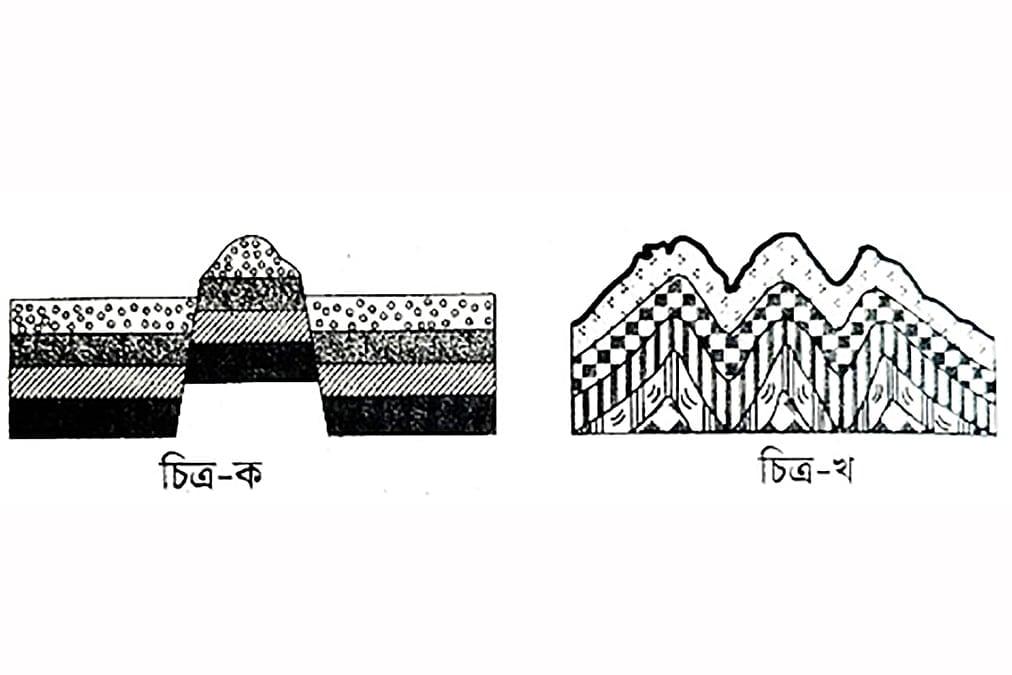
The main feature of folded mountains, as discussed in Chapter 2 of the HSC 2026 Geography Paper 1, is the presence of folds. These mountains form due to the folding of soft sedimentary rocks, such as the Himalayas.
Key Characteristics of Folded Mountains
1. Formed by tectonic movements. 2. Result from the shifting of Earth's crust, causing folds at the edges. 3. Composed of layered soft sedimentary rocks. 4. Presence of fossils in sedimentary rocks. 5. Occasionally contains igneous and metamorphic rocks within the layers. 6. Exhibits long fault lines.
Differences Between Folded and Block Mountains
Block mountains, such as the Black Forest in Germany, are formed by the vertical displacement of Earth's crust due to faults. They are typically lower and less peaky compared to folded mountains like the Himalayas, which form due to the folding of sedimentary layers under intense lateral pressure from tectonic activity.