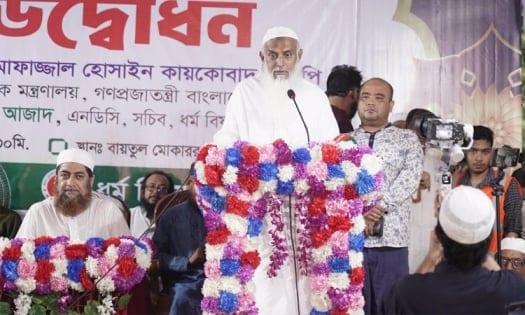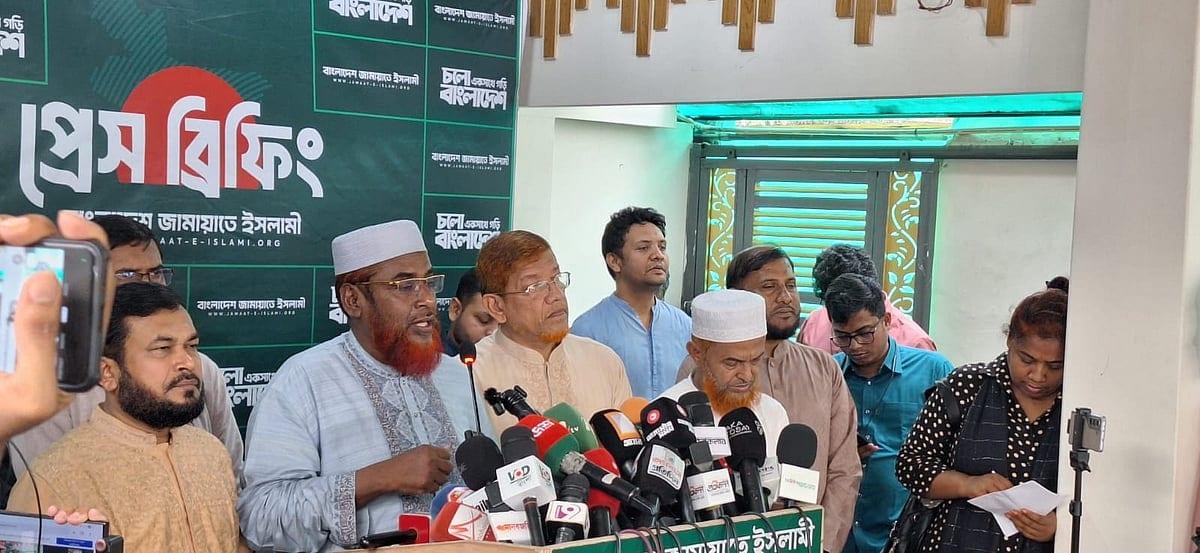
Bangladesh Jamaat-e-Islami has identified three major obstacles to the implementation of the proposed national budget for the fiscal year 2026-27. These obstacles include rising costs of gas, electricity, and fuel; uncontrolled high inflation; and global and geopolitical economic uncertainties. Jamaat's Secretary General, Mia Golam Parwar, highlighted these challenges during a press conference held at the party's central office in Moghbazar, Dhaka. The press conference was organized to discuss the party's reaction to the proposed budget, which was presented in the Jatiya Sangsad by Finance Minister Amir Khosru Mahmud Chowdhury. The proposed budget amounts to 938,000 crore Taka.
Parwar stated that the increasing costs in the electricity and fuel sectors pose the first major obstacle. He noted that gas, fuel, and electricity prices have been raised multiple times in the past three months since the government came to power. The second major obstacle, according to Parwar, is the uncontrolled high inflation. The third significant hurdle is the global and geopolitical economic uncertainties.
Parwar commented that these three major obstacles will make it very difficult for the government to achieve the revenue collection targets and implement the budget. Jamaat-e-Islami has identified the budget deficit as the biggest weakness of the proposed budget. The party believes that if the government borrows more from banks to cover the deficit, it will reduce private sector investment, negatively impacting employment and industrialization.
Golam Parwar also criticized the revenue collection target of 629,000 crore Taka, stating that there is no realistic plan to achieve it. He emphasized the need for tax structure reforms, corruption control, and ensuring accountability in tax administration. Parwar accused the government of using linguistic tactics to hide the issue of tax increases.
Regarding the growth target of 6.5%, Parwar called it a 'gimmick' and stated that it does not align with the forecasts of international organizations like the IMF. He argued that the current fragile investment environment, weak financial policies, undue interference in the banking sector, rampant corruption, and discriminatory decisions will hinder the country's future productivity. Parwar also questioned the inflation target of 7.5%, stating that the rising costs of fuel, electricity, and gas will increase production costs, potentially leading to higher inflation and reducing the purchasing power of the general public.
Jamaat-e-Islami opposed the proposal to increase the minimum personal tax rate from 5% to 10%, arguing that it would create additional pressure on the lower and middle classes. The party also called for the cancellation of the opportunity to legalize undeclared income. Parwar expressed concerns about the increased size of the Annual Development Programme (ADP) to 300,000 crore Taka, stating that without ensuring transparency and accountability, it would create opportunities for corruption.
Parwar expressed concerns about the Bank Resolution Act, stating that it allows for the looting of public money and transferring billions of Taka to a few individuals and groups. He criticized the current government for following the same fascist path as the previous Awami League government, stating that there would be no fundamental change in the situation. Parwar commented that the people of Bangladesh did not receive a people-friendly, well-planned, visionary, and implementable budget from the elected government after the July coup.
The Secretary General stated that due to the non-implementation of the July decree based on the people's verdict, this budget would lead to corruption, money distribution among party workers, and organized looting. Jamaat-e-Islami called for the modification of the 'ambitious and looting-friendly' budget to propose an investment-friendly and people-welfare budget. The press conference was attended by Jamaat's Assistant Secretary General Abdul Halim, Hamidur Rahman Azad, Dhaka North Secretary Rezaul Karim, and Dhaka North Publicity and Media Secretary Ataur Rahman Sarkar, among others.