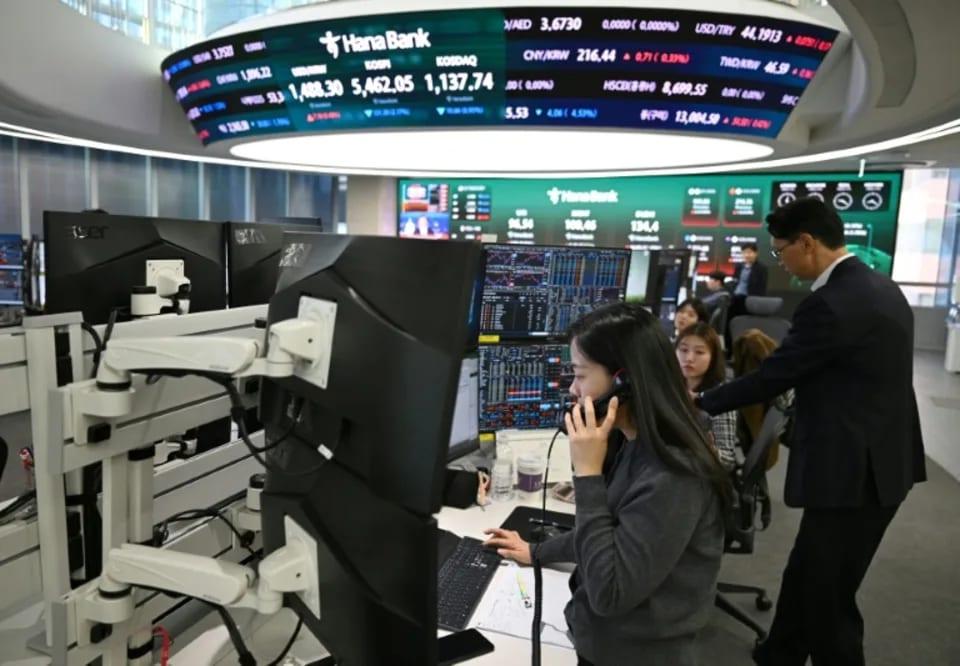
Asian stocks have mostly rebounded following days of losses, driven by a recovery in technology shares, while oil prices have eased slightly despite ongoing geopolitical tensions. The rebound was led by technology stocks, with Japan's Nikkei rising 1.75 percent and South Korea's Kospi increasing by 3.6 percent. This follows a recent decline in tech stocks due to concerns over the artificial intelligence (AI) sector potentially being overbought, particularly in chip shares.
Stephen Innes of SPI Asset Management noted that the rebound does not appear to be driven by a significant improvement in AI fundamentals. He emphasized that upcoming earnings from major tech companies, including Tesla, Alphabet, Microsoft, Meta, Apple, and Amazon, will be crucial in determining whether the investments in AI infrastructure are justified.
Oil prices saw a slight decrease, with West Texas Intermediate down 0.3 percent at $82.98 per barrel and Brent North Sea Crude down 0.63 percent at $88.59. This comes despite Iran's announcement of strikes on US military targets in Bahrain and Kuwait, and the Houthi rebels' declaration of a blockade on Saudi ports. Analysts believe that any disruptions are unlikely to be sustained due to the Houthis' limited capability.
In other developments, US President Donald Trump signed orders to impose new tariffs on Canadian goods, and yields on British gilts rose following comments by new Prime Minister Andy Burnham about public finances. Additionally, US Secretary of State Marco Rubio condemned China's actions in the South China Sea during an ASEAN foreign ministers' meeting.
The rebound in Asian stocks and the easing of oil prices have significant implications for global markets, including those in Bangladesh, which relies on stable oil prices and global economic conditions for its own economic stability.