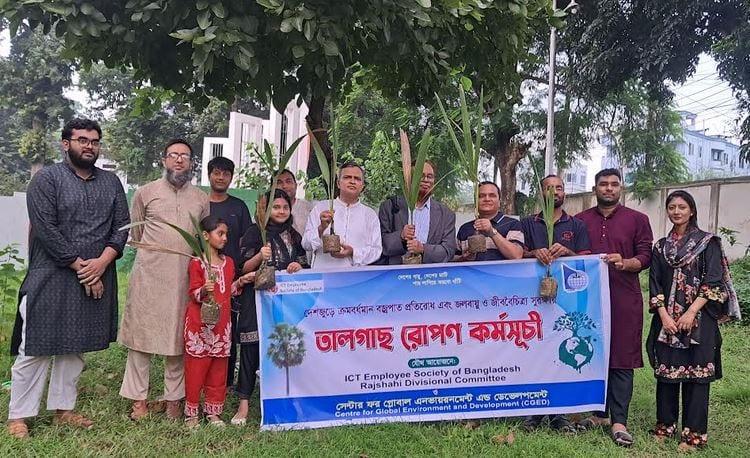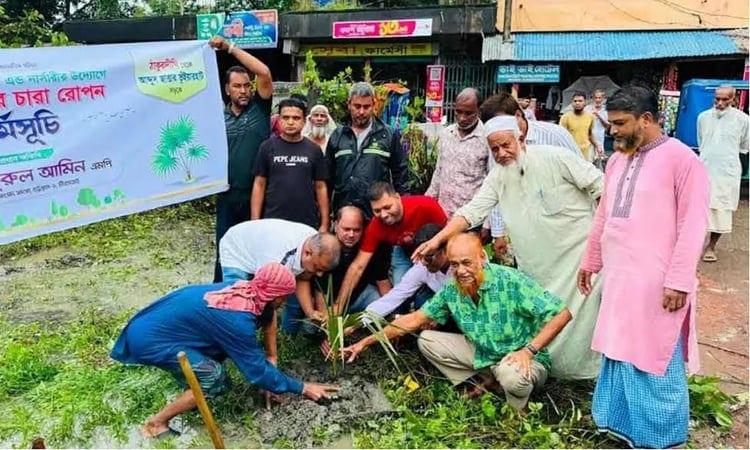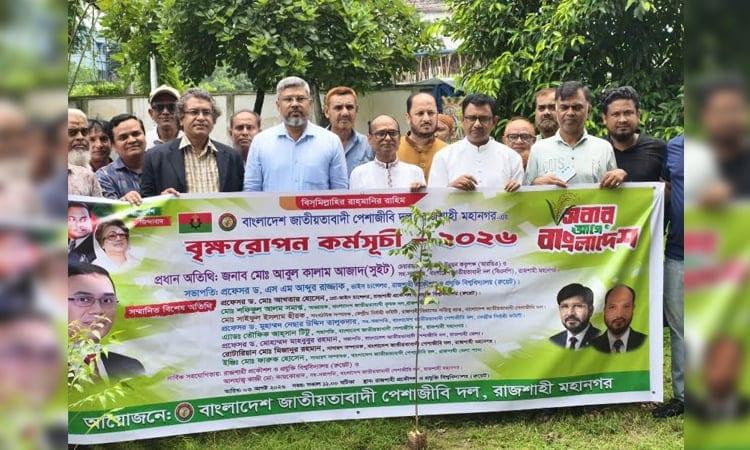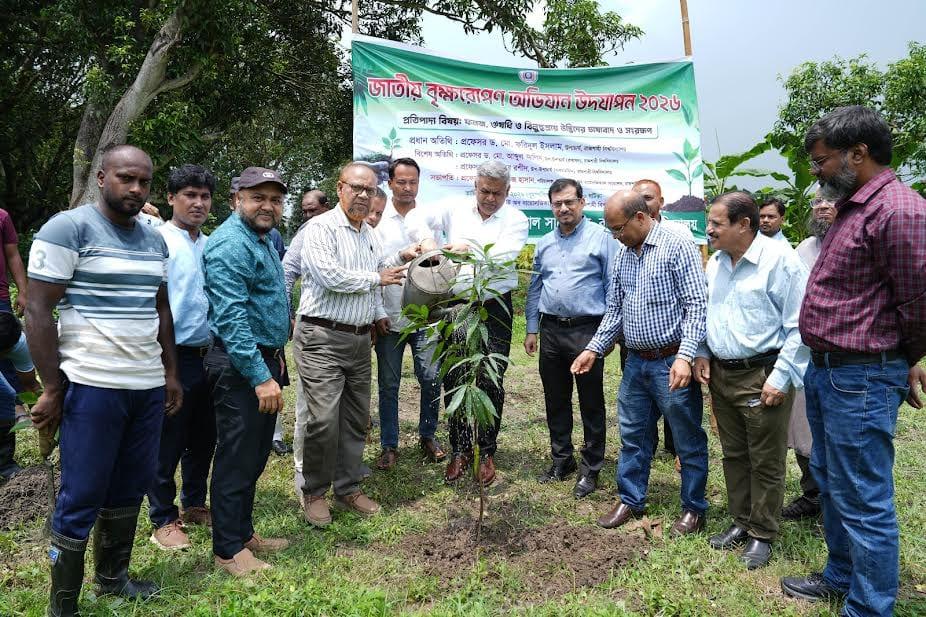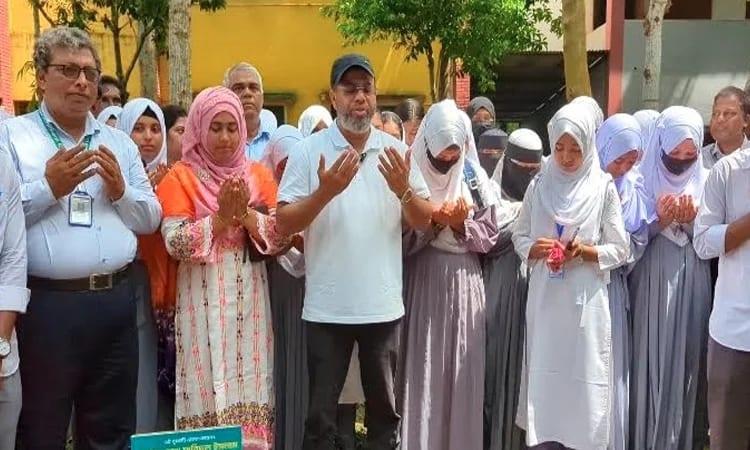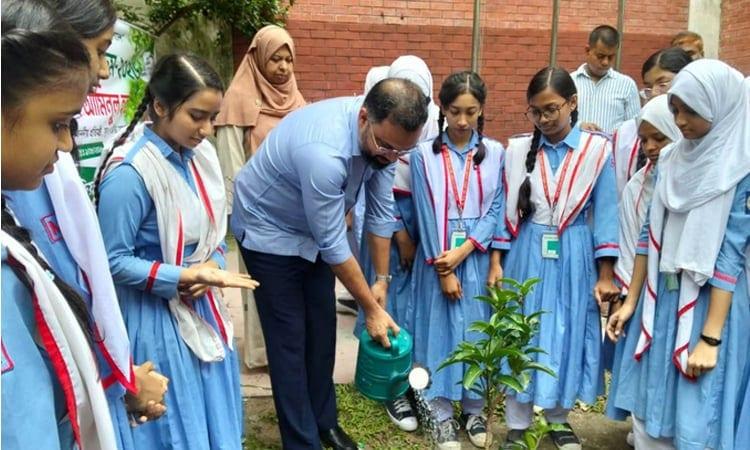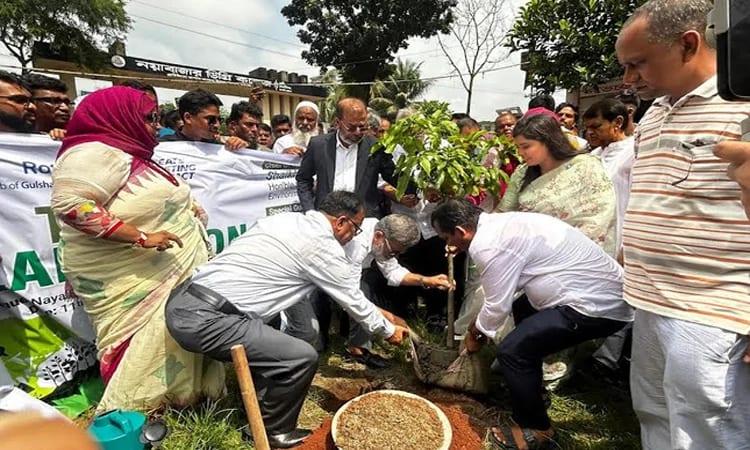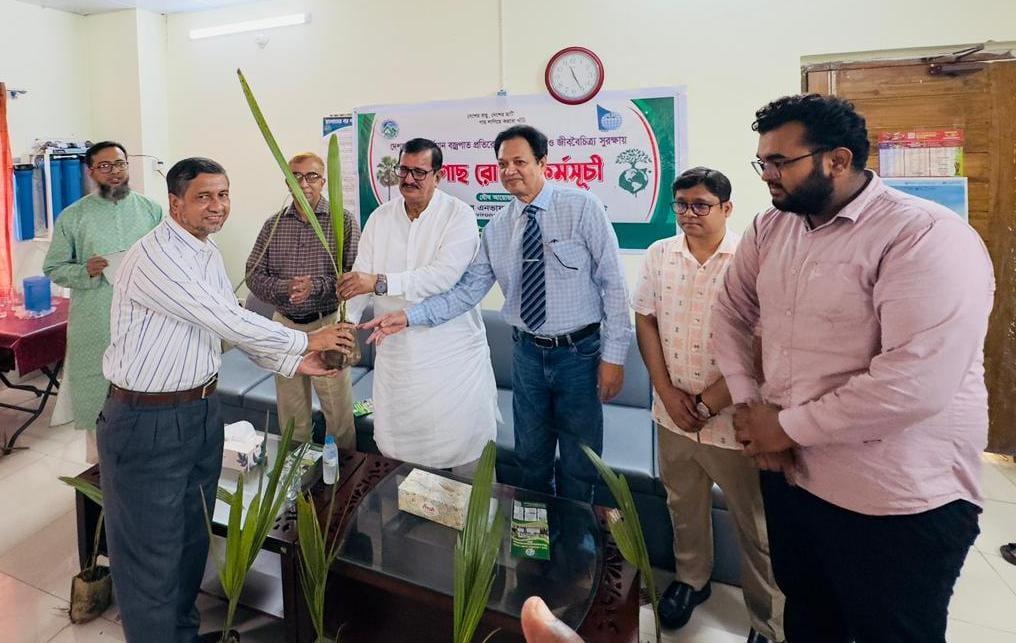
A program to plant one thousand palm tree saplings has been inaugurated in Rajshahi with the aim of preventing the increasing lightning strikes across the country and protecting the climate and biodiversity. The initiative, jointly launched by the Nature and Biodiversity Conservation Forum (NBCF) and the Center for Global Environment and Development (CGED), is part of a nationwide effort to plant one lakh tree saplings. The saplings will be planted in various educational institutions, including schools, colleges, and madrasas, as well as at Rajshahi University, Rajshahi University of Engineering and Technology, Rajshahi Medical College Hospital, and along the banks of the Padma River.
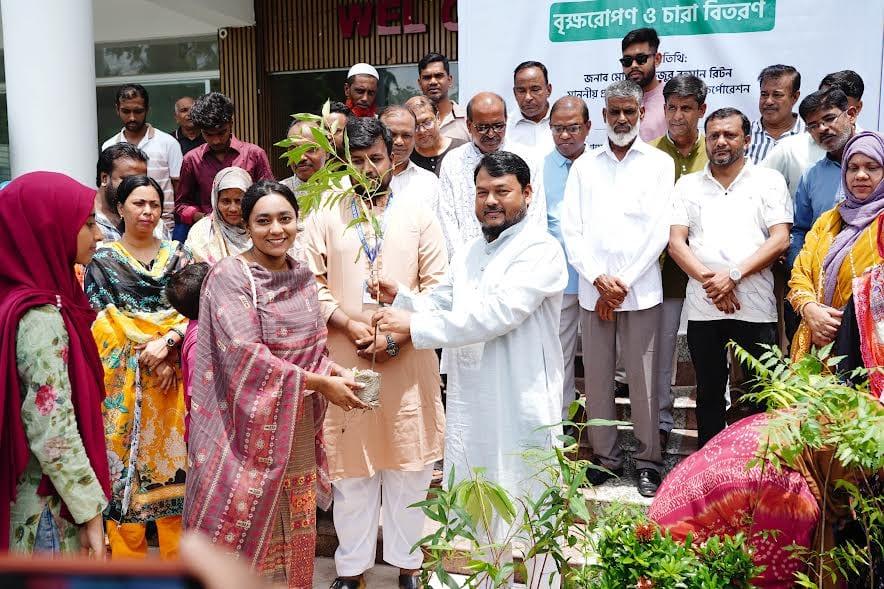
The program was inaugurated today by planting palm tree saplings on the premises of Rajshahi Medical College. Land Minister Mizanur Rahman Minu, MP, graced the occasion as the chief guest, with the program presided over by Professor Dr. Khondkar Md. Faisal Alam, Principal of Rajshahi Medical College. Among the invited guests were Rajshahi City Corporation Secretary Sohel Rana, Principal of Rajshahi Institute of Health Technology Professor Dr. Mirza Mohammad Wasi Parvez, Executive Director of CGED Dr. Abdul Wahab, President of NBCF Professor Dr. BK Dam, and Principal of Rajshahi Government Survey Institute Amirul Islam.
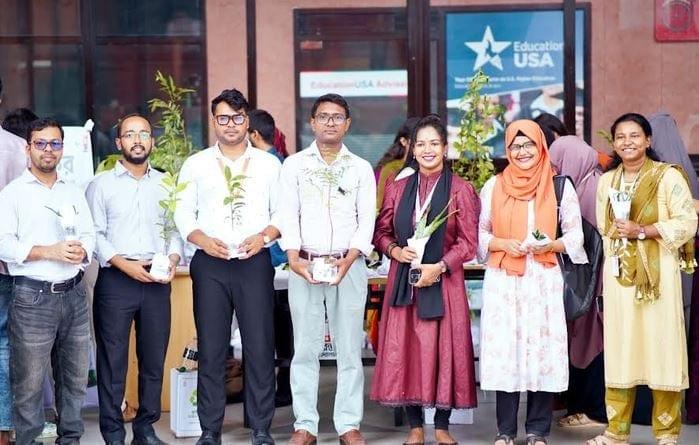
After the inauguration, Minister Minu distributed palm tree saplings to the heads of various educational institutions in Rajshahi. The event highlighted the importance of tree plantation in mitigating the effects of climate change and enhancing biodiversity. Palm trees are particularly effective in preventing lightning strikes due to their tall stature and conductive properties, which help dissipate electrical charges.
The initiative is expected to have a significant impact on the local environment. By planting trees in educational institutions, the program not only contributes to climate protection but also raises awareness among students and the community about the importance of environmental conservation. The involvement of multiple institutions and organizations underscores a collaborative effort to address environmental challenges.
Lightning strikes have been a growing concern in Bangladesh, causing damage to property and posing risks to human life. The plantation of palm trees is a strategic measure to reduce the incidence of lightning strikes. Additionally, the program aligns with global efforts to combat climate change by increasing green cover and promoting biodiversity.
The success of this program in Rajshahi could serve as a model for other regions in Bangladesh, encouraging similar initiatives across the country. The involvement of educational institutions ensures that future generations are educated about the importance of environmental stewardship and sustainable practices.