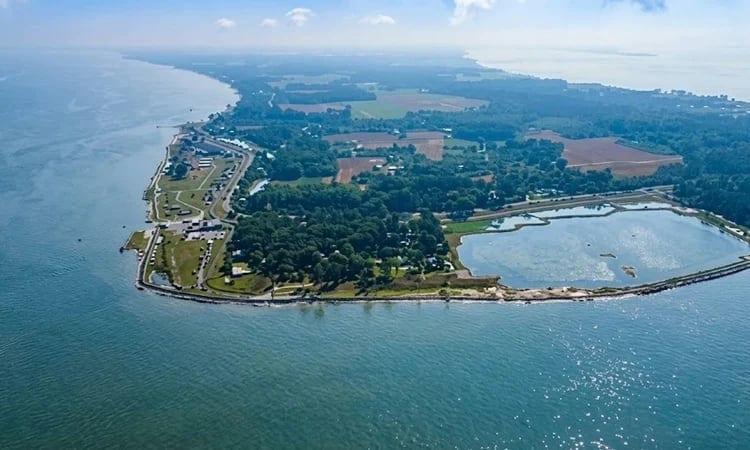
Bhola, known as the ‘Queen of Islands,’ is set to be connected to the national road network through a new highway linking the district with the mainland. This initiative is expected to significantly improve communication, trade, and commerce across the southern region of the country. For decades, residents of Bhola have depended largely on ferries, launches, trawlers, and speedboats to travel to Barishal and other parts of the country. The Tetulia and Meghna rivers separated Bhola from the mainland, making road travel difficult and time-consuming.
Prime Minister Tarique Rahman has decided to construct a new highway along the Bhola–Mehendiganj–Hijla–Rahmatpur route to bring the district under the national highway network. This initiative is part of his election commitment. He announced the plan for a road connection between Bhola and Barishal at an election rally in Barishal on February 4. On August 22, he again announced the construction of the highway connecting Bhola with Rahmatpur, Hijla, and Mehendiganj and instructed the authorities concerned to move ahead with it.
According to the Roads and Highways Department, some 21.5 kilometers of new road will be constructed on the proposed route. A feasibility study will be conducted through the appointment of a consultant before construction begins. Residents of Bhola have welcomed the decision, saying the highway would end their long-standing dependence on waterways. Abdul Ahad Khan and Babul Mia, residents of the Officerpara area of Bhola municipality, said patients requiring emergency treatment often had to depend on waterways to reach Barishal or Dhaka. Delays and difficult weather conditions sometimes create life-threatening situations.
Auto-rickshaw driver Gias Uddin said ferry services are often disrupted during the winter fog and bad weather. Transport operators sometimes had to wait for hours or even several days at ferry terminals because of ferry shortages. “If Bhola is connected with Dhaka by road, ordinary people and transport workers will be benefited greatly,” he said. Md Jamal Uddin Khan, a Director of the Bhola Chamber of Commerce, said the district has enormous economic potential because of its natural gas, agriculture, hilsa fisheries, and tourism. He said easier road connectivity would allow products such as hilsa, watermelon, capsicum, and other agricultural goods to reach Dhaka and other parts of the country more quickly.
While welcoming the highway project, residents and local organizations have also renewed their demand for the construction of a direct Bhola-Barishal bridge. Mir Mosharraf Hossain, member secretary of ‘Amra Bholabasi,’ said people from all sections of society had long been campaigning for the bridge. “We welcome the initiative, but the demand for the Bhola-Barishal Bridge must not fade away amidst the road construction project. Both should receive priority for the development of the road network,” he said.
President of the Bhola Press Club Adv Nazrul Haque Anu said Bhola remained geographically isolated despite being an important district. He welcomed the initiative but said a bridge over the river is a must to establish direct connectivity between Bhola and Barishal. Bhola District Council Administrator and district BNP convenor Golam Nabi Alamgir said the proposed road connection would bring major changes to the district’s economy. He said improved connectivity would facilitate proper utilization of Bhola’s natural gas resources and encourage the establishment of industries. Agricultural products and hilsa would also be transported more easily to markets across the country.
Bhola-3 lawmaker and Speaker of the Jatiya Sangsad Major (rtd) Hafiz Uddin Ahmed Bir Bikram welcomed the initiative, saying better road connectivity and construction of the bridge had long been the legitimate demands of the people. Bhola-1 lawmaker and Information and Broadcasting Minister Andaleeve Rahman said Prime Minister Tarique Rahman is committed to fulfilling his promises and expressed the hope that the development initiative would transform the economic landscape of Bhola and the southern region of the country. Lawmaker from Bhola-2 Mohammad Hafiz Ibrahim also welcomed the decision and expressed hope that construction of the highway would be completed quickly.
Roads and Highways Department Executive Engineer in Bhola Mohammad Maidul Islam said a new 21.5-kilometer road would be constructed along the Rahmatpur–Hijla–Mehendiganj–Bhola route. He said a feasibility study would be carried out by a consultant and the construction work would begin after the necessary assessment and selection process. According to officials involved in the project, once the feasibility study and other formalities are completed, it should be possible to bring Bhola under the national highway network within the shortest possible time. Bhola covers around 3,403 square kilometers, with approximately 2.2 million people living in seven upazilas. Residents believe the proposed highway could finally provide the district with an alternative to its longstanding dependence on waterways.
However, they say the real fulfillment of their long-awaited dream will come only when the project moves beyond announcements and is implemented on the ground. Once Bhola is connected to the national highway network, the road could create an important transport corridor linking the district with the Payra and Mongla ports. It could also strengthen direct road connectivity between Chattogram Port, Payra seaport in Patuakhali, and Mongla Port in Bagerhat, potentially creating a powerful “Southern Coastal Economic Corridor.” Improved connectivity is also expected to reduce travel time and transportation costs significantly. At present, traveling between Dhaka and Bhola can take around 8–10 hours, depending on ferry services. Once the road connectivity is established, the journey could potentially be reduced to around 4–5 hours, road transport experts said.
For the people of Bhola, the proposed highway therefore represents more than a transport project. They see it as a long-awaited opportunity to overcome the geographical isolation and integrate the island district more closely with the national economy. The initiative is expected to bring substantial economic and social benefits to the region, enhancing trade, reducing travel time, and improving overall connectivity.