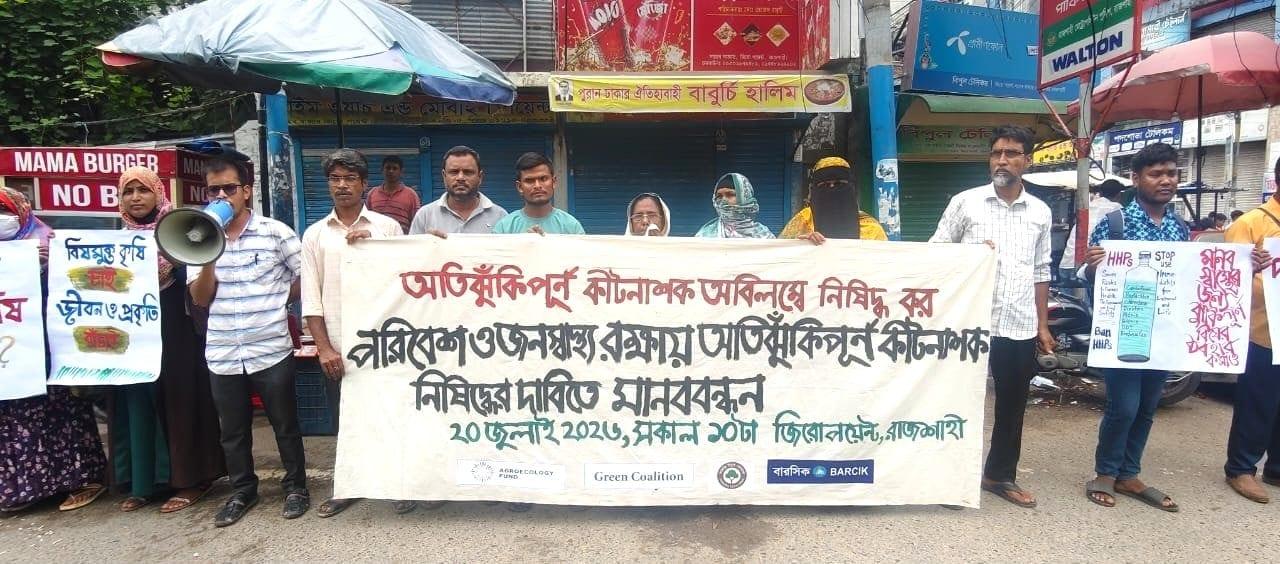
In Rajshahi, a human chain was organized to demand a phased ban on Highly Hazardous Pesticides (HHPs) to protect the environment, public health, biodiversity, and ensure a safe food system. The event, held at Shaheb Bazar Zero Point, was jointly organized by BARCIK, the Barendra Youth Forum, and the Green Coalition. Participants included farmers, environmental activists, youth representatives, researchers, and members of civil society.
Impacts of Hazardous Pesticides
Speakers highlighted the severe negative impacts of chemical pesticides on humans, bees, fish, birds, soil, water, and the entire ecosystem. Abu Sama, General Secretary of Nauhata Fishermen's Association, noted that fish fry are dying due to pesticide runoff, leading to a decline in fish populations. Upen Rabidas, President of Adivasi Youth Council, mentioned the rapid disappearance of wild vegetables, medicinal plants, indigenous fish, snails, crabs, and other natural foods due to excessive pesticide use.
Call for Sustainable Agriculture
Atikur Rahman, President of Barendra Youth Forum, emphasized that agriculture dependent on pesticides and chemicals is unsustainable. He advocated for agroecology as a transformative approach. BARCIK researcher Shahidul Islam pointed out that many countries have made progress in controlling HHPs and expanding alternative agricultural methods. He called for a scientific re-evaluation of HHPs in Bangladesh according to international standards and their phased ban.
Alternative Agricultural Practices
The speakers proposed agroecology, Integrated Pest Management (IPM), biological pest control, and conservation of local seeds as foundations for a safe and climate-resilient agricultural system. They stressed that the demand to ban HHPs is a collective call for public health, safe food, environment, biodiversity, farmers' rights, and the security of future generations.