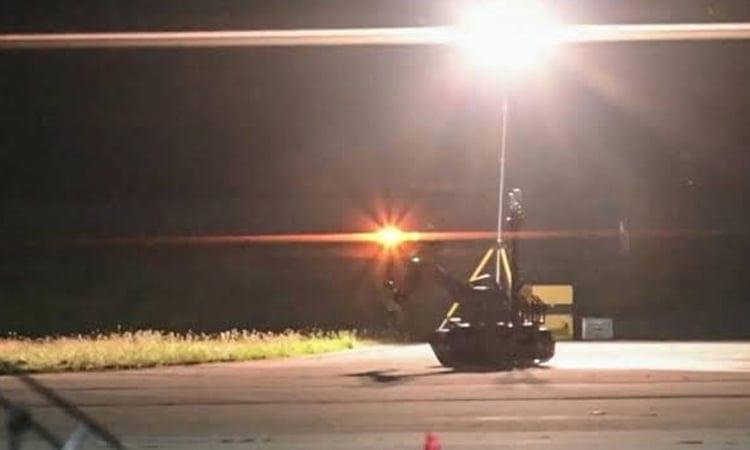
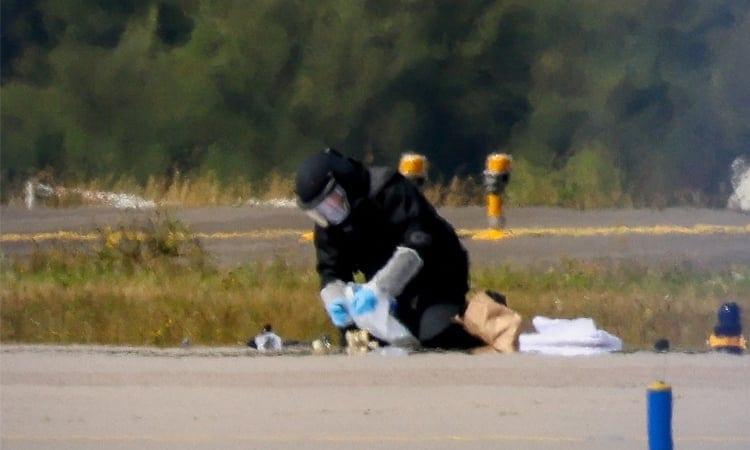
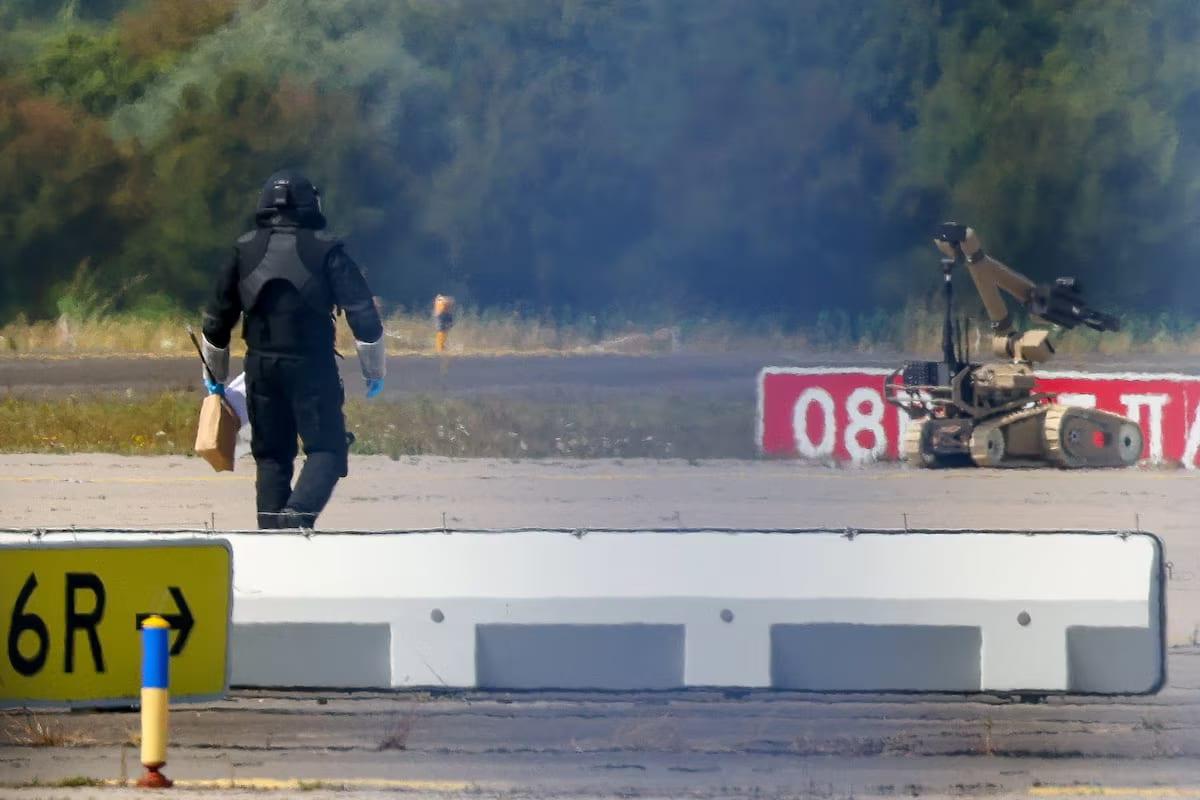
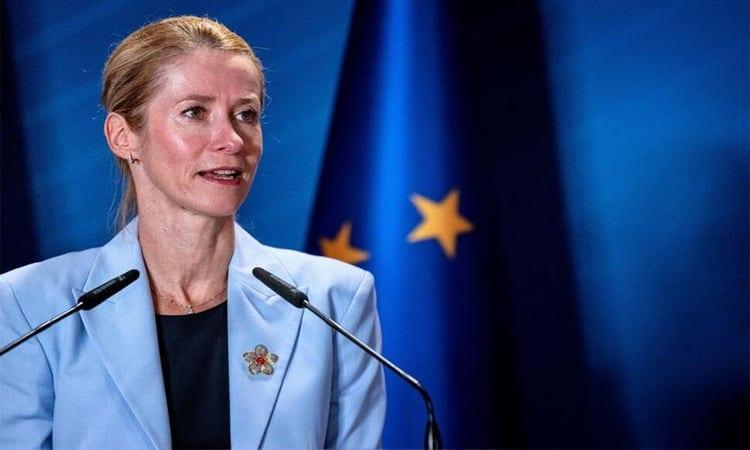
EU countries have summoned Russia's envoys and are discussing fresh sanctions following a drone incident in Germany that EU foreign policy chief Kaja Kallas described as 'state-sponsored terrorism'. The incident, involving an explosive-laden drone at Leipzig airport, has heightened concerns over a sabotage campaign aimed at destabilizing Ukraine's supporters. Kallas stated, 'It is clear that it has all the hallmarks of state-sponsored terrorism. The question is, what do we do about this?'
French foreign minister Jean-Noel Barrot echoed the sentiment, saying, 'We will not let an act of such gravity go unpunished.' Kallas announced that EU foreign ministers agreed to continue working on a proposal to impose sanctions on 1,600 individuals and entities linked to Russia's military industry, with the hope of adopting them next month.
Germany has directly blamed Moscow for the Leipzig incident and has taken steps to shut a Russian consulate and end the contract for a cultural center in Berlin. In response, Russian President Vladimir Putin called Germany's actions 'another mistake, a serious one,' stating it 'clearly runs counter to the interests of the German people.' Germany's foreign minister Johann Wadephul asserted, 'Russia has escalated, Russia has carried out this hybrid attack, and now Russia must live with the consequences.'
EU chief Ursula von der Leyen described the Leipzig incident as 'a new escalation' in Europe, emphasizing that it was an attack using military-grade material carried out by Russian operatives on EU soil. She warned that such incidents had become a 'new normal' for Europe as Russia increases its destabilizing activities. Polish top diplomat Radoslaw Sikorski noted, 'We are no longer in regular peacetime.'
Lithuania's foreign minister Kestutis Budrys called for stronger measures to punish Moscow, stating, 'We have to consider what options we have in our hands and respond, because it is obvious Russia does not see the political cost of the hybrid activities against us.' Kallas also mentioned a 'broad consensus' to continue work on a proposal to ban visas for Russians who fought in Ukraine and increase restrictions for tourists. Additionally, there has been renewed discussion on whether the EU should use some 200 billion euros of frozen Russian central bank assets to fund Ukraine.