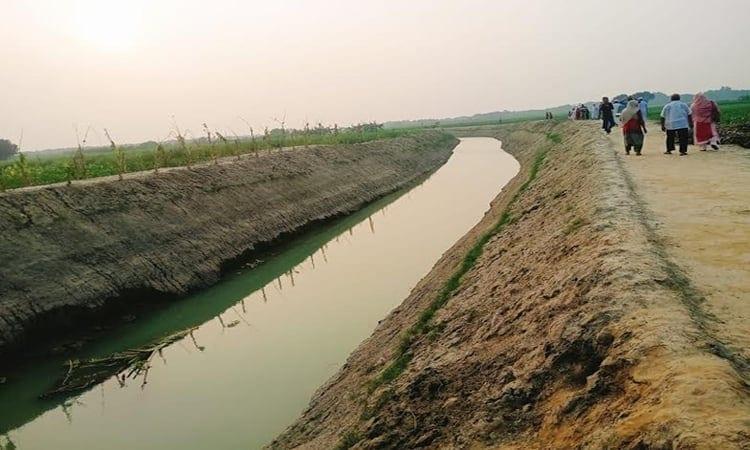
Natore district has returned nearly Taka 22 lakh in unspent funds from the excavation of seven canals to the state treasury after the successful completion of the projects. The canal excavation programme, implemented by the Ministry of Disaster Management and Relief, covered 11.65 kilometres of canals across four upazilas. The total allocation for the seven projects was Taka 4,45,74,000, but the actual expenditure was Taka 4,24,09,000, resulting in a surplus of Taka 21,65,000.
The Khalishadanga Canal in Lalpur upazila, measuring three kilometres, was allocated Taka 1,28,78,000 but spent Taka 1,28,53,000, leaving a surplus of about Taka 25,000. The 2.5-kilometre Chandana Canal in Lalpur had an allocation of Taka 1,03,03,000 and was completed at a cost of Taka 1,02,95,000, saving around Taka 8,000.
In Bagatipara upazila, excavation of a 1.05-kilometre canal from Dumrai to the Baral River was completed at a cost of Taka 26,81,000 against an allocation of Taka 27,07,000, generating savings of approximately Taka 27,000. Similarly, excavation of the 1.35-kilometre canal from Pukurpar to the Baral River cost Taka 32,04,000 compared with the allocated Taka 32,22,000, leaving about Taka 19,000 unspent.
In Gurudaspur upazila, excavation of the 1.35-kilometre canal from Shidhuli Canal to Airmari Bridge was completed at a cost of Taka 51,26,000 against an allocation of Taka 51,53,000, saving Taka 27,000. In Natore Sadar upazila, excavation of the 750-metre Bhaturia Canal cost Taka 25,62,000 against an allocation of Taka 25,79,000, leaving a surplus of around Taka 14,000.
The largest savings came from the two-kilometre Helencha Canal in Natore Sadar. Although Taka 77,28,000 had been allocated for the project, the actual expenditure was Taka 56,82,000, resulting in savings of approximately Taka 20,46,000. District Relief and Rehabilitation Officer A.K.M. Shaha Alam Molla attributed the savings to close supervision and coordinated efforts at every stage of implementation.
The successful completion of these projects at lower costs than allocated highlights efficient resource management and the potential for significant savings in public works projects. This surplus not only benefits the state treasury but also sets a positive example for future infrastructure projects in the region.