The government has undertaken a series of conservation, research, and habitat restoration initiatives to prevent the extinction of indigenous fish species and protect the country’s aquatic biodiversity, Fisheries and Livestock Minister Mohammad Amin Ur Rashid told Parliament today.
Comprehensive Strategy for Conservation
Replying to a scripted question from ruling party lawmaker Khairul Kabir Khokon (Narsingdi-1), the minister said the government has adopted a comprehensive strategy that includes establishing fish sanctuaries, restocking open water bodies with native fish fry, conserving breeding grounds, strengthening law enforcement, and promoting scientific research.
"The government has taken a wide range of measures to address the various risks threatening indigenous fish species and to ensure their long-term conservation," he said.
Establishment of Fish Sanctuaries
The minister informed the House that 669 fish sanctuaries have been established in rivers and inland open water bodies across the country, covering 1,195.91 hectares, and are being managed by local beneficiary groups.
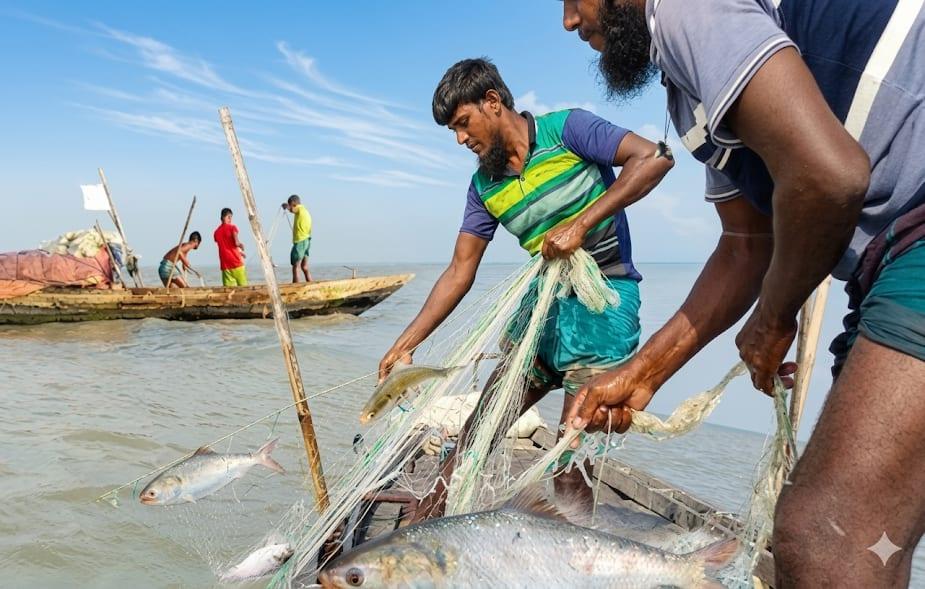
He said a 40-kilometre stretch of the Halda River, from Nazirhat Bridge in Fatikchhari to the Halda-Karnaphuli confluence and Kalurghat Bridge, has been declared a fish sanctuary to protect valuable aquatic resources.
In Moulvibazar district, 10 permanent fish sanctuaries are being maintained across three upazilas.
Guidelines and Regular Programmes
Amin Ur Rashid also said the government has formulated the "Guidelines for Establishment and Management of Fish Sanctuaries in Inland Open Waters, 2026" to strengthen conservation efforts.
"As part of the Department of Fisheries’ regular programmes, indigenous fish fry are released into open water bodies, while beel nurseries are established every year to increase fish production in natural waters," he said.
According to the minister, some 947 beel nurseries were established during the 2024-25 fiscal year under both revenue and development programmes.
Conservation Projects and Legal Enforcement
The government has already implemented a project titled "Conservation and Development of Indigenous Fish Species and Snails" to enhance the production of native fish.
To ensure the conservation of aquatic biodiversity and the natural breeding of fish, fishing remains prohibited for 30 days every year—from May 29 to June 28—in seven haor districts.
"The government is strictly enforcing fisheries conservation laws, including taking tough action against the use of destructive illegal fishing gear such as current nets," the minister said.
Role of Research Institutes
He also highlighted the role of the Bangladesh Fisheries Research Institute (BFRI) in preventing the extinction of indigenous fish species through research.
"So far, BFRI has successfully developed breeding and culture technologies for 41 indigenous fish species, including pabda, gulsha, shing, magur, bheda, bata, sarputi, bhangana, kalibaush, mahashol, ayir, chital, foli, kuchia, tangra and khalisha," he said.
The minister also informed Parliament that Bangladesh currently has 261 indigenous fish species.