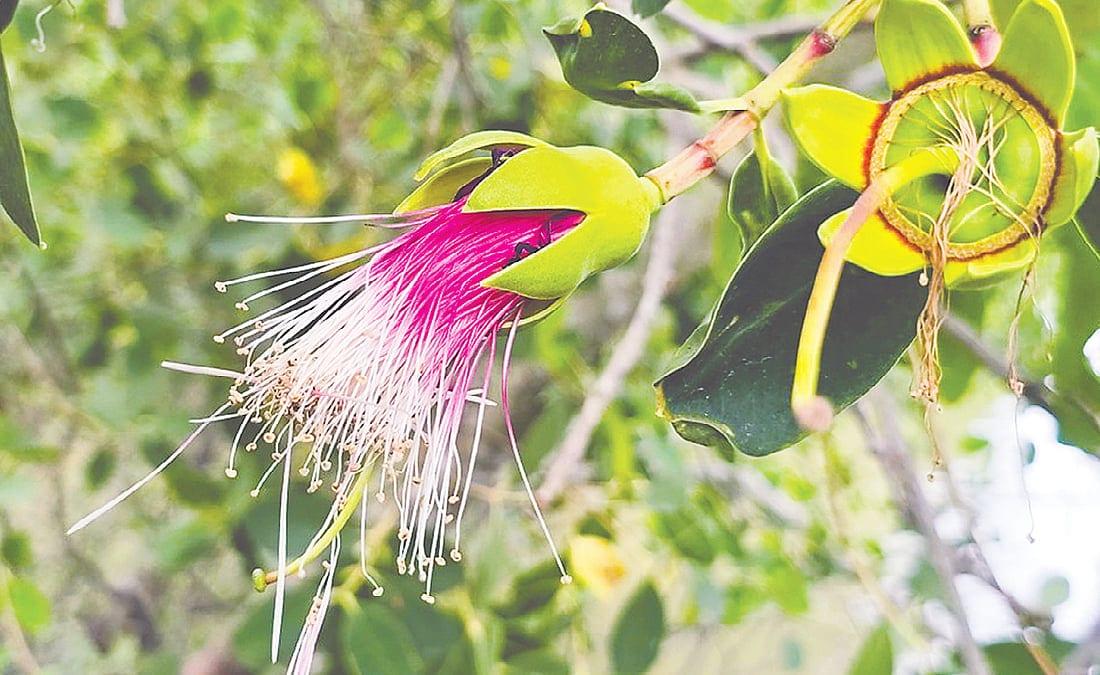
The Chhaila flower, known for its beauty and sweet fragrance, is one of the most captivating flowers in the Sundarbans mangrove forest. This flower, scientifically named Sonneratia caseolaris, is a true mangrove plant that thrives in the brackish waters of the Sundarbans.
Locally known as Chhaila, this flower is also referred to as Chhaila, Ora, and Chak Keora in various texts. The fruit of the Chhaila tree resembles a crab apple and is often used in local cuisine, particularly in dishes with shrimp.
The Chhaila tree is an evergreen, fast-growing, medium to large-sized tree that can reach up to 15 meters in height. Its bark is smooth when young but becomes rough and gray-brown to brown as it matures. The tree's roots develop pneumatophores, which are aerial roots that help it survive in saline environments.
The Chhaila flower blooms in the evening and falls by morning, producing a copious amount of nectar. The flowering season typically starts in July-August and continues until February, though it was observed blooming in May this year. The flower has a unique structure with stamens resembling a bundle of cotton, hiding the petals.
Despite tolerating high salinity, the Chhaila tree thrives best in moderately saline areas, particularly along the banks of rivers and canals in deep, muddy soil.