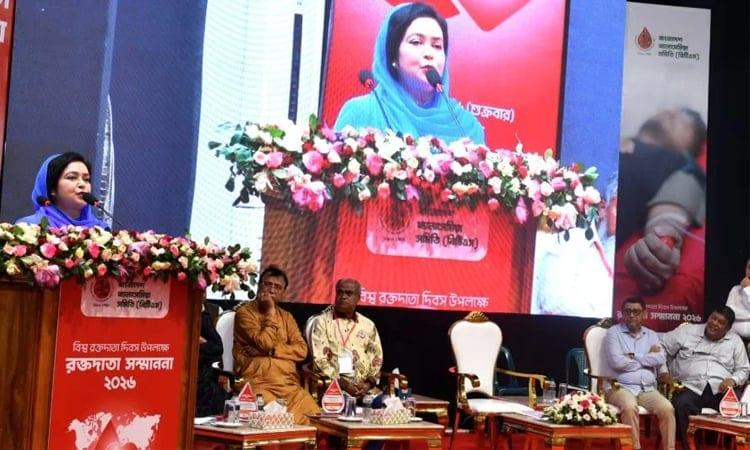
At the 'Blood Donor Award 2026' ceremony held at the Institution of Engineers, Bangladesh (IEB) auditorium in Dhaka, Dr Zubaida Rahman emphasized the urgent need for a comprehensive database of thalassaemia and other rare disease patients. Speaking as the chief guest, she highlighted the importance of maintaining a registry to ensure better care and support for those affected.
'It is necessary to prepare a nationwide database of people suffering from thalassaemia and other congenital and rare diseases, and to maintain a registry,' Dr Rahman stated. She underscored the necessity of extending reassurance and compassion to patients and their families, even though a complete cure for thalassaemia may not be possible.
Dr Rahman also urged the relevant authorities to introduce screening for expectant mothers to help prevent thalassaemia. She noted that the disease can be detected through screening during pregnancy and at any age through screening tests. Furthermore, she suggested expanding awareness and screening programmes to district hospitals, upazila health complexes, union-level health facilities, and villages across the country.
Referring to the government's plan to recruit 100,000 health workers, Dr Rahman proposed that these individuals should receive comprehensive training on thalassaemia, including its symptoms, treatment, and ways to counsel and reassure patients. She also suggested categorizing diagnosed patients into thalassaemia major, thalassaemia minor, and thalassaemia trait to facilitate appropriate treatment and care.
Expressing gratitude to voluntary blood donors, Dr Rahman congratulated them for their humanitarian service. She also acknowledged her daughter, Zaima Rahman, for her voluntary blood donations. Dr Rahman thanked all members of the Bangladesh Thalassaemia Society for their continuous support to thalassaemia patients and their families since 1989.