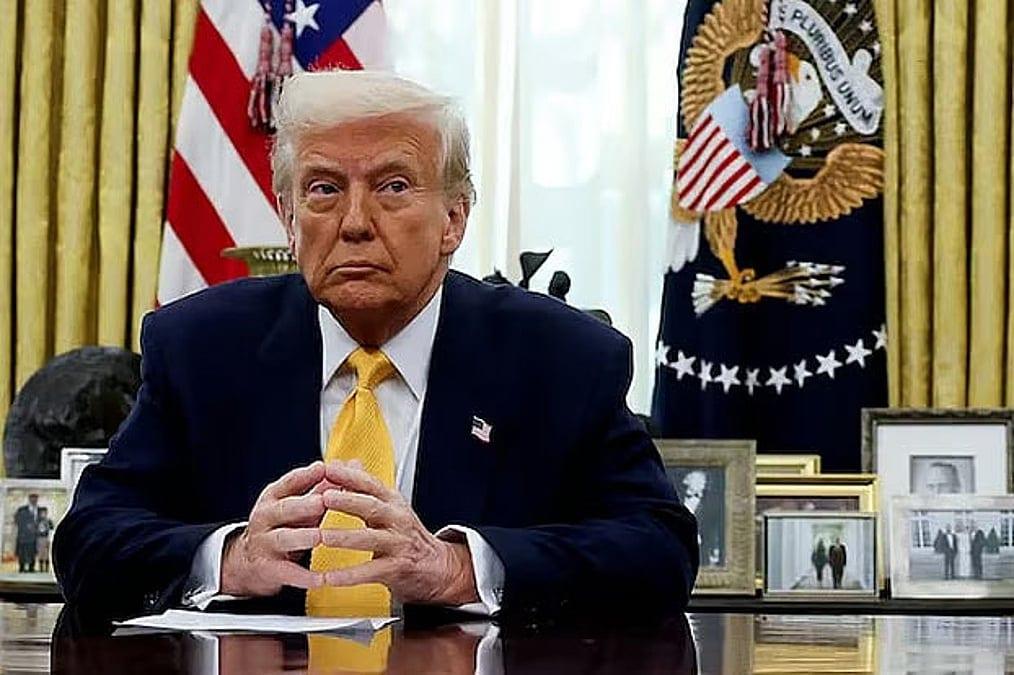
US President Donald Trump's threat to impose new tariffs on trade partners failing to curb forced labor is deemed ineffective by experts, business groups, and human rights organizations. The proposed tariffs, ranging from 10 to 12.5 percent on goods from 60 countries, are based on the accusation that these countries have failed to control the trade of goods produced by forced labor. However, the affected countries deny these allegations.
The plan by the Office of the United States Trade Representative (USTR) is based on a 'Section 301' investigation, which targets unfair trade practices. Critics argue that this initiative will have limited impact on addressing the problems of child labor, forced labor, and other exploitative working conditions prevalent in global supply chains.
Ram Ben Tsion, co-founder and CEO of Publican, a digital shipment verification platform, stated that the new measure is not strongly related to forced labor but is rather a new rationale for imposing tariffs. The International Labour Organization (ILO) estimates that 27.6 million people worldwide are victims of forced labor, a 2.7 million increase since 2016.
The European Union (EU), one of the US's major trading partners, has drawn particular attention. The USTR report criticizes the EU's forced labor regulations, which are set to be stricter than US regulations from December 2027. The European Commission (EC) has called Trump's tariff decision unjustified and reaffirmed its commitment to the trade agreement with Washington, which limits US tariff rates on most European goods to a maximum of 15 percent.
Human rights organization Walk Free asserts that no G-20 country is taking sufficient action to combat forced labor relative to their economic capabilities. The organization also notes that the US is among the top 10 countries with the highest number of people living in modern slavery.
Andrew Wilson, Deputy Secretary-General of the International Chamber of Commerce (ICC), expressed concern over the 'arbitrary' nature of the tariff imposition. He argued that if the purpose of these tariffs is to strengthen control over modern slavery, then the measure is meaningless.
Businesses argue that Trump's fluctuating trade policies have increased costs and instability in supply chains. Rick Oldenberg, CEO of Learning Resources, a toy manufacturer, stated that linking forced labor policies with commercial interests is inappropriate. Helen de Rengaerve, Senior Corporate Accountability Lawyer at Human Rights Watch, questioned whether the tariff structure would bring about real change, fearing it could increase political resistance and have counterproductive effects on the fight against forced labor.