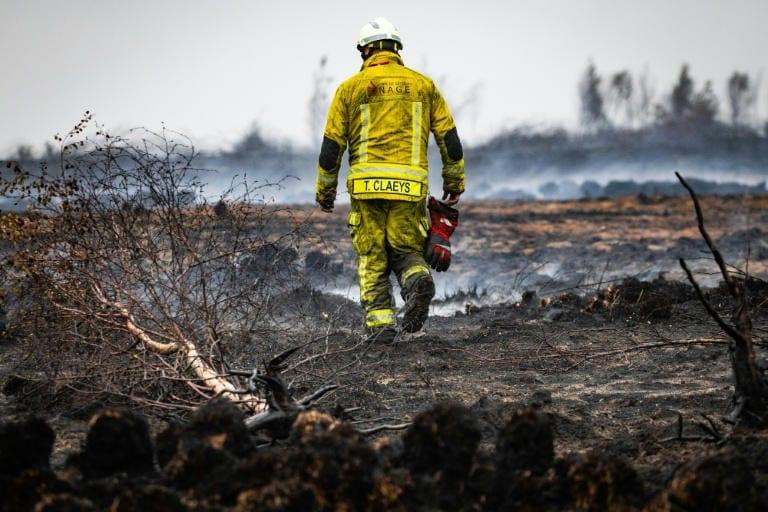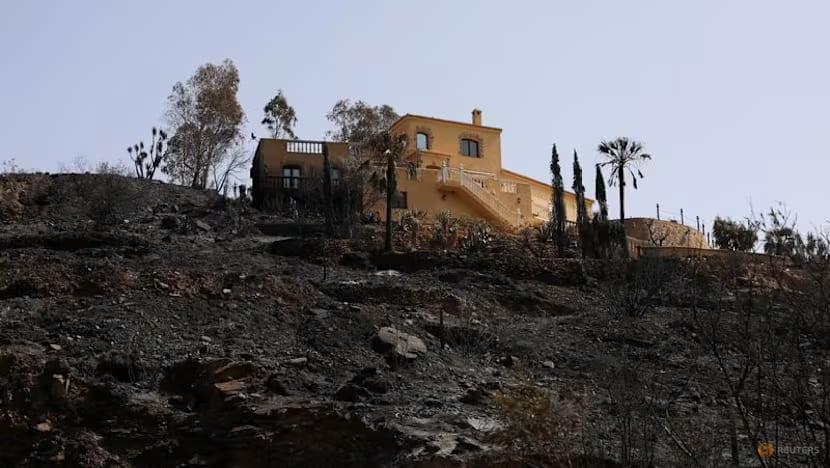
Firefighters battling a wildfire in southern Spain that killed 12 people started to contain the blaze on Saturday as the hardest-hit village remained deserted, with charred vegetation and blackened homes a grim reminder of the inferno that sent terrified people fleeing from their homes. Around 500 firefighters backed by over 20 water-dropping aircraft were battling the blaze which erupted Thursday in the Gallardos area of the southern region of Andalusia, home to many foreign residents.
Favorable Weather Conditions Aid Firefighters
Calmer winds and higher air humidity levels allowed firefighters to directly attack the flames for the first time, officials said. "The fire has not spread at all today," Justice Minister Felix Bolanos said at the end of the day after travelling to the area, adding that the burned area remained unchanged at 6,600 hectares. "We have taken advantage of a window of opportunity, with favourable weather conditions in terms of wind and humidity today, to intensify our efforts," he said, expressing hope the blaze could be brought under control in the coming hours.
Tragedy Strikes as Fire Spreads Rapidly
Officials said the 12 people who died in the fast-moving fire had been trapped in vehicles and as they tried to flee on foot. The majority were foreigners although their identities have not yet been released. "We were absolutely terrified. We could see the flames. It was horrific," Manoli Ramos, 72, a councillor in the small whitewashed village of Bedar where the victims were found told AFP, adding "it was like hell". Bedar was virtually a ghost town Saturday afternoon, with nearly all of its residents evacuated, according to an AFP reporter. Police kept the main road into town closed.
Evacuations and Hospitalizations
The wildfire -- one of the deadliest in Spain's recent history -- forced some 1,500 people to evacuate. Eight people remain in hospital, with four being treated in a burns unit. Officials said some of those who died had not followed orders to evacuate or to shelter in place once the flames got too close.
Climate Change and Wildfires
The authorities suspect the wildfire began when a power line broke as Spain sweltered in extreme heat, exceeding 40C in recent weeks. Winter and spring rains spurred abundant vegetation that later dried out in successive heat waves, leaving ample fuel for wildfires, officials said. Bolanos said the blaze had at times spread at a rate of 100 metres a minute, "a level of intensity and severity we have never seen before". "It is clearly a consequence of the climate emergency the world is facing," he said. Scientists agree that human-driven climate change is making extreme weather events such as heatwaves more likely and more intense.
Prime Minister to Visit Affected Area
Prime Minister Pedro Sanchez is scheduled to visit the fire-ravaged area on Monday. Antonio Sanz, the Andalusian regional government's emergency chief, said police had searched the affected areas without finding any further victims, although he cautioned that the search was continuing. "That does not mean it cannot happen, but after the Civil Guard swept the area, including locations that were still hotspots, it gives us hope," he said. Sanz said references to 23 missing people were misleading, explaining that the figure referred to people whose relatives had been unable to contact them and who could have reached evacuation centres or other safe locations. He said seven formal missing persons reports had been filed. Officials said they could not establish a definitive toll until the bodies recovered from the fire had been formally identified.