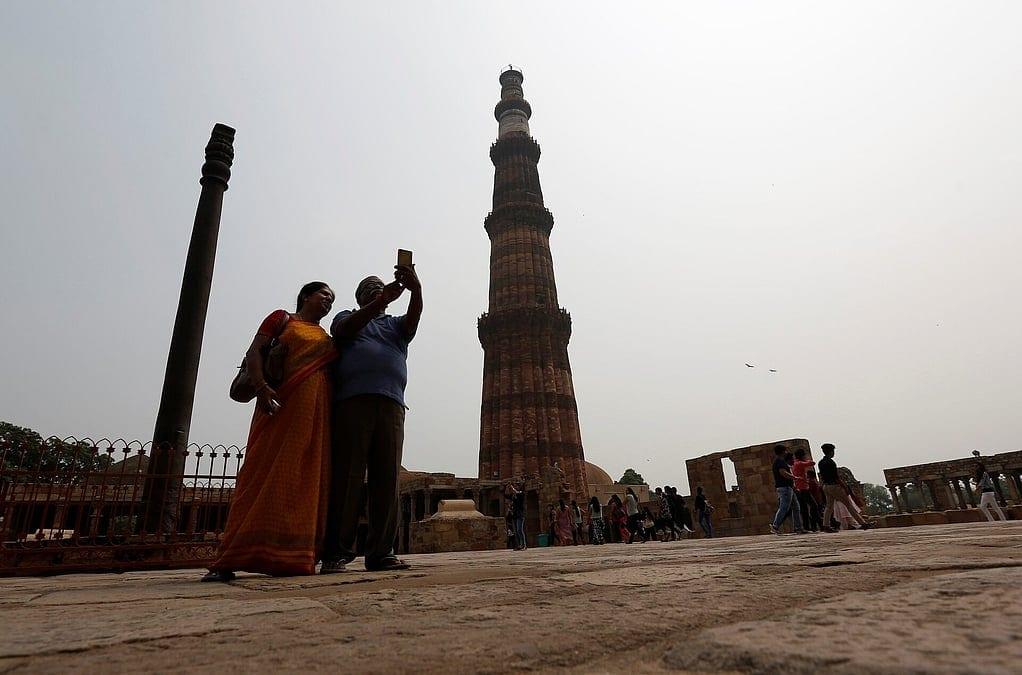
The Iron Pillar in Delhi's Qutub Minar complex has stood rust-free for nearly 1,600 years, defying the natural laws of corrosion. Despite being exposed to rain, wind, and humidity, the pillar remains untarnished and robust. Researchers from IIT Kanpur revealed in 2003 that the pillar's resistance to rust is due to its high phosphorus content and a unique protective layer called'misawite' formed by iron, oxygen, and hydrogen.
The pillar was constructed using a special type of wrought iron with significantly higher phosphorus levels compared to modern iron. Ancient Indian craftsmen employed a technique called 'forge welding' to maintain the high phosphorus levels, which played a crucial role in preventing rust. Additionally, the absence of lime in the pillar's composition allowed the formation of the protective misawite layer, safeguarding it from environmental adversities.
While the pillar is now part of the Qutub Minar complex, its original location and the circumstances of its relocation to Delhi remain subjects of debate among historians. Some theories suggest it was initially placed in Mathura or Udayagiri, while others propose it was brought to Delhi by rulers like Anangpal Tomar or Sultan Iltutmish. Regardless of its origin, the Iron Pillar stands as a testament to ancient Indian metallurgical prowess, captivating scientists, historians, and researchers for centuries.