The Pulse Today
BREAKING
Sajib Pledges Aid for 50,000 Flood-Affected People in SonargaonMP Azharul Islam Mannan Distributes Relief Funds to Needy Families in SonargaonParliament Proposes Anti-Gambling Bill with Maximum 7-Year Prison PenaltyOpenAI Unveils 'Schedule' Feature to Boost Task Management in AI ChatbotPrime Minister Tareq Rahman Arrives in Dalian, China for Economic ForumEurope Confronts Intense Heatwave; Conditions Predicted to DeteriorateGold Prices Rise Again in Bangladesh Amid Global Market IncreaseSpaceX's Nasdaq Debut Values Company at Over $2 Trillion, Surpassing AmazonStudy Reveals AI Data Centers Contribute to Local Temperature IncreasesNarayanganj BNP Youth Wing Holds Rally to Welcome New Central CommitteeKhulna Tragedy: Three Family Members Killed in Motorcycle-Truck CollisionUS Special Envoy Sergio Gor Discusses Bilateral Relations with Prime Minister Tarique Rahman2nd CAS International Squash Tournament Begins August 24 in DhakaBangladesh Braces for Rain in Rangpur, Mymensingh, Sylhet, and Other DivisionsKyiv Strikes: Death Toll Rises to 9, 23 WoundedPeru's Ex-President Humala Released After Court Overturns 15-Year SentenceMassive Attack Banned in Singapore Following Palestinian Flag Display by Band MembersEU Confronts Migrant Crisis in Spain's North African Enclave of CeutaTrump's Prolonged and Unpopular Struggles in the Iran ConflictTanker Hit by Unknown Projectile Near Oman, Raising Tensions in Strait of HormuzTrump Jokes About Avoiding ICC Scrutiny Amid U.S. Diplomatic Campaign Against the CourtTwo Teens Killed, One Injured in Rajshahi Truck-Motorcycle CollisionAmazon Leads US Stock Surge Despite Rising Bond Yields and Inflation ConcernsCeuta Migration Crisis: Spain Confronts Unprecedented Influx from MoroccoHundreds Protest in Madrid Against Migrant Influx in Ceuta

HSTU Scientists Develop Rapid, Affordable Method for Detecting Harmful Bacteria in Food

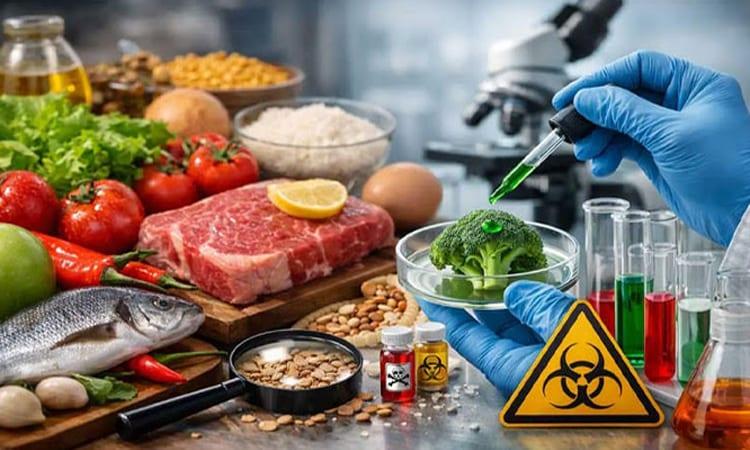
Researchers at Hajee Mohammad Danesh Science and Technology University (HSTU) have developed a rapid and cost-effective method to detect harmful bacteria in food, enhancing food safety.

By Staff Correspondent
Share
নিরাপদ খাদ্য বাজারজাত করতে হাবিপ্রবি’র গবেষকদের সাফল্য | বিশেষ প্রতিবেদন
BSS

Researchers at Hajee Mohammad Danesh Science and Technology University (HSTU) have made a significant breakthrough in ensuring food safety by developing a rapid and cost-effective method to detect harmful bacteria in food. This new technique can identify the presence of Bacillus cereus, a harmful bacterium responsible for various foodborne illnesses, within just 90 minutes.

Innovative LAMP Technique

Led by Associate Professor Dr. Mohammad Atiqul Haque from the Microbiology Department, the research team has introduced a Loop-Mediated Isothermal Amplification (LAMP) based testing method. This technique is significantly faster and more sensitive than traditional PCR tests, which can take 3 to 5 hours and require expensive equipment.

The LAMP method can be performed using simple equipment like a water bath or heating block, making it accessible for widespread use. The cost per test is approximately $2.50, making it a feasible option for resource-limited settings.

Widespread Contamination

The research revealed that nearly 80% of the samples tested contained at least one toxin gene from Bacillus cereus. The highest contamination was found in animal feed, followed by milk and eggs. This indicates that the bacterium is more prevalent in Bangladesh's food system than previously thought.

Potential Applications

Dr. Haque highlighted that this technology could be crucial for government food testing laboratories, veterinary diagnostic centers, dairy and poultry industries, and mobile outbreak investigation teams. The researchers plan to conduct large-scale sample collection and monitoring studies across the country and develop a multiplex LAMP technology to detect multiple toxin genes in a single test.

Need for Funding

Despite the promising results, the research team noted that insufficient funding has limited the scope of their studies. They emphasized the need for financial support to expand the use of this technology in more regions and food products, ultimately strengthening food safety monitoring in Bangladesh.


Source: BSS

FAQ

What is Bacillus cereus?
Bacillus cereus is a harmful bacterium that can cause foodborne illnesses such as diarrhea and food poisoning.
How does the new LAMP technique work?
The LAMP technique uses isothermal amplification to detect the presence of Bacillus cereus in food samples within 90 minutes.
What are the benefits of the new testing method?
The new method is faster, more sensitive, and cheaper than traditional PCR tests, making it accessible for widespread use.

Topics

Comments

More in Science

See all →

Latest stories