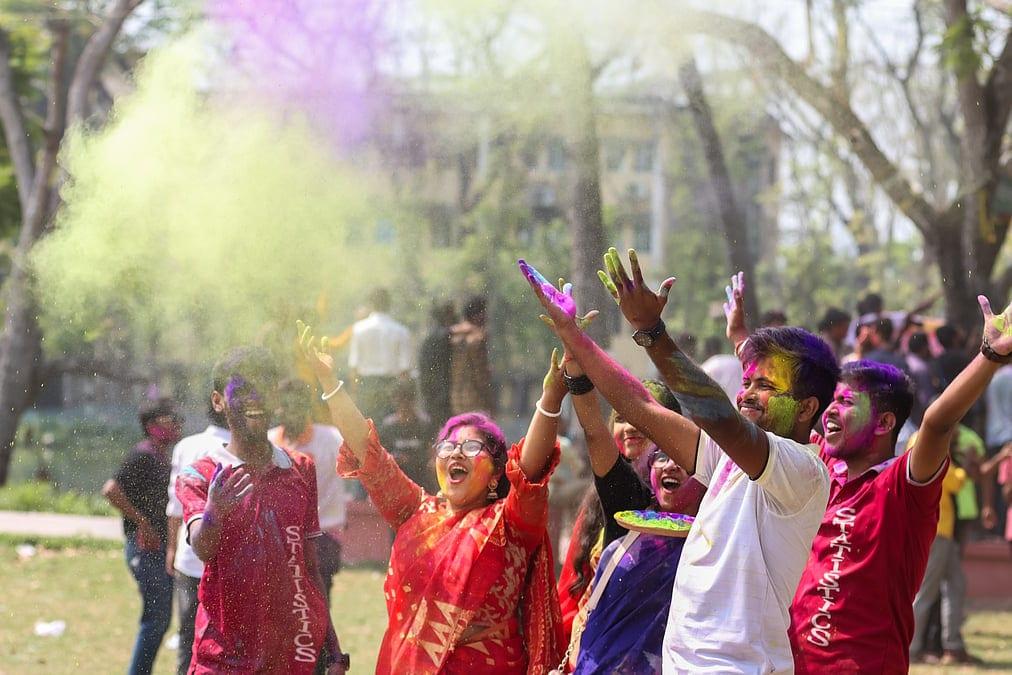
Dolyatra, or Dol Purnima, is a traditional Bengali festival celebrated with great enthusiasm. It falls on the full moon day of the Falgun month, marking the arrival of spring. This festival is deeply rooted in Hindu Vaishnav traditions and commemorates the playful colors of Radha and Krishna in Vrindavan. The festival is also associated with the birth anniversary of Mahaprabhu Sri Chaitanya. Dolyatra is not just about celebrating the deities but also about embracing the vibrant colors of life.
Historical and Cultural Significance
The origins of Dolyatra can be traced back to the Dwapar Yuga when Lord Krishna and Balarama defeated two demons, bringing relief to the people of Mathura. The festival is celebrated with the burning of effigies, symbolizing the triumph of good over evil. In modern times, Rabindranath Tagore introduced the Riturangar Utsav in 1907, which later evolved into the Basanta Utsav, celebrated on the full moon day of Falgun. This festival is a celebration of the spring season, welcoming the blooming of Palash flowers, a symbol of spring in Bengal.
Celebrations and Traditions
Dolyatra is marked by colorful processions, where idols of Radha and Krishna are adorned with flowers and swung in a decorated swing. People play with colors, sing, dance, and enjoy the festive atmosphere. The festival is a time for community bonding, where people from all walks of life come together to celebrate. It is a day of joy, marking the end of winter and the beginning of a new season.