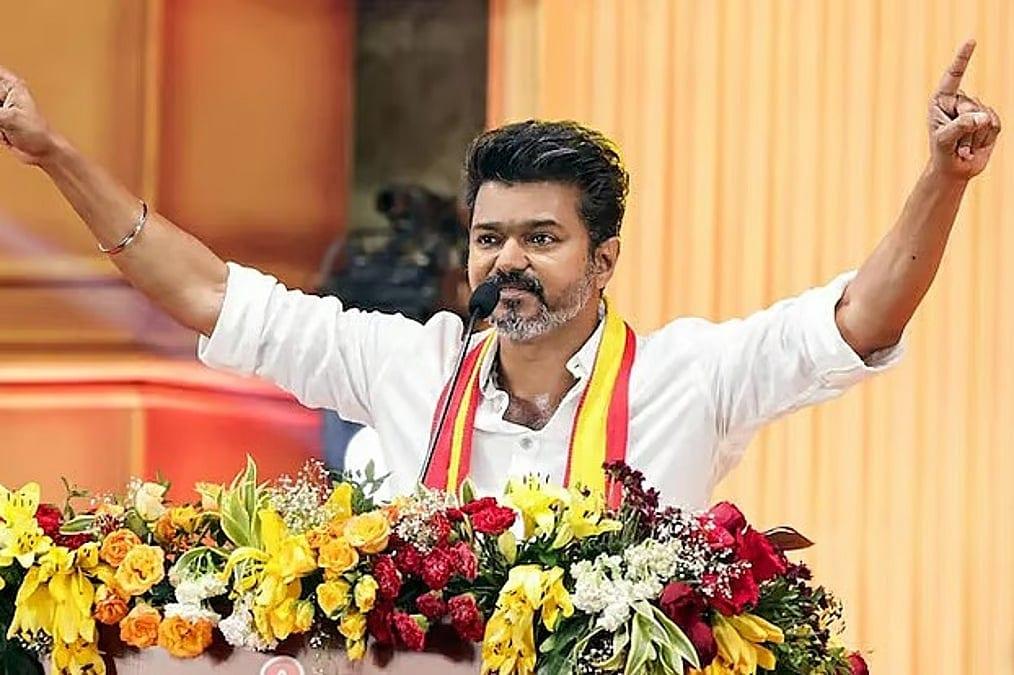
Joseph Vijay Chandrasekhar, known as Thalapathy Vijay to his fans, has quickly found himself under pressure to deliver on his election promises after being sworn in as Tamil Nadu's Chief Minister on May 10. Farmers have taken to the streets, debates over electricity subsidies have emerged, and the state's massive debt burden looms large. Can Thalapathy Vijay truly bear the weight of his promises?
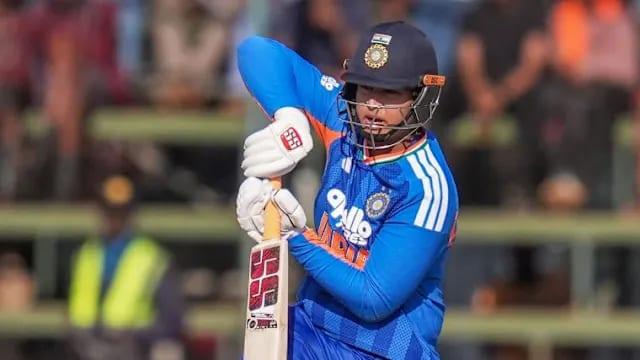
Born on June 22, 1974, in Chennai, Vijay is the son of film director S A Chandrasekhar. He left Loyola College to pursue acting and became one of Tamil cinema's highest-paid actors. On February 2, 2024, he founded the Tamilaga Vetri Kazhagam (TVK) political party. In just two years, his party won 108 out of 234 assembly seats in the May 4, 2026, elections, making it the single largest force.
Vijay's political journey is unique. Unlike M G Ramachandran (MGR) and J Jayalalithaa, who transitioned from film to politics using established party structures, Vijay built his political organization from scratch. His nearly 85,000 fan clubs across the state played a crucial role in his political rise. In 2009, he formed 'Vijay Makkal Iyakkam' (VMI), which engaged in social work and community service, laying the groundwork for his political career.
Vijay's films, starting from 2012, began reflecting his political ideology, criticizing the political and social system. Movies like 'Kaatthi,' 'Mersal,' and 'Sarkar' addressed issues such as farmers' plight, rural healthcare, and electoral fraud. These films served as his political manifesto, resonating with the public.
In the 2021 local elections, members of Vijay's fan clubs won 115 out of 169 panchayats, setting the stage for the formal announcement of TVK in February 2024. Despite challenges, including a tragic incident in September 2025 where 40 people died in a stampede at one of his rallies, Vijay managed to gain the support of the youth, with 60% of voters aged 20-40 casting their ballots for him.
Vijay's 'Ten Guarantees' manifesto included ambitious promises such as financial aid for women-headed households, free LPG cylinders, gold and silk sarees for marriages, farm loan waivers, unemployment allowances for graduates, free electricity up to 200 units, and the creation of 5 lakh government jobs. Experts estimate that fulfilling these promises would increase the state's annual welfare expenditure by 52% to 1 lakh crore rupees, nearly one-third of the state's total revenue income.
On his swearing-in day, Vijay announced free electricity, the formation of an anti-narcotics task force, and a women's safety force. However, controversies soon arose. The free electricity promise came with conditions, and the farm loan waiver was limited, leading to protests. The state's debt has already crossed 10 lakh crore rupees, and fulfilling these promises could increase the fiscal deficit from 3% to 4%, posing long-term risks.
Additional challenges include legal hurdles from the National Bank for Agriculture and Rural Development (NABARD) regarding farm loan waivers and a decreasing central allocation due to the state's lower population. Administrative inexperience is another significant issue for the TVK government.