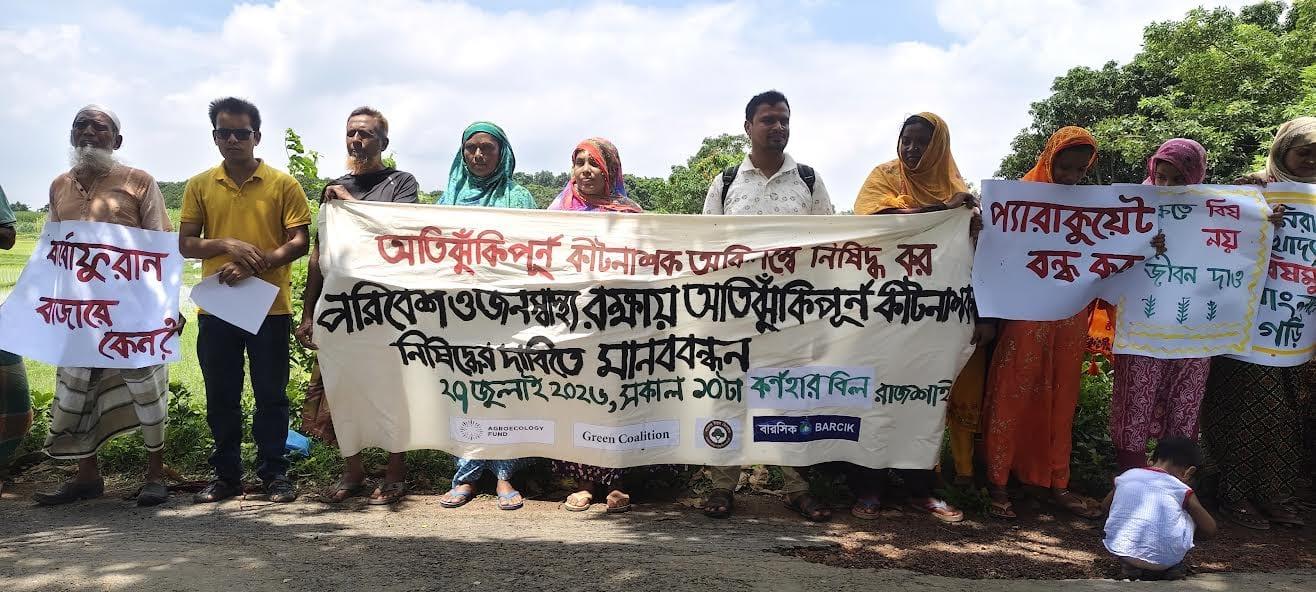
Social watchdogs in Bangladesh have called for an immediate ban on highly hazardous pesticides, including Paraquat, to ensure safe food, public health, and biodiversity. The demand was made during a human chain organized in the Karnahar Beel area of Paba Upazila in Rajshahi by development research organization BARCIK, Barendra Youth Forum, and Green Coalition. Farmers, fisherfolk, agriculturists, youth representatives, environmental activists, and civil society members participated in the event.
Pesticides Threaten Health and Environment
The speakers highlighted that the excessive use of chemical pesticides, particularly hazardous ones like Paraquat, poses long-term risks to public health and the environment. Paraquat, banned in around 70 countries, is still freely used in Bangladesh, leading to increased health risks for humans and devastating impacts on indigenous fish, bees, pollinating insects, soil microorganisms, and aquatic and terrestrial biodiversity.
Call for Responsible Agricultural Practices
The participants argued that banning Paraquat is a scientific and responsible decision that supports farmers, consumers, and the environment. They emphasized that the excessive use of pesticides is damaging indigenous fish diversity, traditional food diversity of indigenous communities, pollinators, and the agro-ecosystem. The speakers called for responsible agricultural practices to protect safe food production, farmers' health, and the country's food system.