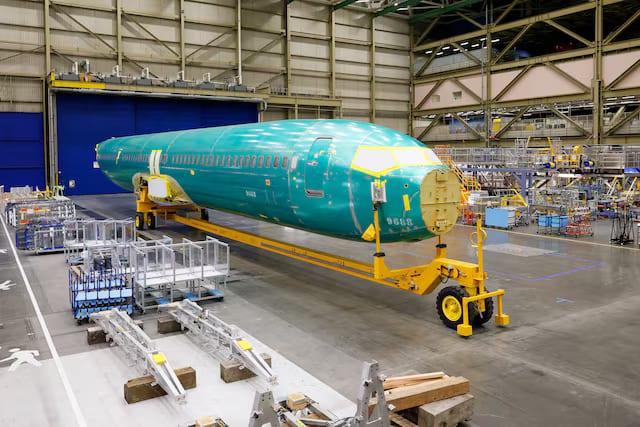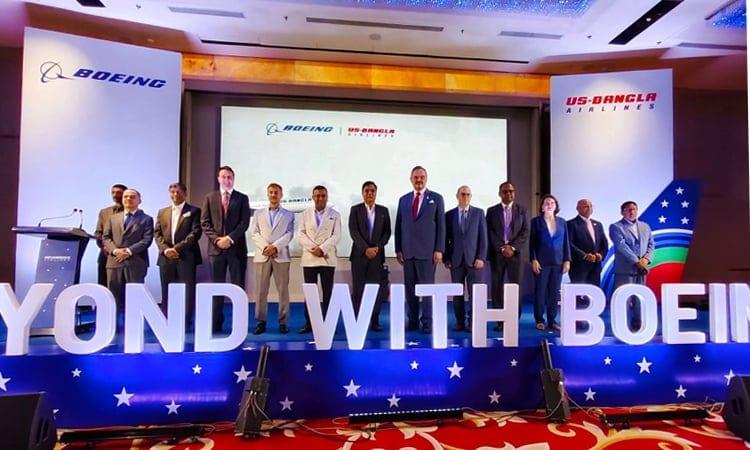
In a significant move to bolster its international presence, US-Bangla Airlines announced a $1.5 billion fleet expansion plan to acquire 21 Boeing aircraft by the end of 2027. The plan includes 15 Boeing 737-8 and six Boeing 737-800 aircraft, marking one of the largest expansion initiatives by a private Bangladeshi airline. The announcement was made at the 'Beyond with Boeing' event in Dhaka, attended by key government officials, diplomats, and aviation stakeholders.
State Minister for Civil Aviation and Tourism M Rashiduzzaman Millat highlighted the government's efforts to transform Bangladesh into a regional aviation hub, mentioning the upcoming Third Terminal of Hazrat Shahjalal International Airport (HSIA), which is expected to handle 24 million passengers annually once operational.
Boeing Vice President of Sales Paul Righi praised US-Bangla's decision, describing it as a significant milestone for the airline's growth. He emphasized the benefits of modern, fuel-efficient Boeing aircraft in supporting US-Bangla's ambitions for greater connectivity and enhanced passenger experience.
US-Bangla Group Managing Director Mohammad Abdullah Al Mamun outlined the airline's long-term vision to transform into a fully integrated global aviation group. The expansion will not only include aircraft but also investments in training, technology, maintenance, cargo, catering, and aviation infrastructure. Mamun noted that the international air travel market in Bangladesh generates an estimated $5.8 billion annually, with foreign airlines currently carrying the majority of international passengers.
The fleet expansion is expected to increase the market share of Bangladeshi carriers on international routes and strengthen the country's competitiveness in the global aviation market. US-Bangla plans to increase frequencies on existing international routes and launch new flights to destinations in South Asia, Southeast Asia, East Asia, the Middle East, and beyond. The airline also aims to develop Chattogram and Sylhet as regional international hubs.