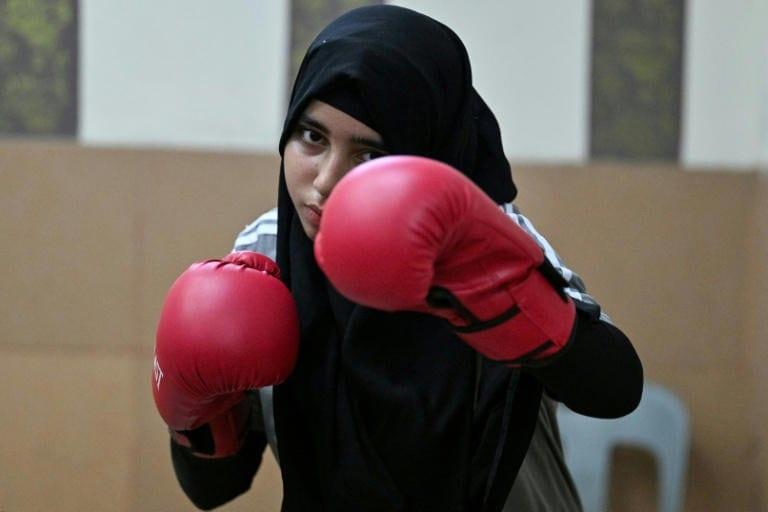
In the gritty Lyari neighbourhood of Karachi, Pakistan, aspiring teenage boxer Hoorain Zahra is determined to follow in the footsteps of her idol, Aliya Soomro. Soomro, 21, made national headlines last year by winning an international bout in Bangkok, a rare achievement for a young woman from Pakistan where cultural norms often dictate that girls and women should stay at home. Recently, Fatima Zahra, 22, became Pakistan's first female Commonwealth Games boxing medallist, winning bronze in the 60kg category in Glasgow.
Thirteen-year-old Hoorain, like Soomro, comes from the sports-mad Lyari area, a community once plagued by gang violence and poverty. Despite societal backlash, she remains undeterred. "They think it (boxing) is not for girls. They also think girls should not even go outside, because girls are not safe outside," Hoorain told AFP as she adjusted her black hijab. "But it is not possible to live without going outside, you have to go out."
The girls train in a modest room in a rundown Lyari building, supervised by coach Ustad Younis Qambrani, who has been training young fighters for over a decade. "I believed women's boxing was very important for girls," Qambrani said. "My two daughters were the first ones to begin women's boxing. The girls who train with us go outside with great confidence. They show great courage and are not afraid of anything."
Lyari's journey from one of Pakistan's most dangerous neighbourhoods to a community renowned for producing athletes mirrors the girls' struggle for acceptance. Once hit by an influx of weapons and drugs during the Afghan war, Lyari saw a heavy-handed operation by paramilitary forces in 2013. Despite religious parties winning the 2018 elections and further restricting girls' activities, sport has continued to thrive within the conservative community.
Some local parents, like Hoorain's and Aliya's, strongly support their daughters' determination to box. Aliya, who hopes to build on her win in Thailand, believes girls have as much right as boys to take up sport. "Our society regards girls as very weak. People think girls are weak and cannot do anything," she said. "But I believe girls can do everything, sometimes even more than men."
The struggle of these young boxers highlights the broader issue of gender inequality in sports and society. Their determination to break barriers and pursue their passion serves as an inspiration, not only in Pakistan but also in countries like Bangladesh, where similar challenges exist. Their story underscores the importance of providing safe spaces for girls to engage in sports and the transformative impact it can have on their confidence and societal perceptions.