The disruption of shipping through the Strait of Hormuz has prompted oil-producing countries in the Gulf to accelerate plans for alternative export routes. A series of pipeline projects have been announced or revived to reroute oil exports away from the critical waterway. In 2025, a total of 14.95 million barrels per day (mbd) of crude oil was exported through the Strait, according to the International Energy Agency (IEA). While Iran, which exported around 1.69 mbd, is expected to continue relying on Hormuz, other Gulf states are looking to diversify their export routes.
Saudi Arabia and UAE Lead Pipeline Expansions
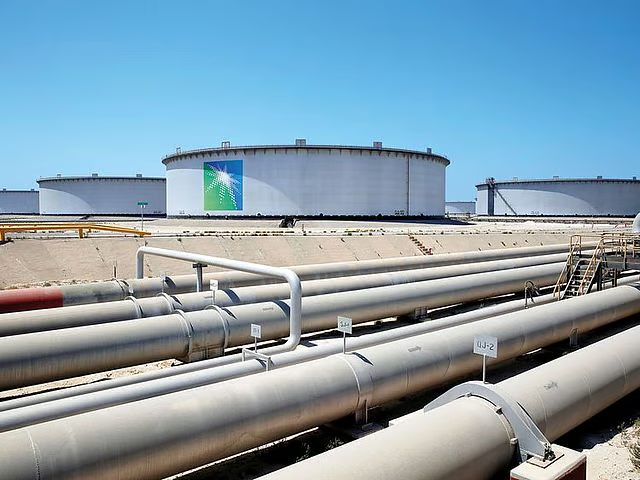
Saudi Arabia has increased the capacity of its East-West Pipeline, which links Abqaiq near the Gulf coast with the Red Sea port of Yanbu, from 2 mbd to 7 mbd. The state oil giant Aramco is also planning a further expansion of up to 2 mbd, potentially completed by 2030/2031. Meanwhile, the UAE is fast-tracking the construction of a second pipeline parallel to its existing Abu Dhabi Crude Oil Pipeline (ADCOP), which will double export capacity through Fujairah and is expected to enter service next year.
Iraq and Potential Regional Collaboration
The US State Department has announced plans to restore a major pipeline linking Iraq's oil fields with Syria's Mediterranean coast, with an initial capacity of 2 mbd. Although no timetable has been set, and political and investment hurdles may delay the project, the initiative underscores the broader regional effort to secure alternative export routes. Additionally, Kuwait and Bahrain, which lack direct pipeline routes bypassing Hormuz, have held discussions with Saudi Arabia about potentially connecting to its pipeline network.