The Pulse Today
BREAKING
Sajib Pledges Aid for 50,000 Flood-Affected People in SonargaonMP Azharul Islam Mannan Distributes Relief Funds to Needy Families in SonargaonParliament Proposes Anti-Gambling Bill with Maximum 7-Year Prison PenaltyOpenAI Unveils 'Schedule' Feature to Boost Task Management in AI ChatbotPrime Minister Tareq Rahman Arrives in Dalian, China for Economic ForumEurope Confronts Intense Heatwave; Conditions Predicted to DeteriorateGold Prices Rise Again in Bangladesh Amid Global Market IncreaseSpaceX's Nasdaq Debut Values Company at Over $2 Trillion, Surpassing AmazonStudy Reveals AI Data Centers Contribute to Local Temperature IncreasesNarayanganj BNP Youth Wing Holds Rally to Welcome New Central CommitteeBangladesh Authorities Seize Indian Cosmetics and Medicines Worth Over Tk 30 Lakh in SylhetUGC Chairman Emphasizes Ethical Values, Tolerance, and Justice in Higher EducationBangladesh Government Sets Ambitious 6-7% GDP Growth Target from TourismHealth Minister Sardar Md. Sakhawat Husain Conducts Surprise Inspection at Gaibandha HospitalBangladesh's Forex Reserves Reach Record $36.47 BillionDhaka Police Arrest 79 in Anti-Crime Operations in TejgaonGovernment Announces Recognition and Support for Victims of Democratic Movements: Saleh ShiblyBangladesh Shilpakala Academy Honors July Martyrs with Commemorative CeremonyPrime Minister's Adviser Emphasizes Unity and Government Commitment Post-July UprisingMinister Dulu Highlights Cultural Practices for Building Value-Based YouthMir Helal Uddin Advocates for Honesty and Public Service in New Bangladesh VisionMinister Afroza Khanam Urges Enhanced Safety Measures in Bangladesh's Tourism SectorBangladesh Cricket Coach Expresses Disappointment Over Nahid Rana's Injury AbsenceBangladesh Proposes Myanmar Gas Pipeline to Address Domestic DemandEx-Bangladesh Cricketer Imrul Kayes Earns Cricket Australia Level-2 Coaching Certification

The Economic Impact of the FIFA World Cup: Job Creation, Income Boost, and Global Growth

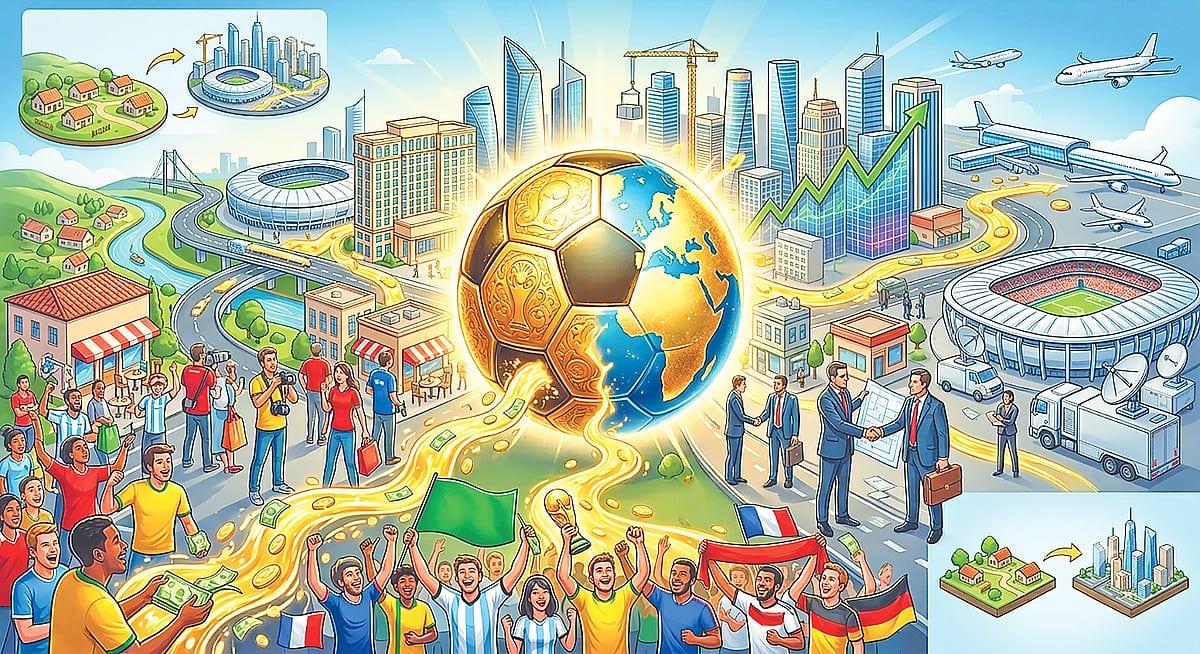
The FIFA World Cup not only changes the fortunes of nations but also has a profound impact on global economies.

By Staff Correspondent
Share
বিশ্বকাপের সঙ্গে অর্থনীতি মিশলে যা হয়

The FIFA World Cup is more than just a sporting event; it is a global economic phenomenon. The 2026 World Cup, set to be held in the United States, is expected to generate $8.1 billion in economic activity worldwide, according to a study by FIFA, the World Trade Organization, and Open Economics. This includes $3.5 billion in the U.S. and $4.6 billion in other countries, contributing $4.9 billion to the global economy after expenses.

The tournament is expected to boost incomes and create jobs. It could generate $2.8 billion in income for workers, officials, and employees involved, with $1.2 billion in the U.S. and $1.6 billion elsewhere. Additionally, it is projected to create the equivalent of 824,000 full-time jobs globally, including 185,000 in the U.S. and 639,000 in other countries.

The expansion of the World Cup from 32 to 48 teams in 2026 is expected to further increase economic activity through more matches, spectators, tourists, broadcasting revenue, and business opportunities. However, not all host countries benefit equally. While Germany's 2006 World Cup is considered a success due to its strong infrastructure, South Africa in 2010 and Brazil in 2014 faced significant financial losses from excessive spending on new stadiums and infrastructure.

For participating countries, the financial rewards can be substantial. The prize money for World Cup winners has increased dramatically over the years, from $14 million for Italy in 1982 to $42 million for Argentina in 2022. This year's champion will receive $50 million. Even for spectators, watching the World Cup can have mental health benefits, according to a study published in BMC Psychology, fostering social connections and a sense of identity.

The Long-Term Impact

Beyond the final whistle, the World Cup leaves a lasting legacy. New tourists visit, hotel businesses thrive, and cities gain international recognition. Less visible impacts include increased sports participation, expanded local businesses, new job opportunities, and enhanced national branding. The 2022 Qatar World Cup, despite its financial challenges, served as a project for national branding and economic diversification.

FAQ

How much economic activity is expected from the 2026 World Cup?
The 2026 World Cup is expected to generate $8.1 billion in global economic activity.
How many jobs could the World Cup create?
It is projected to create the equivalent of 824,000 full-time jobs globally.
What was the prize money for the 2022 World Cup winner?
The 2022 World Cup winner, Argentina, received $42 million.

Topics

Comments

More in business

See all →

Latest stories