For decades, people living along the Ganges-dependent regions of southwestern Bangladesh have watched rivers shrink, croplands struggle for water and salinity creep deeper into once-fertile areas. Now the ambitious Padma (Ganges) Barrage Project has rekindled hopes among residents, farmers and water managers who see it as a long-awaited solution to the region’s growing water crisis. Approved by the Executive Committee of the National Economic Council (ECNEC), the Tk 33,474-crore project is expected to be implemented over the next seven years. The mega infrastructure initiative aims to restore river flows, improve irrigation and revive ecosystems across nearly one-third of Bangladesh that have been affected by reduced Ganges water entering from upstream. Yet while many welcome the project as a potential game changer, experts warn that large-scale river interventions can also produce unintended environmental consequences if not carefully planned and monitored.
Hope for water, agriculture and rivers
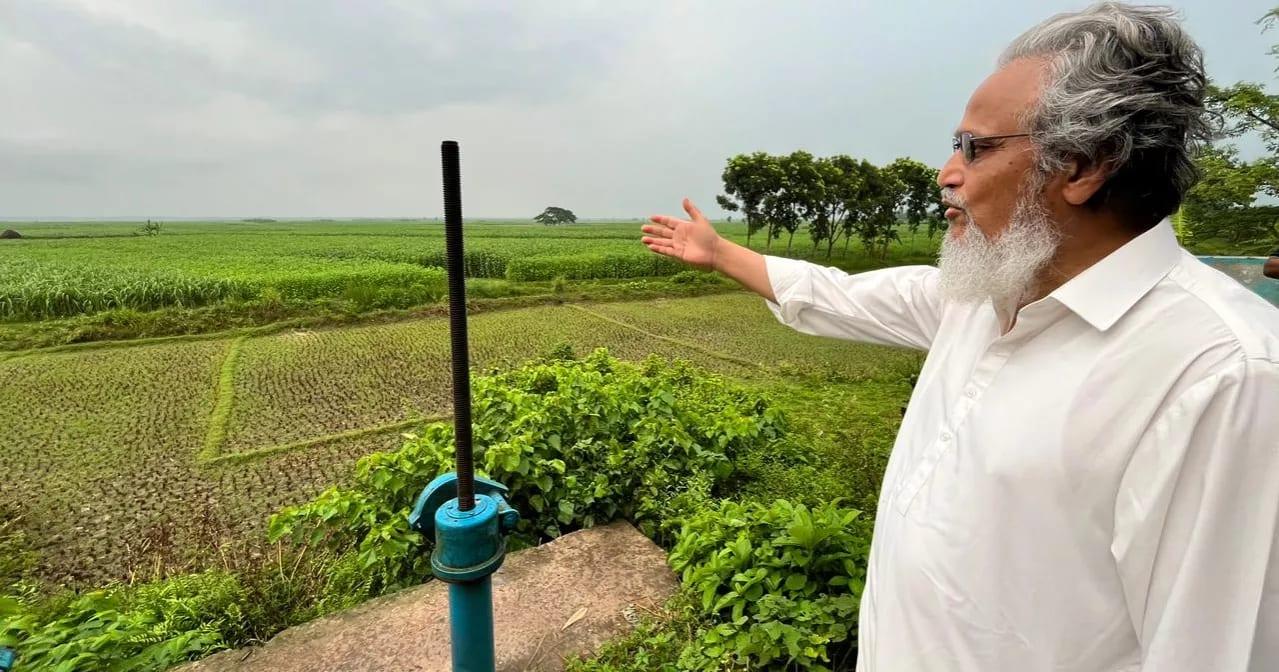
In Rajbari’s Pangsha upazila, where the barrage is proposed near Charjiguri village under Habashpur Union, local residents are already discussing its potential benefits. Survey teams have installed markers near a sluice gate on the flood protection embankment, signalling the planned project site. For many farmers, the promise of a dependable water supply is the project’s biggest attraction. Ayub Kazi, a 50-year-old trader and landowner in the area, believes surface water from the river would be far more beneficial than relying on groundwater. “River water produces better yields. The groundwater here contains iron and is not as good for cultivation,” he said. He added that many diesel-powered irrigation pumps have become difficult to operate because of fuel shortages, making alternative water sources increasingly important.
A region under stress
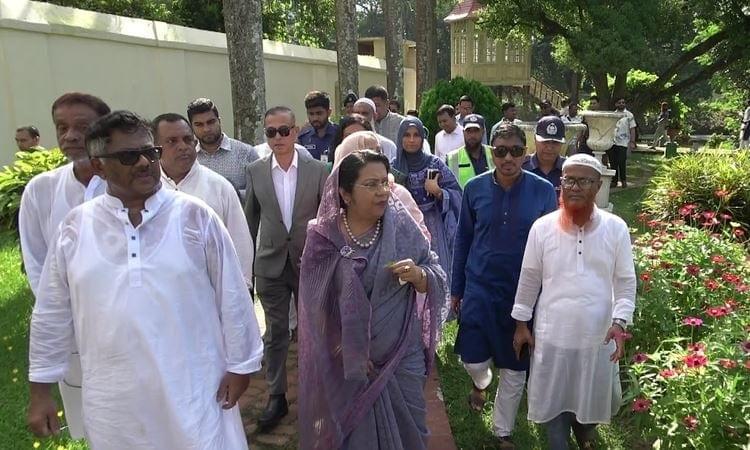
Experts say the consequences of reduced freshwater flow extend far beyond agriculture. Speaking during a recent visit by journalists to Ganges-dependent areas of Kushtia and Rajbari, retired chief engineer and former secretary Engineer Aktar Hossain described the situation as increasingly alarming. He warned that parts of the Khulna region could become unsuitable for habitation by 2050 if salinity intrusion continues unchecked. The visit, organised with the participation of the International Farakka Committee (IFC), highlighted a range of challenges facing the southwest, including declining agricultural productivity, deteriorating fisheries, reduced navigability of rivers and damage to vegetation and wildlife.
Expected gains
Officials of the Bangladesh Water Development Board said the barrage could help reverse many of these trends by retaining water during the dry season and ensuring continuous flow through major distributaries. Engineer Rashidur Rahman, executive engineer of BWDB’s Water Development Division in Kushtia, said the project would help maintain water levels in the Gorai, Modhumati, Hisna and other distributaries of the Ganges. The increased flow, he said, would gradually reduce salinity in southwestern districts and contribute to ecological recovery. The project is also expected to strengthen the Ganges-Kobadak (GK) irrigation scheme, one of the country’s largest irrigation projects. Rashidur Rahman said maintaining river levels at around 10 metres would comfortably exceed the minimum requirement for the GK pumping station and allow irrigation coverage to expand from about 55,000 hectares to 95,000 hectares. Supporters estimate that nearly seven crore people across 19 districts could ultimately benefit through improved irrigation, increased agricultural production, enhanced fisheries and better water security.
Balancing benefits and risks
Despite the enthusiasm, water experts caution against viewing the barrage as a risk-free solution. Large barrages alter natural river dynamics, affecting sediment movement, water quality and ecological processes. Engineer Aktar Hossain stressed that every barrage inevitably carries some negative impacts and that policymakers must focus on minimising those effects through scientific planning and rigorous assessment. “We need to utilise available computer models and conduct comprehensive studies so that adverse impacts remain as limited as possible,” he said. He also argued that discussions on transboundary rivers often focus heavily on water quantity while neglecting water quality concerns. He said pollution carried by the Ganges, including heavy metals, should receive greater attention in negotiations involving upstream and downstream countries. He pointed to international examples where upstream countries have been held accountable for transboundary pollution, citing arrangements between Germany and the Netherlands regarding contamination in the Rhine River.
Beyond water flow
Former Jahangirnagar University vice-chancellor and IFC Bangladesh chief adviser Prof Jasim Uddin Ahmad raised additional concerns about heavy metals transported through Ganges sediments. Such pollutants, he said, could pose long-term risks to both human health and river ecosystems. He also highlighted broader environmental challenges linked to cross-border pollution. Referring to studies conducted under his supervision, Jasim Uddin said emissions from coal-based industries in India contribute to air pollution affecting Bangladesh. According to him, acid rain associated with those emissions may be linked to the top-dying disease that has affected sundri trees in the Sundarbans.
A defining water project
As Bangladesh moves forward with one of its largest water infrastructure projects, expectations remain high among communities that have long struggled with shrinking rivers and increasing salinity. For many in the southwest, the Padma Barrage represents more than a structure across a river. It symbolises a chance to restore water security, revive agriculture and protect livelihoods. But experts say the project’s ultimate success will depend not only on engineering excellence, but also on how effectively environmental risks are anticipated and managed.