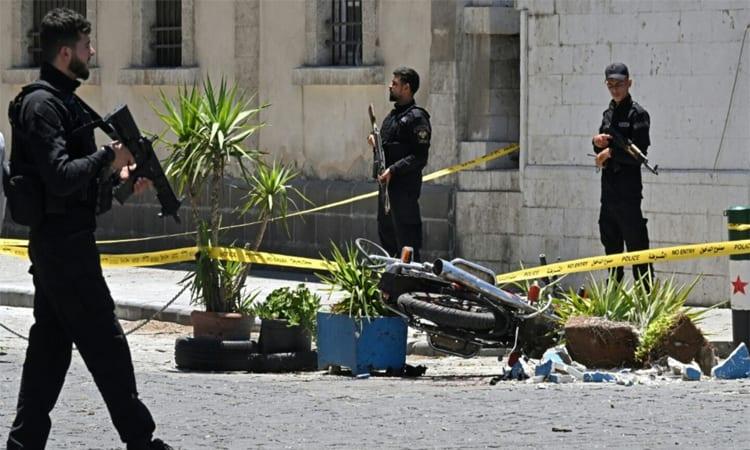
Syrian authorities have detained an IS-linked cell they believe was behind two bomb blasts in Damascus during French President Emmanuel Macron's visit earlier this week. The attacks occurred as Macron became the first European Union head of state to visit Syria since the fall of Bashar al-Assad in 2024.
Blasts During Macron's Visit
The bomb blasts took place on Tuesday, killing one person and wounding dozens. The explosives were planted near the Four Seasons Hotel, where Macron had spent the night. One bomb was placed in a garbage container, and the other in a vehicle near the hotel. The explosions happened after Macron left the building and just before his arrival at the presidential palace to meet Syrian President Ahmed al-Sharaa.
Capture of IS-Linked Cell
Syria's Interior Minister Anas Khattab announced that the cell responsible for the bombings is now in custody. Preliminary investigations indicate the cell was affiliated with the Islamic State (IS) group. The interior ministry stated that the cell was captured following simultaneous raids across Damascus and its countryside.
Security and Diplomatic Implications
The attacks cast a shadow over Macron's visit, which aimed to signal the normalization of relations between Syria and the European Union. Despite the blasts, Macron and al-Sharaa vowed to boost ties, announcing plans to exchange resident ambassadors. Macron emphasized the need to not let such attacks destabilize the region.
Background and Context
Syria joined the US-led coalition against IS last year, following the group's near eradication in Iraq and Syria by 2019. The recent blasts in Damascus are the second this month, highlighting ongoing security challenges. Macron had postponed announcing the date of his visit until his plane landed on Monday for security reasons.
Significance for Bangladesh
The capture of the IS-linked cell and the security measures taken during Macron's visit underscore the persistent threat of terrorism in the region. For Bangladesh, this incident highlights the importance of robust counter-terrorism strategies and international cooperation in combating extremist groups. It also emphasizes the need for vigilance, especially given the global nature of terrorist networks.