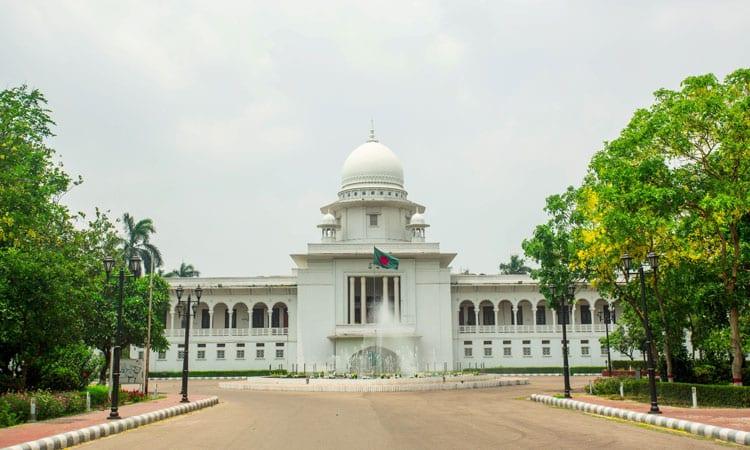
A writ remains one of the most powerful constitutional tools for protecting citizens' rights, with a single petition filed before the High Court often leading to relief and lasting benefits for thousands of people across the country. Under Article 102 of the Constitution, five types of writs may be filed: Writ of Habeas Corpus, Writ of Mandamus, Writ of Certiorari, Writ of Prohibition, and Writ of Quo Warranto.
Types of Writs and Their Purposes
The Writ of Habeas Corpus is invoked when a person is detained or arrested without lawful authority. The High Court directs the authorities to produce the detained person before the court and examine the legality of the detention. The Writ of Mandamus compels a public authority or government official to perform a legal duty that they have failed or refused to perform. The Writ of Certiorari enables the High Court to quash an order or decision of a subordinate court, tribunal or public authority if it has acted without jurisdiction, exceeded its jurisdiction, or committed an error of law. The Writ of Prohibition prevents a subordinate court or tribunal from proceeding with a case that falls outside its lawful jurisdiction. The Writ of Quo Warranto allows the High Court to examine the legal authority under which a person occupies a public office and determine whether the appointment is lawful.
Public Interest Litigation and Landmark Judgments
The legal foundation of public interest litigation (PIL) was laid by the landmark Mohiuddin Farooque v. Bangladesh case. The court held that any individual or organisation may seek legal remedies in the public interest even without being directly affected by the matter, provided the issue concerns public welfare. This has led to numerous writ petitions setting important judicial precedents in securing justice for individuals and protecting the public interest.
Significant Rulings and Their Impact
Several significant rulings have resulted from writ petitions. Following a writ petition filed by Supreme Court lawyer Ishrat Hasan on behalf of infant Umair, the High Court directed the authorities to establish breastfeeding corners at workplaces, airports, bus terminals, railway stations, shopping malls and other public places, as well as in government and autonomous institutions. Another landmark ruling recognised the Turag River, along with all rivers in the country, as legal entities, strengthening efforts to protect rivers and evict illegal encroachers. The High Court also directed educational institutions to allow admission using only the mother's name on admission forms, enabling children who are unable to identify or disclose their father's identity to pursue education without facing discrimination.
Ensuring Rights and Justice
A writ petition is a constitutional right that allows the courts to intervene and uphold justice. For instance, child worker Naim Hasan Nahid received a total compensation of Taka 30 lakh after a six-year legal battle, following a writ petition filed by his father. The High Court has also directed all universities and university colleges to form anti-ragging committees and implement the Ministry of Education's anti-ragging policy. Additionally, all hospitals nationwide have been directed to provide immediate medical care to critically injured patients, reinforcing citizens' right to life-saving emergency healthcare.
The Importance of Responsible Filing and Media Coverage
Supreme Court senior lawyer Barrister Salauddin Dolon emphasised the importance of keeping the door to public interest litigation open for the greater good of society and the state. However, he also noted that many people file writ petitions on irrelevant issues merely to gain media attention. He urged the media and journalists to act responsibly to prevent the exploitation of matters lacking genuine public interest for personal gain.