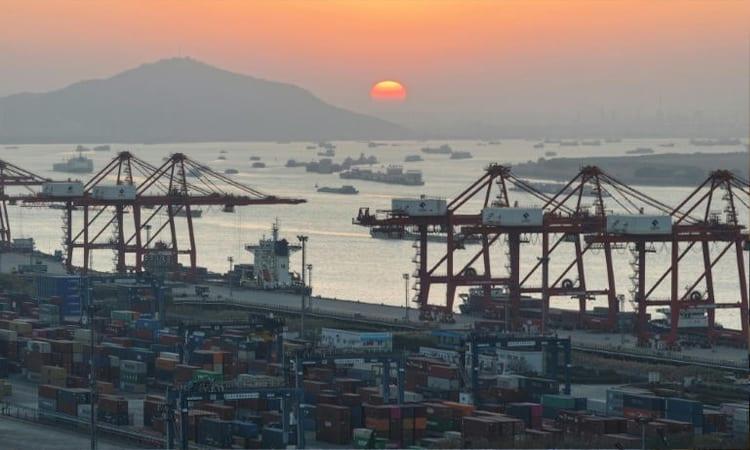
Trade tensions between the European Union and China are set to be a key focus as top EU trade official Maros Sefcovic hosts his Chinese counterpart Wang Wentao in Brussels for day-long discussions on Monday. The EU is increasingly concerned about growing trade imbalances with China, fearing that it could lose certain industries if it does not take action against a surge of cheap Chinese goods flooding the European market.
Growing Concerns Over Trade Imbalances
The European Union's trade deficit in goods with China reached approximately 360 billion euros ($410 billion) in 2025, indicating that the bloc imported significantly more from China than it exported. Brussels argues that Chinese firms have an unfair advantage due to massive state subsidies, a claim supported by data from the Organisation for Economic Co-operation and Development (OECD). Between 2005 and 2024, Chinese companies received around three to eight times more government support than businesses in the OECD, according to the OECD.
EU's Trade Defence Measures
In response to these imbalances, the EU has an arsenal of trade defence tools at its disposal. These include imposing higher tariffs if investigations prove that companies are selling goods at unfairly low prices or if there is state support giving an unjust advantage to manufacturers. Brussels could also implement safeguard measures, such as quotas, in the event of a sudden surge in imports. Additionally, the European Commission is developing an instrument that would compel businesses to diversify their suppliers in critical sectors like chips and rare earths.
Avoiding a Trade War
Despite growing acceptance of the need to get tougher, the EU has shown no appetite for a painful trade war with China. Beijing has warned it is ready to retaliate against any measures it believes target China, having previously imposed duties on European cognac and conducted anti-dumping probes into pork and dairy products. Although China's envoy to the EU, Cai Run, echoed the retaliation warning last week, he also urged dialogue, stating that the EU and China are "partners, not rivals, and certainly not enemies."
Next Steps
After the discussions in Brussels, Wang Wentao will travel to London, continuing his tour aimed at understanding the EU's stance on trade and seeking potential solutions to the mounting tensions. The relationship remains significant for both sides, with the EU being China's second-largest trading partner.