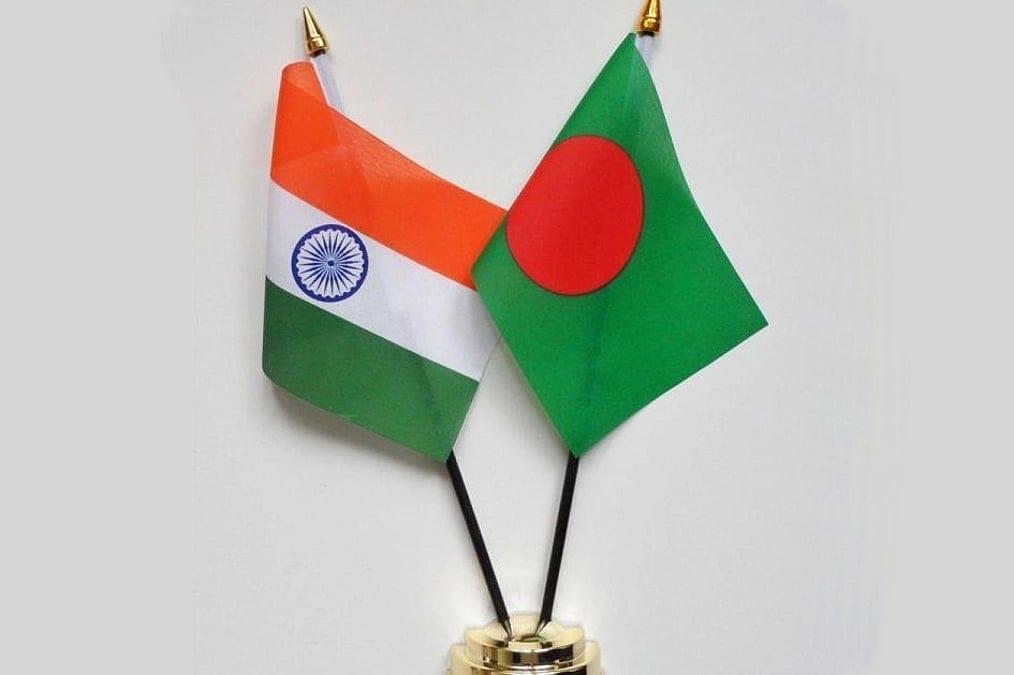
India's imposition of restrictions on certain Bangladeshi products a year ago has resulted in a decrease in exports from Bangladesh to India. In the first ten months of the current fiscal year (July-April), Bangladesh's exports to India have fallen by approximately 3.42%.
The decline is particularly noticeable in sectors such as ready-made garments, processed agricultural products, raw jute and jute goods, leather-free shoes, and leather and leather goods. However, exports of plastic products have seen a slight increase.
According to the Export Promotion Bureau (EPB), from July to April of the current fiscal year, Bangladesh exported goods worth $146.58 million to India, compared to $152.78 million in the same period last fiscal year. This represents a decrease of 3.42%.
Several exporters have noted that the imposition of restrictions has increased the cost of exporting goods to India, reducing Bangladesh's competitiveness and impacting exports. They suggest that the current government should take steps to relax these restrictions through dialogue with the Indian government.
Despite the decline, India remains an important export market for Bangladesh. In the 2021-22 fiscal year, Bangladesh exported $199 million worth of goods to India, though this figure has decreased in the subsequent two years. In the last fiscal year, India was Bangladesh's eighth-largest export market, with exports worth $176 million, a 12% increase from the previous year.
In April of last year, the Bangladesh government banned the import of yarn from India via land ports. In response, India imposed restrictions on the export of garments, food products, jute goods, cotton-yarn waste, plastic products, and wooden furniture. Further restrictions on jute goods were imposed on August 11, and India also initiated an investigation into imposing remedial tariffs on the import of jute goods from Bangladesh.
Under the restrictions, jute and garment products cannot be exported from Bangladesh to India via land ports and must be exported through Mumbai's Nhava Sheva port. Food products, soft drinks, wooden furniture, cotton-yarn waste, and plastic products can be exported via land ports in West Bengal, excluding Burimari and Banglabandha.
Former member of the Bangladesh Trade and Tariff Commission, Mustafa Abid Khan, believes that the complexities in trade between India and Bangladesh are primarily political. He suggests that the restrictions were imposed by India after Bangladesh banned the import of Indian yarn via land ports, indicating that the issue can be resolved through dialogue.
The largest export from Bangladesh to India is ready-made garments. In the first ten months of the current fiscal year, $50 million worth of garments were exported, a decrease of about 11% compared to the same period last year.
Fazle Shamim Ehsan, Executive President of the Bangladesh Knitwear Manufacturers and Exporters Association (BKMEA), emphasizes the importance of the Indian market and calls for effective government initiatives to relax the restrictions. He notes that the interim government first banned the import of Indian yarn via land ports, followed by India's imposition of restrictions. However, Indian yarn is now being imported via sea routes.
The second-largest export from Bangladesh to India is processed agricultural food. In the first ten months of the current fiscal year, $18.08 million worth of these products were exported, a decrease of 0.66% compared to the same period last year.
The third-largest export is raw jute and jute products, with $11 million worth of these products exported in the first ten months of the current fiscal year, a decrease of 24% compared to the same period last year.
Tapas Pramanik, Chairman of the Bangladesh Jute Spinners Association, highlights the importance of the Indian market for jute products and calls for government initiatives to remove barriers through dialogue with India.
Khondaker Golam Moazzem, Research Director of the private research institution CPD, notes that India is becoming an important partner in global trade. With the finalization of a Free Trade Agreement (FTA) with the European Union (EU) and ongoing FTA negotiations with the United States, India's trade is expected to increase, presenting opportunities for Bangladesh to expand its business there. He emphasizes the need for special initiatives to normalize trade relations between the two countries, suggesting that discussions at the level of Prime Minister, Foreign Minister, and Commerce Minister could lead to a quick resolution.