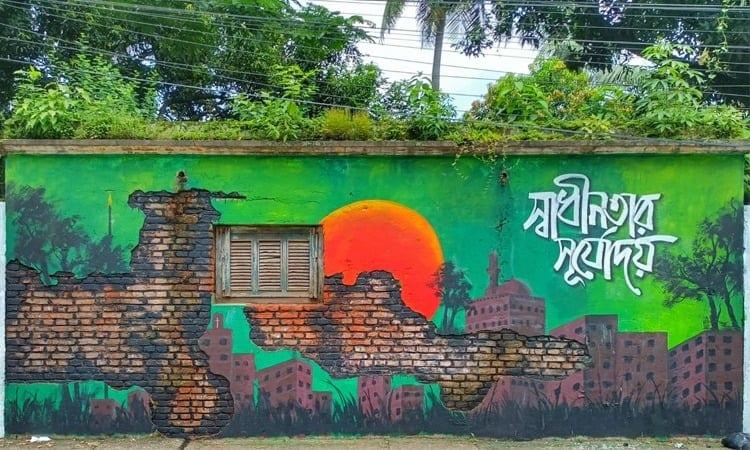
July Shaheed Dibosh (July Martyrs' Day) is being observed today across Bangladesh. The day commemorates Abu Sayed, the first martyr of the 2024 student-led quota reform movement, and all others who lost their lives during the July Uprising. Marking the day, the national flag remains at half-mast on all government, semi-government, and autonomous buildings, as well as educational institutions and Bangladesh missions abroad. Religious institutions across the country are holding special prayers and supplications for the salvation and forgiveness of the martyrs.
July 16, 2024, is widely viewed as the catalyst that transformed a localised government job quota reform movement by students into a nationwide mass uprising. On this day, Abu Sayed, a 23-year-old student at Begum Rokeya University in Rangpur, was shot and killed by police. Video footage of him standing unarmed with his arms outstretched in defiance became the defining visual symbol of resistance. Alongside Abu Sayed, at least five other demonstrators were killed across Dhaka, Chattogram, and Rangpur on July 16. This daylight violence triggered intense public outrage, drawing citizens, families, and workers out to the streets to support the students.
This momentum directly led to the '36 Days of July' movement, resulting in the fall of the Awami League government on August 5, 2024. On July 2, 2025, the Cabinet Division issued an official gazette notification declaring July 16 as the 'July Martyrs' Day'. On this occasion, President Mohammed Shahabuddin and Prime Minister Tarique Rahman issued separate messages, paying tribute to the martyrs and calling for collective efforts to build an equitable Bangladesh.
Rapid Action Battalion (RAB) has announced comprehensive security measures across Bangladesh to ensure the peaceful observance of the July Martyrs' Day. Security has been reinforced at programme venues and July memorial sites.