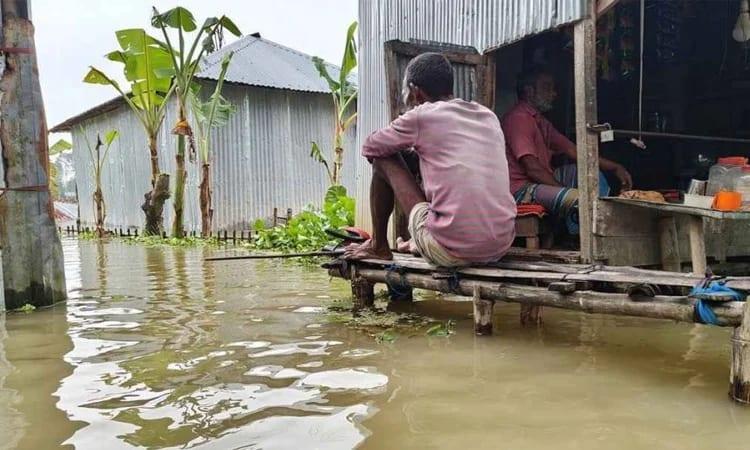
In the wake of increasingly frequent floods, experts stress the need for Bangladesh to improve its flood forecasting system, increase investment in disaster management, and implement better urban planning to reduce flood-related losses. Professor Dr. Md. Humayun Kabir, Dean of the Faculty of Earth and Environmental Sciences at the University of Dhaka, emphasized that a reliable flood forecasting and early warning system is crucial. He noted that timely forecasts can significantly reduce casualties and economic losses by allowing authorities to operate drainage pumps, mobilize emergency services, and enable people to take precautionary measures.
Professor Kabir highlighted the importance of modern weather monitoring technology, including fully functional weather radars, real-time rainfall and river monitoring, and stronger coordination among agencies responsible for weather forecasting, water resources, and disaster management. He also called for increased budgetary allocation for disaster management to enhance forecasting capacity, preparedness, and emergency response.
The Dean further suggested that the government should adopt long-term urban water management strategies by reconnecting Dhaka's canals, wetlands, and surrounding water bodies to allow excess rainwater to drain naturally during heavy rainfall. He pointed out that years of unplanned urbanization have disrupted the city's natural drainage system, leading to increased flood risks.
To mitigate waterlogging in Dhaka, Professor Kabir recommended improving the drainage system, restoring degraded wetlands, maintaining and creating retention ponds, and promoting rainwater harvesting. He emphasized that rainwater should be treated as a resource rather than waste and suggested that the government begin implementing rainwater harvesting systems in major public institutions before expanding the initiative nationwide.
Professor A.K.M. Saiful Islam of the Institute of Water and Flood Management (IWFM), Bangladesh University of Engineering and Technology (BUET), explained that Bangladesh experiences different forms of flooding, each requiring unique management approaches. He noted that recent flooding was triggered by a monsoon depression that transported a large volume of moisture from the Bay of Bengal into the eastern region of the country, leading to intense orographic rainfall.
Professor Saiful Islam highlighted that extreme rainfall is becoming more common due to climate change, which increases atmospheric moisture, resulting in more intense downpours. He stressed that rapid and unplanned urbanization, encroachment on wetlands and canals, obstruction of natural drainage, and poor solid waste management have significantly increased flood risks in cities. He called for the strict implementation of urban master plans, building regulations, and zoning policies, alongside improved maintenance of drainage infrastructure and embankments.