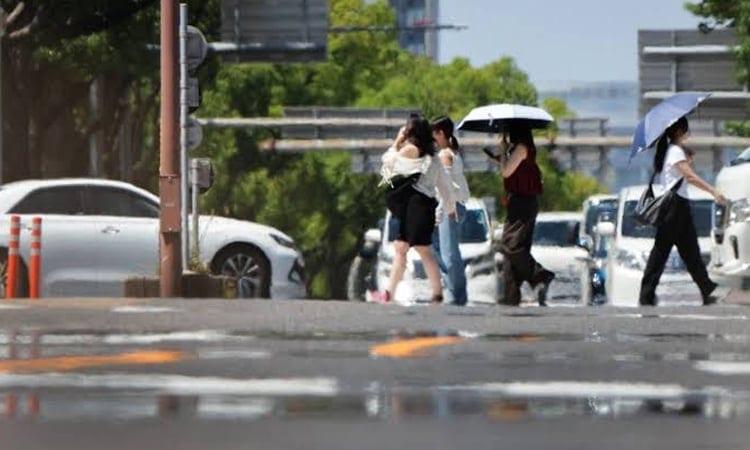
Japan recorded its fifth consecutive 'cruelly hot day' on Saturday, marking the longest streak of extreme heat since records started in 2010. The new meteorological term 'kokushobi', or 'cruelly hot day', was devised this year to warn people of temperatures above 40°C. Six cities in central Japan surpassed this threshold, prompting heatstroke warnings. Close to 11,000 people sought emergency medical care between July 13 and 19, with 14 pronounced dead upon arrival. Japan experiences about 1,300 heat-related deaths annually and aims to halve this number by 2030. Scientists link the increasing frequency and intensity of extreme heat to human-induced climate change.
Unprecedented Heatwave
The term 'kokushobi' was introduced by the Japan Meteorological Agency (JMA) to more effectively call for vigilance against extremely high temperatures. Although it does not trigger any official measures nationwide, it serves as a stark warning for the public. The highest recorded temperature in Japan was 41.8°C in Isesaki, north of Tokyo, on August 5, 2025. Last year was Japan's hottest summer on record, highlighting the growing threat of extreme heat.
Public Health Concerns
The Fire and Disaster Management Agency reported that 453 people received hospital treatment for heat-related issues in Tokyo on a single day, the highest number since records began. The agency urged the public to regard the extreme heat as a 'disaster'. With Japan aiming to halve its annual heat-related deaths by 2030, the current heatwave underscores the urgent need for effective heat mitigation strategies.