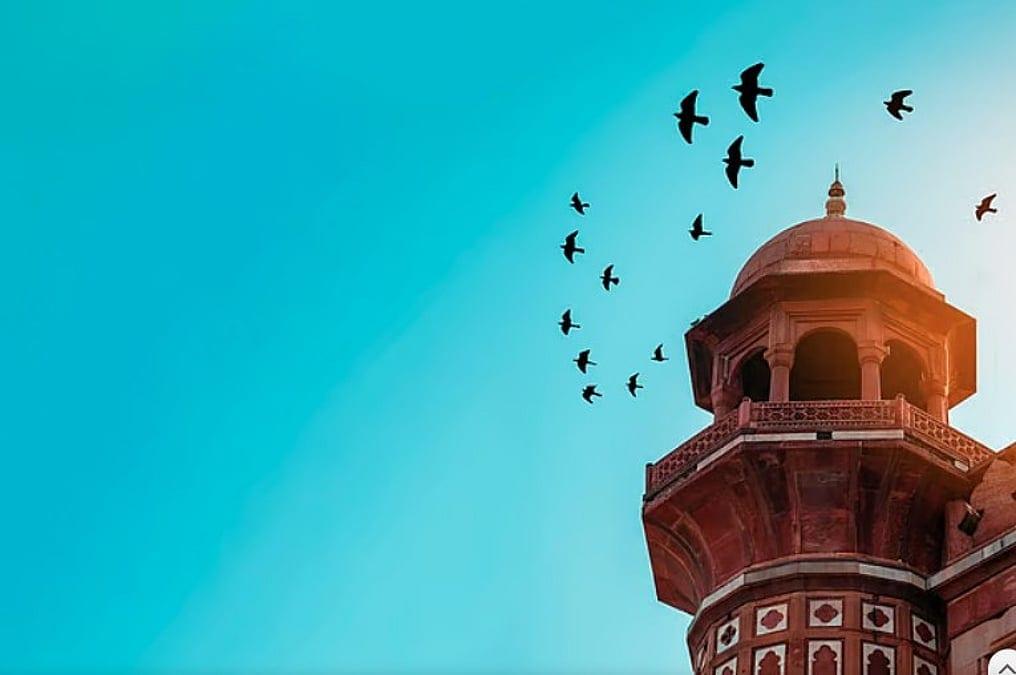
Madina Munawwara, formerly known as Yathrib, is the cherished city of Prophet Muhammad (PBUH). After his migration (Hijra), it became known as Madinat un-Nabi or the City of the Prophet. It is a place of refuge, love, patience, and self-sacrifice, and a sacred ground for righteous deeds.
Prophet Muhammad (PBUH) said, 'Whoever visits my grave, I will intercede for them.' (Dar Qutni: 2695; Bayhaqi: 3862) He also said, 'Whoever performs Hajj but does not visit my grave has wronged me.' (Dar Qutni, page: 272)
The Prophet (PBUH) also stated, 'Whoever performs 40 prayers in my mosque without missing any will be free from hypocrisy and the torment of Hell.' (Tabarani: 5444, Volume: 5, page: 325; Tirmizi: 200) It is also mentioned, 'One Rak'ah prayer in Masjid an-Nabawi is equivalent to 50,000 Rak'ah prayers elsewhere.' (Ibn Majah: 752)
The most sacred place in Masjid an-Nabawi is the Rawdah Sharif, where the Prophet's (PBUH) grave is located. Adjacent to it are the graves of Hazrat Abu Bakr (RA) and Hazrat Umar (RA). There is an empty space reserved for Hazrat Isa (AS).
The area from the Rawdah Sharif to the Prophet's (PBUH) Minbar is known as 'Riyad ul-Jannah' or the Garden of Paradise. It contains six pillars, each with its own significance.
Madina Munawwara is also home to Jannat ul-Baqi, a cemetery where numerous Sahaba, Tabi'in, and righteous Muslims are buried. The city is also near the historic Mount Uhud, where significant battles and events took place.