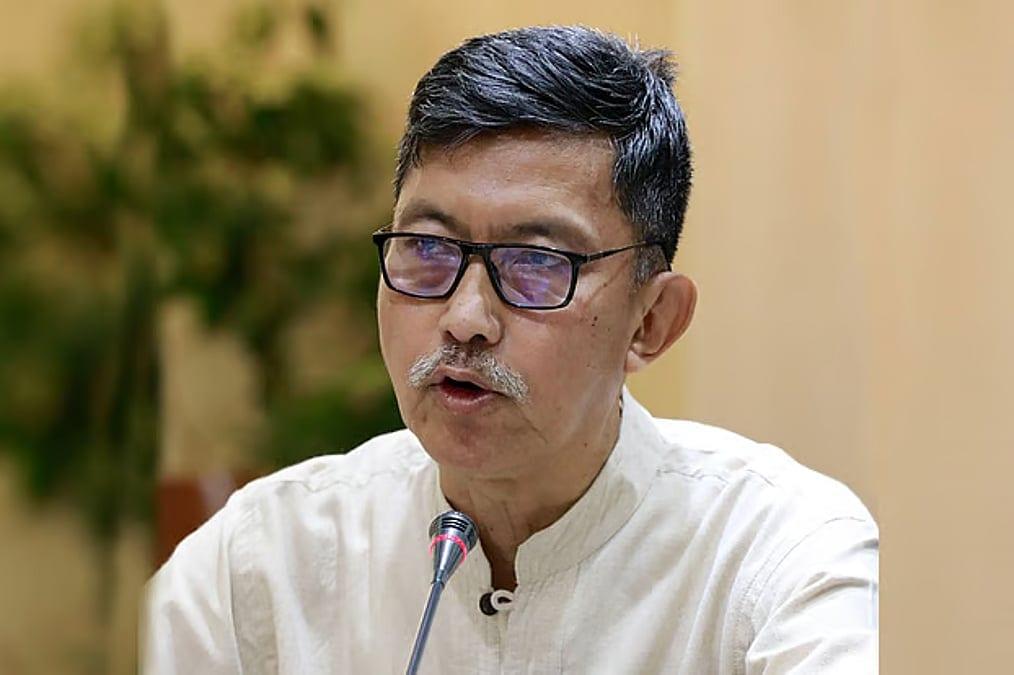
Dipen Dewan, the Minister of Chittagong Hill Tracts Affairs, resigned on the first working day after Eid, submitting his resignation letter to the Prime Minister's Office at the Secretariat on Monday morning. His resignation, coming just over three months after the formation of the government, has sparked various discussions. These include issues related to ministry management, the restructuring of the Hill District Council, and internal politics within the Rangamati BNP.
In his resignation letter, Dewan cited physical health complications, stating that his illness was hindering his ability to perform his ministerial duties effectively. He emphasized the need to maintain the momentum of the current government's development and administrative activities.
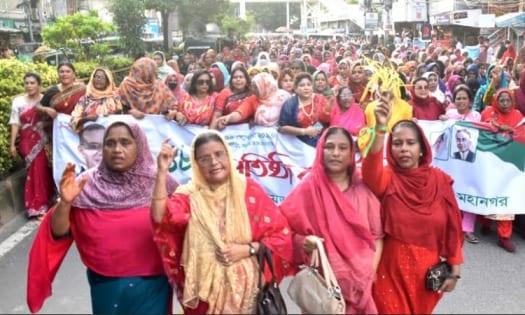
Supporters of Dewan staged a road blockade and protest in Rangamati, demanding the withdrawal of his resignation and his reinstatement. They claim that he was forced to resign due to pressure. Saiful Islam, Vice President of Rangamati District BNP, told Prothom Alo that Dewan is not physically unwell.
There has been significant discussion about Dewan's resignation being linked to issues of authority in ministry management, control over Rangamati District BNP politics, and the appointment of administrators in the Chittagong Hill Tracts District Council. However, no definitive reason for his resignation has been confirmed by government sources.
Multiple political sources suggest that Dewan had been uncomfortable since becoming the Minister of Chittagong Hill Tracts Affairs. This discomfort is attributed to the appointment of Mir Mohammad Helal Uddin, MP from Chittagong-5 (Hathazari), as Deputy Minister. This is the first time a Deputy Minister from outside the Hill Tracts region has been appointed, raising questions among the hill people who believe the ministry should be reserved for representatives of the hill tribes.
Social media speculation suggests that Dewan's resignation was due to a rift with Deputy Minister Mir Mohammad Helal Uddin. However, Helal Uddin denied any distance, stating they have a good relationship and that he called Dewan upon hearing of his resignation but was unable to reach him.
Another speculated reason for Dewan's resignation is a difference of opinion regarding the restructuring of the Hill District Councils in Rangamati, Khagrachhari, and Bandarban. A source claims that the Prime Minister's Office instructed Dewan to expedite the restructuring, but he was delaying the process.
Another source alleges that Dewan wanted to appoint administrators of his choice to the District Councils but was unable to do so. There is also talk that he was trying to place someone from his close circle in a position.
Sources close to Dewan claim he was sincere about the implementation of the Chittagong Hill Tracts Accord and supported government talks with the accord's signatory, the Chittagong Hill Tracts Jana Sanghati Samiti (JSS). He reportedly wanted Prime Minister Tareq Rahman to hold talks with JSS Chief Jyotirindra Bodhipriya Santu Larma.
Dipen Dewan, a postgraduate in law from Dhaka University, joined the judicial service and later joined the BNP in 2005 after resigning as a joint district judge. He became the Rangamati District BNP President in 2010 but faced internal party conflicts. In 2016, he was made the BNP's Central Religious Affairs Co-Secretary. Despite distancing himself from local politics, he won the Rangamati seat in the 13th National Parliament election with a significant margin and was appointed Minister for the first time.
Dewan's resignation has been met with protests in Rangamati, with BNP leaders and activists demanding his reinstatement. Saiful Islam believes Dewan's resignation is detrimental to BNP politics, hill politics, and all communities in the hills. Sajamang Marma, Senior Vice President of Kaukhali Upazila BNP and Executive Member of District BNP, claims Dewan's cited reasons for resignation are incorrect and that he resigned under pressure.
The BNP government, led by Prime Minister Tareq Rahman, was formed on February 17 after the general election on February 12. With Dewan's resignation, the cabinet now comprises 48 members, including 24 full ministers, 23 deputy ministers, and 10 advisors with ministerial status. There has been ongoing discussion about reorganizing the cabinet, and Dewan's resignation adds to this discourse. His resignation so soon after the government's formation is a rare occurrence in the country.