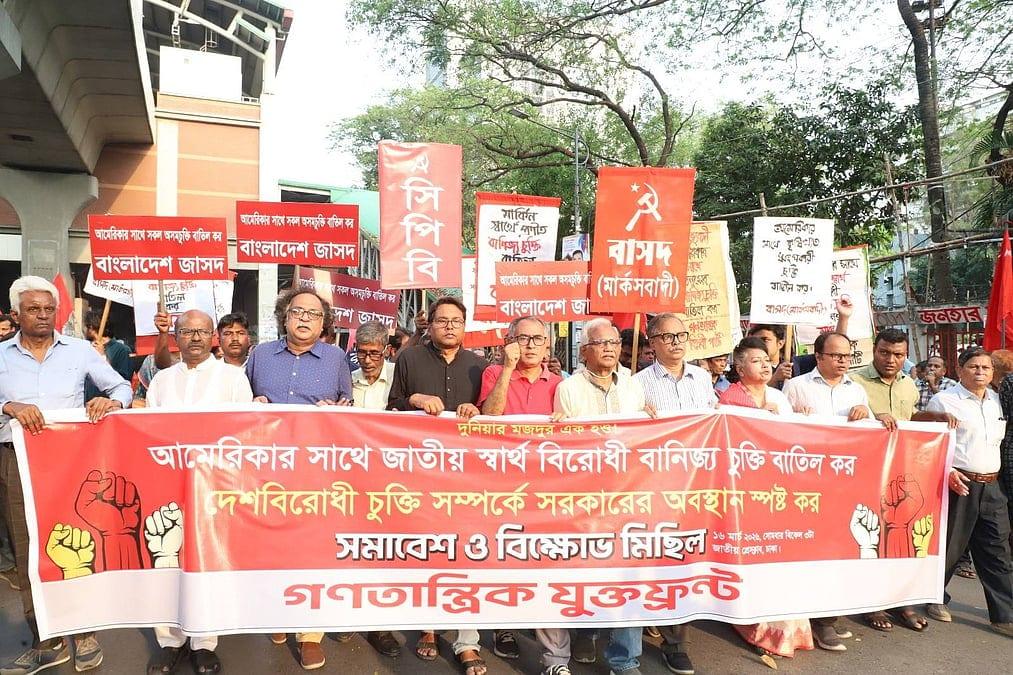
Left-wing parties in Bangladesh are facing a severe decline in voter support and political relevance. In the recent 13th National Parliament Election, all candidates from the left-wing alliance lost their deposits. The alliance, known as the 'Democratic United Front,' consisted of nine left-wing parties but failed to secure a single seat. Key leaders from these parties received minimal votes, highlighting their diminishing influence. The left-wing parties, traditionally focused on advocating for the poor, workers, and farmers, have struggled to resonate with these groups or urban middle-class voters. The rise of Islamist parties and the dominance of centrist parties like the Awami League and BNP have further marginalized the left. Internal divisions and lack of unity among left-wing parties have exacerbated their decline. Historically, left-wing parties had some success, but they have not been able to sustain it, leading to their current irrelevance in both politics and elections.
Historical Context and Current Challenges
Left-wing parties in Bangladesh have a history of advocating for the poor and marginalized, but their influence has waned over the years. In the 1991 election, the Communist Party of Bangladesh (CPB) won five seats, but since then, their performance has steadily declined. The alliance formed by left-wing parties in the recent election failed to field a unified candidate in many constituencies, leading to further fragmentation. Key leaders from these parties received minimal votes, with some prominent figures failing to secure even a thousand votes. The left-wing parties' inability to gain traction in traditional strongholds and their failure to appeal to new demographics have contributed to their current predicament.
Future Prospects and Internal Divisions
The future of left-wing politics in Bangladesh appears uncertain. Prominent left-wing politician Professor Mozaffar Ahmed, who once held significant influence, has seen his party's support dwindle. Similarly, other left-wing leaders have struggled to maintain their electoral success. Internal divisions and lack of unity among left-wing parties have hindered their ability to present a cohesive front. Despite these challenges, some left-wing leaders remain optimistic, believing that the rise of capitalism and religious nationalism will eventually create an opportunity for left-wing politics to regain strength. However, this will require significant planning, strategy, and unity among left-wing parties.