The government is allocating a total of 1 lakh 45 thousand crore taka for the social safety sector in the upcoming 2026-27 fiscal year budget. This represents an increase from the current fiscal year's allocation of 1 lakh 16 thousand 731 crore taka. The previous fiscal year saw an allocation of 1 lakh 36 thousand 26 crore taka for this sector.
New programs such as Family Cards and Farmer Cards are being introduced, alongside increases in the number of beneficiaries and allowance amounts for existing programs like old-age allowances.
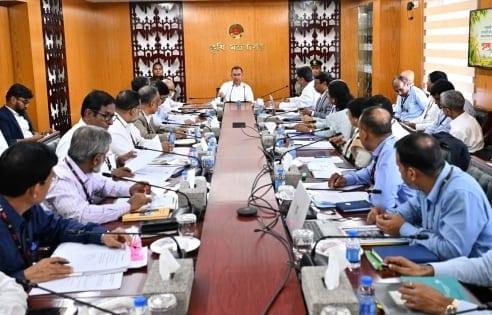
The Minister of Finance and Planning, Amir Khosru Mahmud Chowdhury, who chairs the Cabinet Committee on Social Safety Programs, finalized the number of beneficiaries and allowance rates in a meeting held on May 7 at the Secretariat. The Finance Minister signed the minutes of this meeting on May 20. Sources from the Finance Division indicate that the Finance Minister is focusing on increasing the number of beneficiaries and per capita allocation in the upcoming budget to reduce poverty, social inequality, and improve living standards among the poor, marginalized, and vulnerable populations.
It has been decided that beneficiaries of social safety programs must have a National Identity Card (NID). For individuals under 18 years of age, birth registration and their guardians' NIDs are required. To ensure that the correct individuals are selected as beneficiaries under social safety programs, a 'Dynamic Social Registry (DSR)' will be implemented. The DSR is a database that facilitates the online storage and analysis of beneficiary information and determines their eligibility.
Stakeholders have identified several challenges in the social safety sector, including incorrect beneficiary selection, low allowances, inadequate data storage and coordination, lack of employment-oriented programs, administrative weaknesses, and irregularities. Ensuring that genuine poor individuals are correctly identified and that allowances reach them is one of the key challenges in this sector.
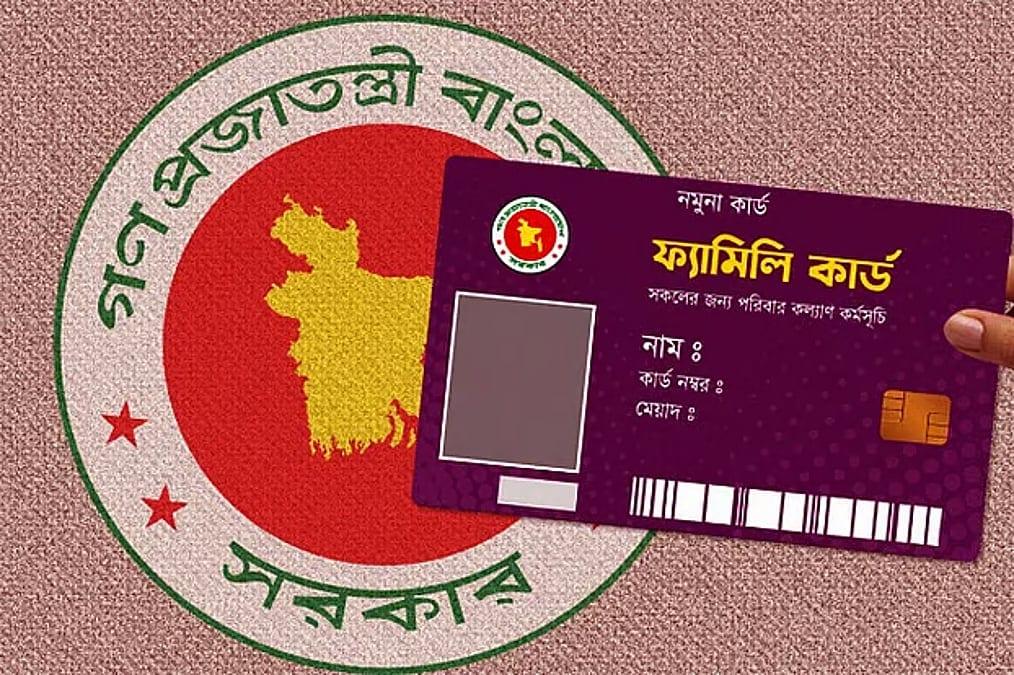
For the first time, eight new programs will be introduced in the upcoming fiscal year, including the Family Card program. In the upcoming fiscal year, 41 lakh beneficiaries will receive Family Cards. Each female-headed household will receive 2,500 taka per month, amounting to a total expenditure of 12,374 crore taka.
The implementation of the Family Card project on a pilot basis began in the current fiscal year. Prime Minister Tareq Rahman inaugurated the project for female-headed households on March 10. A meeting chaired by the Finance Minister on April 27 reviewed the progress of the Family Card implementation. It was announced that 1 crore 61 lakh families will receive Family Cards over five years, at a cost of 1 lakh 34 thousand crore taka.
Other new programs include monthly honorarium allowances for families of martyrs and injured individuals from the July Uprising. A total of 16,513 beneficiaries have been identified across four categories. The monthly allowances range from 10,000 to 20,000 taka, with an annual expenditure of 237 crore 25 lakh taka.
The Farmer Card program will benefit 42 lakh 50 thousand individuals, with each cardholder receiving 2,500 taka annually. The total expenditure for this program will be 1,062 crore 50 lakh taka.
A new program has been introduced to provide honorariums to individuals working in mosques and other places of worship. A total of 2 lakh 55 thousand 666 beneficiaries have been identified, including 86 thousand 833 imams, priests, and Bihar headmasters, an equal number of muezzins, sebaits, and Bihar deputy headmasters, and 82 thousand khadims. The honorariums range from 2,000 to 5,000 taka, with additional festival allowances.
The program for protecting jobless workers will provide 5,000 taka per month to 15 thousand workers for a maximum of three months, with a total allocation of 22 crore 64 lakh taka. This program has been renamed from the 'Social Security Program for Distressed Workers in Export-Oriented Industries'.
The Vulnerable Group Feeding (VGF) program will benefit 15 lakh individuals, who will receive the economic equivalent of 1 lakh 10 thousand tons of rice. This program will be implemented under a unified policy framework.
New proposals also include canal excavation and tree plantation programs, which will be implemented through development projects. There has been some debate over whether these programs should be considered part of the social safety sector. However, a senior official from the Finance Division explained that these programs can be considered part of the expanded framework of social safety programs, as they provide employment and income generation opportunities for poor communities.
The old-age allowance program currently benefits 61 lakh individuals at a rate of 650 taka per month. The allowance will be increased by 50 taka to 700 taka, with the number of beneficiaries rising to 62 lakh. The total expenditure for this program will be 5,239 crore taka.
The number of beneficiaries for the existing 'Widow and Destitute Husband Allowance Program' will be increased by 1 lakh to 30 lakh. The allowance will be increased by 50 taka to 700 taka, with a total expenditure of 2,535 crore taka.
The number of disabled beneficiaries will be increased from 34 lakh 50 thousand to 38 lakh, with their allowance increased from 900 taka to 1,000 taka. The number of disabled individuals receiving scholarships will be increased from 81 thousand to 1 lakh. The scholarship amounts will be increased from 900 to 1,300 taka at the primary, secondary, higher secondary, and tertiary levels, and from 1,000 to 1,400 taka. The expenditure on allowances and scholarships for this group will increase by 870 crore taka.
The monthly allowance for backward communities will remain at 650 taka, but the number of beneficiaries will increase. The allowance for the Maternal and Child Assistance Program will remain at 850 taka, but the number of beneficiaries will increase by 1 lakh 24 thousand to 18 lakh 95 thousand 200.
Financial assistance for patients with cancer, kidney disease, liver cirrhosis, stroke-induced paralysis, congenital heart disease, and thalassemia will be doubled from 50 thousand to 1 lakh taka. The number of beneficiaries will increase from 60 thousand to 65 thousand.
The monthly honorarium for freedom fighters will remain at 20 thousand taka. The honorariums for the families of Bir Protik, Bir Bikrom, Bir Uttom, and Bir Shreshtho will be increased by 5 thousand taka to 25, 30, 35, and 40 thousand taka, respectively.
Selim Raihan, Executive Director of the South Asian Network on Economic Modeling (SANEM), welcomed the government's initiative to expand the social safety sector but emphasized the need for proper utilization of funds. He noted that the 2015 National Social Safety Strategy recommended eliminating political interference in beneficiary selection, addressing duplication, and ensuring proper use of funds. Implementing these recommendations would help address many of the sector's challenges.