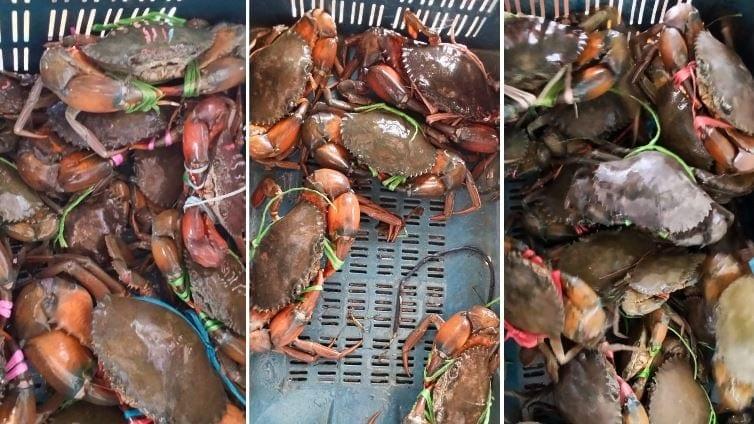
Commercial crab farming has emerged as a profitable alternative to traditional rice and fish cultivation in Dumuria upazila of Khulna, significantly transforming the livelihoods of hundreds of farmers and creating new opportunities for export earnings. Favorable climatic conditions, easy access to saline water, and strong international demand have encouraged many unemployed youths and small farmers to engage in crab fattening, making it one of the region's fastest-growing aquaculture industries.
Economic Benefits and Lower Investment
Farmers in Dumuria highlight that crab farming requires comparatively lower investment, is less vulnerable to disease outbreaks than conventional fish farming, and yields market-ready crabs within three to four months. Both soft-shell and hard-shell crab fattening methods are widely practiced, ensuring attractive returns. The economic benefits have drawn many farmers to this sector, turning it into a major source of income.
Government Support and International Demand
The Department of Fisheries in Khulna Division has been instrumental in providing training and marketing support to nearly 28,000 farmers, including 9,000 women, making them self-reliant. Dumuria Senior Fisheries Officer Sohel Md. Zillur Rahman Rigan notes that the area's soil and water are highly suitable for crab farming. The government is also working to strengthen market linkages to ensure fair prices for farmers and reduce the role of middlemen.
Transforming Lives and Expanding Opportunities
More than 5,000 farmers, including many women, have become self-reliant through crab farming in Dumuria. Crabs produced in the region enjoy strong demand in international markets, including China, Singapore, Malaysia, Hong Kong, Thailand, South Korea, Taiwan, Australia, Japan, and the United Arab Emirates. Farmers like Ashutosh Ghosh and Monali Saha have found crab farming to be more profitable than traditional paddy or fish cultivation.
Challenges and Future Prospects
Despite its success, crab farmers face challenges such as middlemen earning more than they do due to a lack of direct marketing channels. Farmers urge the government to provide easier access to credit and expand hatchery facilities for artificial seed production, which could help crab farming emerge as a major export-earning sector alongside the country's shrimp industry.