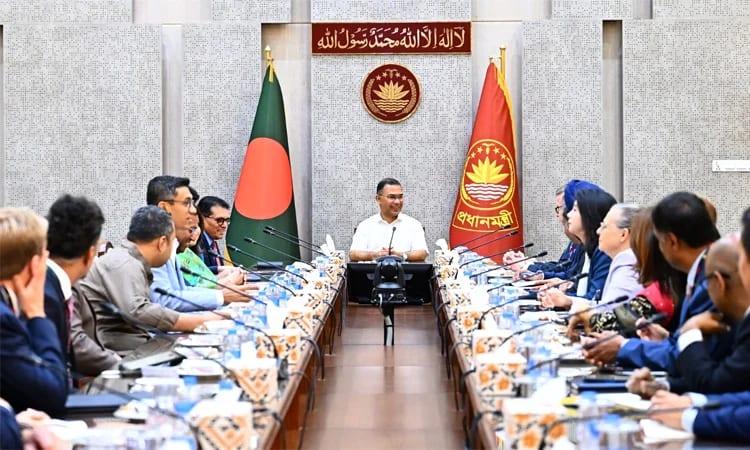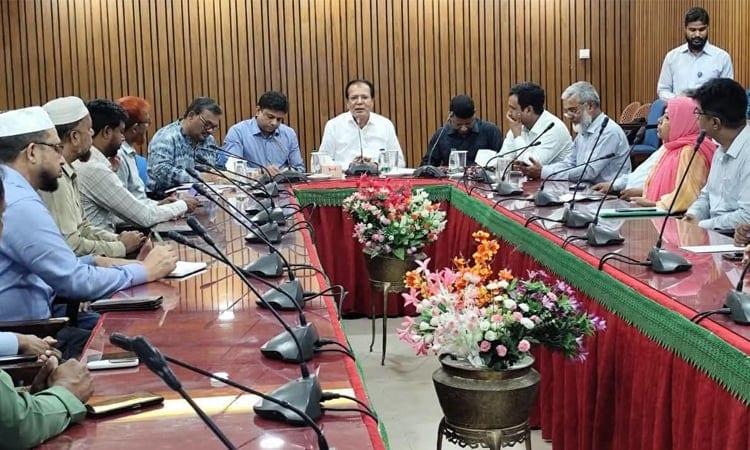
The Cabinet Committee on Economic Affairs (CCEA) today approved three proposals, including the import of urea fertilizer under a government-to-government (G2G) arrangement, the transfer of industrial land for the expansion of the Bangladesh Ordnance Factory (BOF), and amendments to the coal price mechanism for two coal-fired power plants. The approvals came from the 20th meeting of the CCEA this year, held at the Bangladesh Secretariat with Finance Minister Amir Khasru Mahmud Chowdhury in the chair.
Urea Fertilizer Import
The committee gave policy approval to a proposal from the Ministry of Industries to procure urea fertilizer for the 2026-27 fiscal year through a G2G agreement. Under the proposal, the Bangladesh Chemical Industries Corporation (BCIC) will sign a contract with SABIC Agri-Nutrients Company of Saudi Arabia to import urea fertilizer to help ensure an adequate supply for the country's agricultural sector. This move is crucial as urea is a vital input for crop production, and a stable supply is essential for maintaining agricultural productivity.
Industrial Land Transfer for BOF Expansion
The CCEA also approved a proposal from the Ministry of Textiles and Jute to hand over the property of Jalil Textile Mills Ltd., currently under the Bangladesh Textile Mills Corporation (BTMC), to the Bangladesh Army. The industrial property, located at Bhatyari in Chattogram, will be used for the planned expansion of the Bangladesh Ordnance Factory (BOF), strengthening the country's defence manufacturing infrastructure. This expansion is expected to enhance the nation's self-reliance in defence production and reduce dependency on imports.
Amendments to Coal Price Mechanism
In the power sector, the committee approved amendments to the coal price mechanism applicable to the 2x612 MW coal-fired power plant at Banshkhali in Chattogram, developed by SS Power I Ltd., and the 307 MW coal-fired power plant of Barisal Electric Power Company Limited. These amendments aim to streamline the financial framework for coal-based power generation, ensuring more stable and predictable pricing for these critical energy sources. Stable coal prices are essential for the financial viability of power plants and the overall energy security of the country.
Significance and Implications
The approvals are expected to help ensure a stable fertilizer supply for agriculture, support the expansion of defence production facilities, and streamline the financial framework for coal-based power generation in the country. These measures are crucial for maintaining agricultural productivity, enhancing defence capabilities, and ensuring a stable energy supply, all of which are vital for the country's economic stability and growth.