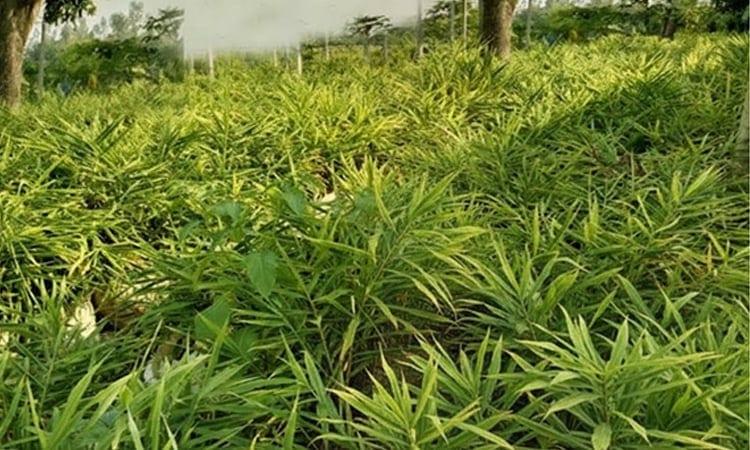
Ginger farming using sacks is becoming increasingly popular among farmers in the Rangpur region. This low-cost method involves planting ginger tubers in sacks filled with soil and organic fertilizer, such as cow dung or mustard greens. Farmers place these sacks in shaded areas like under trees, in orchards, or around homesteads, reducing land waste and minimizing the risk of natural disasters such as floods.
Innovative Method
This innovative method of ginger cultivation is not limited to traditional farmers. Many people are now growing ginger in sacks on their rooftops, in courtyards, and by clearing bushes around their homes. Pioneered by farmer Md Shahinul Islam Bokul from Moyenpur village in Mithapukur upazila, this method has shown significant success. Bokul cultivates both Bari-2 and Thai varieties of ginger, demonstrating an effective way to make the country self-reliant in spice production and save foreign exchange on imports.
Community Impact
Bokul's success has inspired over 350 villagers to adopt the sack method for ginger farming. Last year, Bokul harvested 115 mounds (each 40 kg) of ginger from 16,000 sacks. This season, he has expanded his cultivation to 18,000 sacks on 80 decimals of land in his Haribhanga mango orchard. The community's shift to this method was driven by attractive ginger prices of Taka 400 per kg, although prices later fell to Taka 100 and Taka 130 due to lack of preservation facilities.
Agriculturist Md Sirajul Islam, Additional Director of the Department of Agricultural Extension (DAE) for the Rangpur region, believes that ginger production could be significantly enhanced by expanding cultivation in sacks. However, he emphasizes the need for modern preservation facilities like cold storages to ensure better prices and a consistent supply of ginger throughout the year.