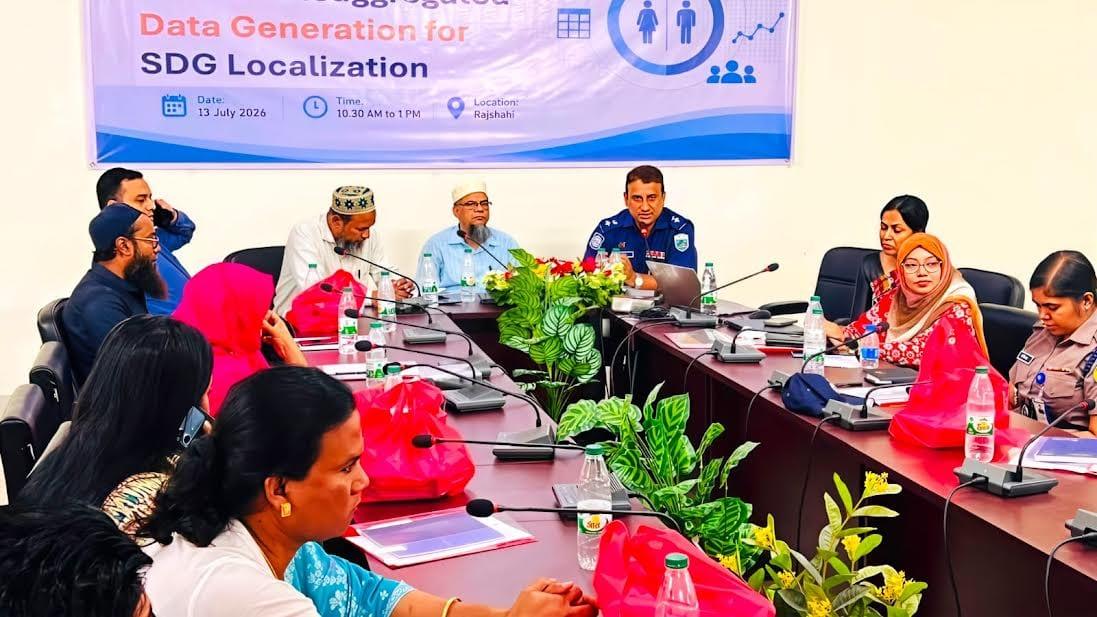
Experts at a participatory discussion in Rajshahi have unanimously stated that there is no alternative to gender-based and reliable data to ensure inclusive development. They stressed the need for quality, gender-based data at the local level to reflect the real needs, experiences, and development-related requirements of women and marginalized communities in policymaking.
Importance of Gender-Based Data
The discussion took place during a training program titled ‘Gender-Disaggregated Data Generation for SDG Localization’, held at the National Research and Training Institute for Occupational Health and Safety in Rajshahi. Professor Dr. Monsur Rahman, chairman of the Department of Statistics at Rajshahi University, addressed the event as the chief guest. He highlighted that strengthening data collection, analysis, and reporting at the local level in alignment with the national statistical framework would enable more effective assessment of progress toward achieving the Sustainable Development Goals (SDGs).
Training Program Details
The training was jointly organized by the United Nations Office for Project Services (UNOPS) Bangladesh and the Bangladesh Bureau of Statistics (BBS). The initiative aims to develop an effective ‘Bangladesh Model’ for implementing SDG-5 (Gender Equality) and SDG-16 (Peace, Justice, and Strong Institutions). Special guests at the event included District Superintendent of Police Mohammad Naimul Hassan and UNOPS Partnership Advisor Shirin Sultana.
Technical Session Insights
Md. Alamgir Hossain, Focal Point Officer of the SDG Cell at the Bangladesh Bureau of Statistics, conducted the technical session. He discussed gender-related SDG indicators, data sources, and various aspects of using gender-based data at the local level. Representatives from district and upazila administrations, local government officials, statistical officers, civil society representatives, and stakeholders from various organizations participated in the training.
Challenges and Opportunities
The program emphasized the need to strengthen the collection, analysis, and use of gender-based data at the local level to formulate evidence-based and inclusive development plans. Speakers noted that sustainable development cannot be ensured without reliable and gender-sensitive data. They stressed the urgency of improving the quality of local-level data for implementing the government’s national priority targets and SDG-5 and SDG-16 related indicators.
Future Implications
The organizers hope that this initiative will enhance the capacity for preserving and reporting gender-based data at the local level, enrich the national SDG tracker, and play a significant role in achieving the goal of creating 190 ‘SDG Data Champions’ across Dhaka, Rajshahi, and Chattogram divisions. The importance of data was also highlighted in ensuring women’s participation, good governance, access to services, accountability, and gender-sensitive policymaking.