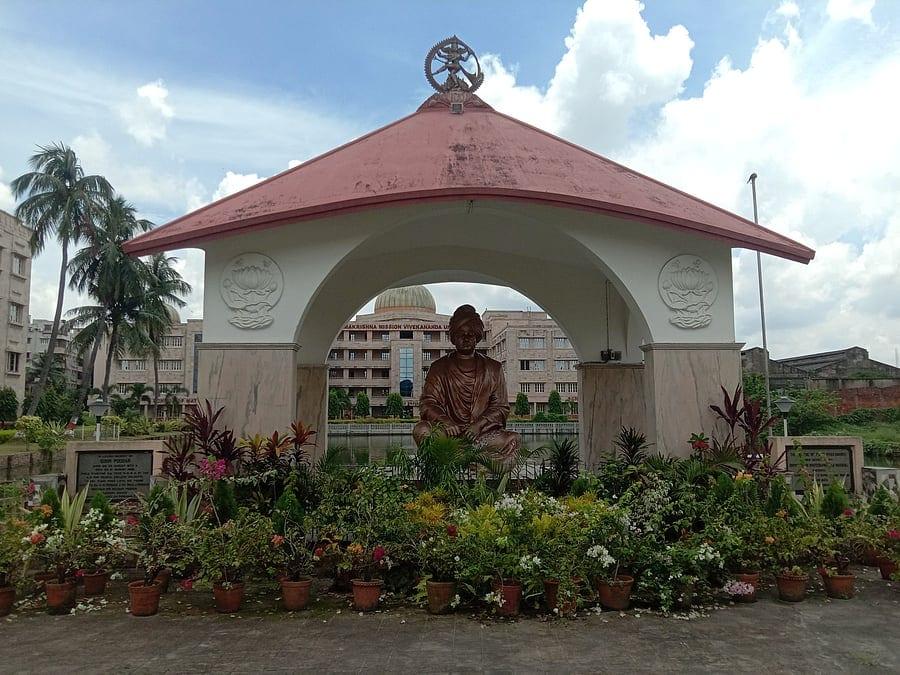
Swami Vivekananda, a devoted disciple of Sri Ramakrishna, sought God's vision and found it through his guru's teachings. He emphasized service to humanity as the true religion, believing that serving all beings is serving God. His mission was to alleviate poverty and ignorance in India, promoting education and social reform. Vivekananda founded the Ramakrishna Math and Mission to spread his guru's ideals. He gained international recognition for his speech at the 1893 World's Parliament of Religions in Chicago, where he introduced the tolerant and inclusive nature of Hinduism to the Western world.
Early Life and Spiritual Quest
Born as Narendranath Datta, Vivekananda was deeply spiritual from a young age. His quest for God led him to Sri Ramakrishna, who confirmed his own divine vision and guided Narendranath on the path of devotion and service.
Teachings and Philosophy
Vivekananda's teachings centered on the unity of all religions, the divinity of the human soul, and the importance of selfless service. He believed in the potential of every individual and advocated for social reform to uplift the downtrodden.
Impact and Legacy
Vivekananda's influence extended beyond India, inspiring people worldwide with his message of universal brotherhood and spiritual enlightenment. His contributions to Hindu renaissance and social reform continue to resonate today.