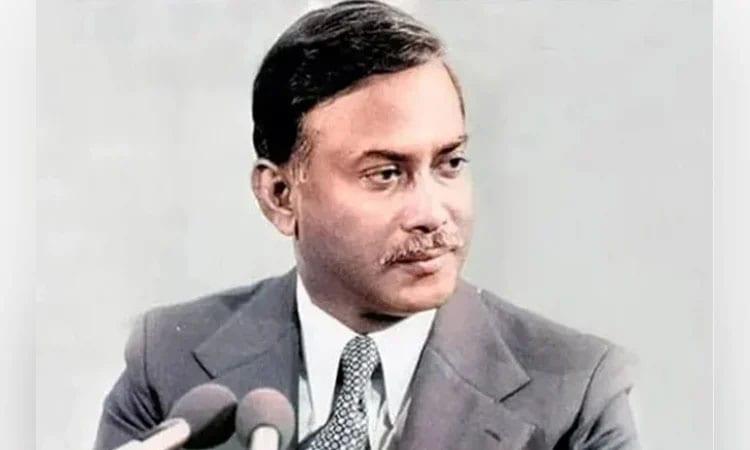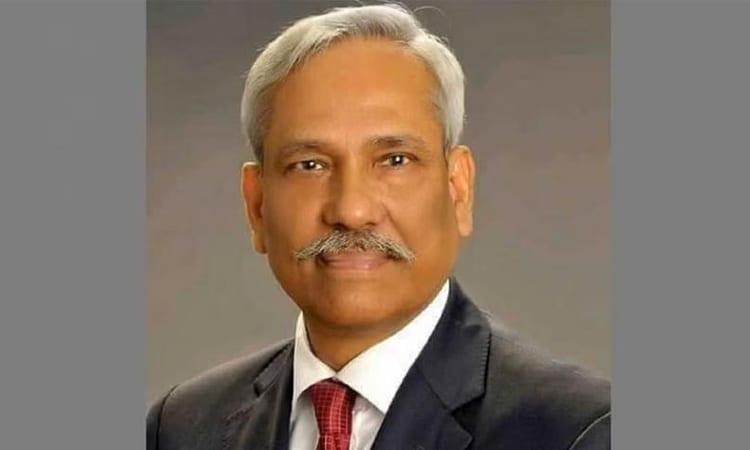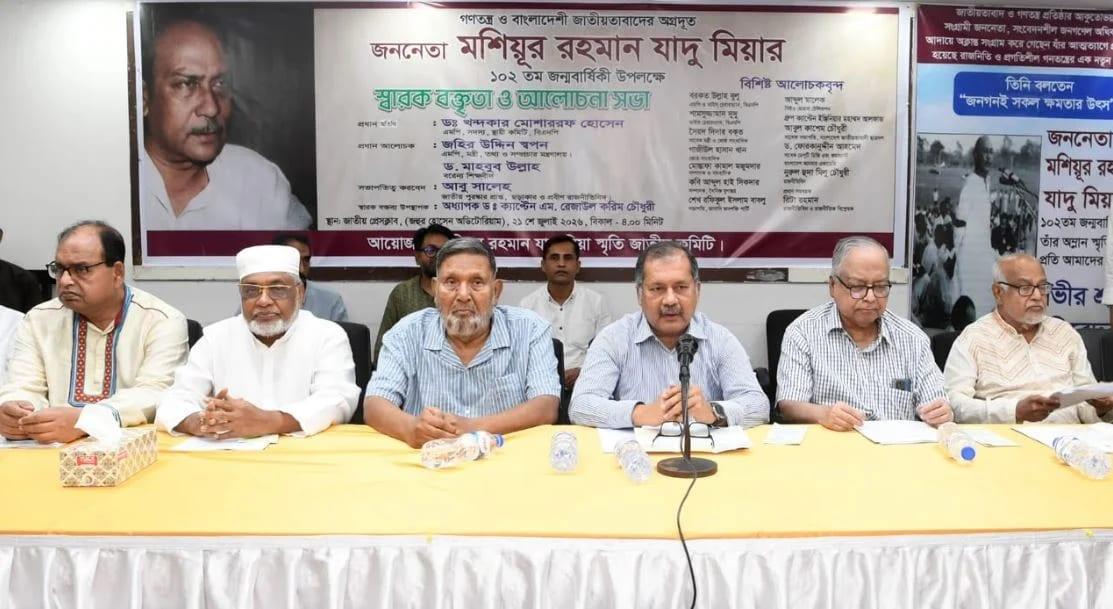
Information and Broadcasting Minister Zahir Uddin Swapon today said late politician Jadu Mia played a crucial role in shaping Shaheed President Ziaur Rahman's political career. He stated that Jadu Miah's role was undeniable in transforming Ziaur Rahman from a military officer into a popular political leader and in laying the ideological foundation of Bangladeshi nationalism. Swapon made these remarks at a discussion organized by the Moshiur Rahman Jadu Miah Smriti Jatiya Committee at the Jatiya Press Club to mark the late politician's 102nd birth anniversary.
Swapon noted that after the 1975 political vacuum in Bangladesh, Jadu Miah demonstrated foresight by speaking out against the misrule of the time and charting a future political course. He emphasized that Jadu Miah guided Ziaur Rahman through a smooth transition from military to political life, which was instrumental in the development of Ziaur Rahman's political thought and ideology. This, in turn, led to the establishment of the Bangladesh Nationalist Party (BNP) as a popular political party.
FAQs
- **What role did Jadu Miah play in Shaheed Zia's political career?** Jadu Miah played a crucial role in transforming Ziaur Rahman from a military officer into a popular political leader and in laying the ideological foundation of Bangladeshi nationalism. - **How did Jadu Miah contribute to the political landscape of Bangladesh post-1975?** Jadu Miah spoke out against the misrule of the time and charted a future political course, providing direction when other political forces were uncertain. - **What was the impact of Jadu Miah's guidance on Ziaur Rahman's political ideology?** Jadu Miah's guidance was instrumental in developing Ziaur Rahman's political thought and ideology, leading to the establishment of the Bangladesh Nationalist Party (BNP). - **How did Jadu Miah's contributions influence future Bangladeshi politics?** Jadu Miah's far-sighted decisions shaped the course of nationalist politics in Bangladesh, paving the way for future elected governments led by Begum Khaleda Zia and Prime Minister Tarique Rahman.