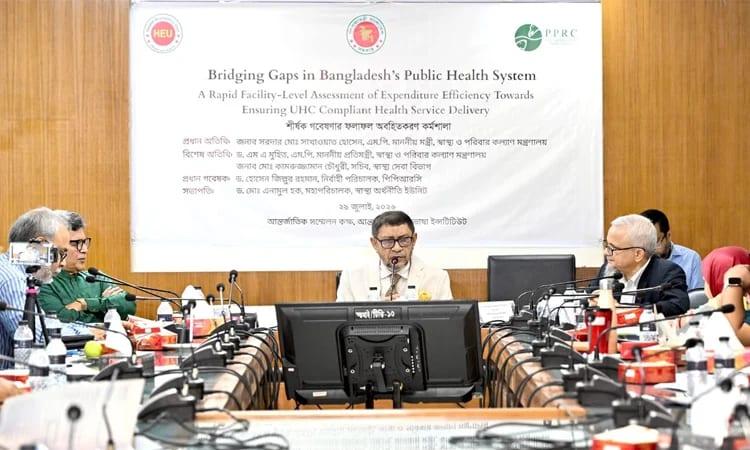
Health and Family Welfare Minister Sardar Md Sakhawat Husain has announced a series of measures to permanently dismantle broker syndicates and unethical practices in government hospitals. Speaking at the unveiling of a study on public health spending efficiency, the minister said commission-based referrals, unnecessary diagnostic tests, and other unethical practices would be brought under strict monitoring.
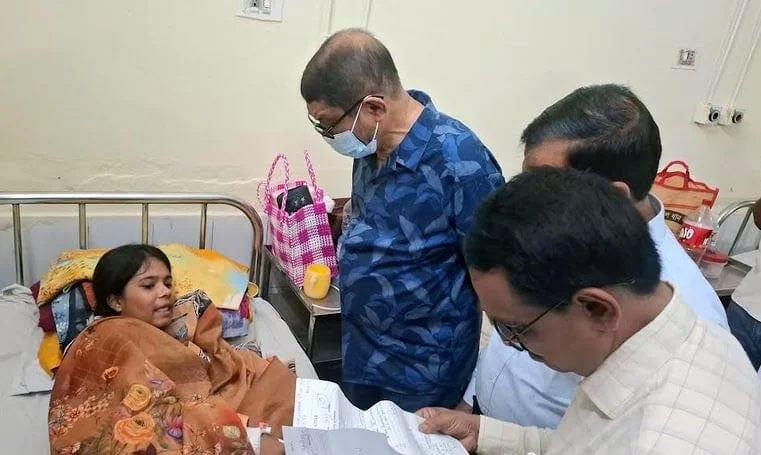
The minister also said physicians would not be allowed to neglect their duties at public hospitals while operating private clinics or referring patients to specific diagnostic centres for personal financial gain. He highlighted irregularities in public procurement, stating that unrealistic eligibility criteria had often been included in tender documents to favour selected individuals or companies.
Sakhawat criticised wasteful spending in the health sector, alleging that costly medical equipment had been procured without the necessary infrastructure or skilled manpower to operate them. He cited radiotherapy machines as an example, noting that some units remained unused because the required facilities had not been prepared before procurement.
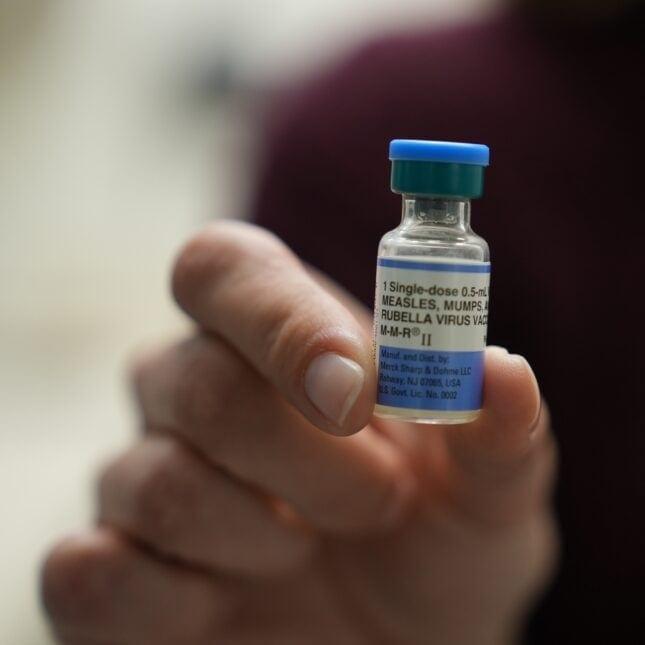
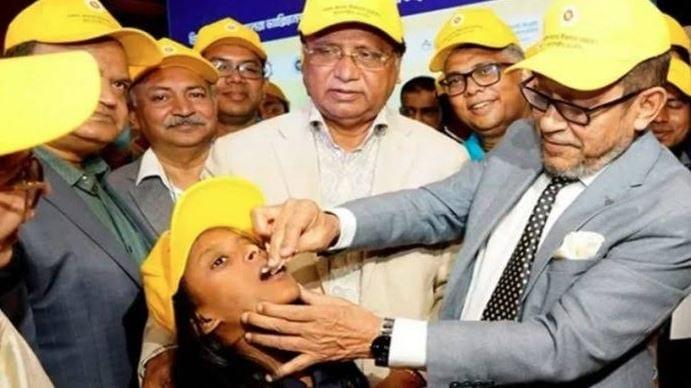
On immunisation, the minister said the previous government had failed to procure measles vaccines and conduct nationwide vaccination campaigns. Since assuming office, the current government has intensified the immunisation programme and brought more than one lakh additional children under vaccine coverage. He underscored the need to expand routine immunisation, noting that around 99 percent of children currently infected with measles are unvaccinated.
The minister announced that the government would not renew the contract of a foreign company providing dialysis services after it expires in November. Instead, dialysis machines would be procured directly by the government to reduce costs, save foreign currency, and make dialysis treatment more affordable. He said 50-bed dialysis centres are being established at every medical college hospital, while each district hospital will have a 10-bed dialysis unit.
The study was jointly conducted by the Power and Participation Research Centre (PPRC) and the Health Economics Unit. PPRC Executive Chairman Dr Hossain Zillur Rahman presented the findings, while Health Economics Unit Director General Dr Md Enamul Haque delivered the welcome address. The assessment covered 22 public healthcare facilities at the primary, secondary and tertiary levels across all eight administrative divisions and reviewed budget implementation, procurement practices and institutional performance for FY2024-25. According to the findings, the average budget implementation rate among the surveyed institutions was 85 percent, while secondary-level facilities recorded the lowest utilisation rate at 78 percent. Although 94 percent of the institutions had unspent funds at the end of the fiscal year, only 11 percent identified financial mismanagement as a matter of concern.