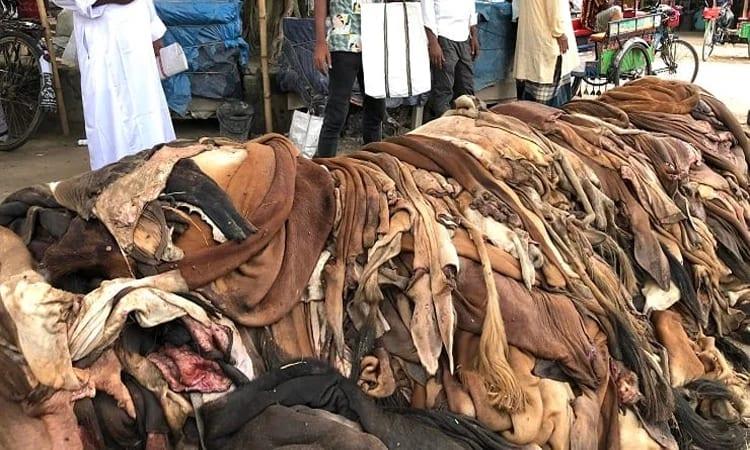
In a move towards sustainable industrial practices, Bangladesh JW Animal Protein Co. Ltd, a Chinese-invested recycling enterprise, has begun producing protein filler, gelatin, and collagen from tannery waste. This initiative aims to transform the leather industry's waste management and promote environmentally friendly production processes. The company has already conducted trial production and established a large factory in the Nayarhat area of Savar, equipped with its own effluent treatment plant (ETP).
The Bangladesh Small and Cottage Industries Corporation (BSCIC) has signed a memorandum of understanding (MoU) with Bangladesh JW Animal Protein Co. Ltd to produce protein filler through chrome separation. The factory, which recycles tannery waste such as leather scraps and chrome shaving dust, has started trial production and exports its products to China and Russia.
Parvez Khan, an interpreter at Bangladesh JW Animal Protein Co. Ltd, noted that the firm is yet to commence full-scale production as the factory construction is incomplete. Once finished, the company plans to process all tannery waste generated in the Savar leather industry, estimated at around 20,000 tonnes. Additionally, preparations are underway to produce raw materials for gelatin and capsules from rawhide scraps.
Mizanur Rahman, the head of BSCIC's leather cell, highlighted that these initiatives could significantly reduce environmental pollution, create new value additions to the leather industry, and generate foreign exchange. Several other companies, including Orion Trading Corporation, Ayub Brothers Tannery Limited, Reza Leather Export, AN International Company Limited, Alamgir Leather Complex, and Feni Tannery Private Limited, are also involved in tannery waste management.
This innovative approach not only addresses the environmental challenges posed by tannery waste but also opens up new economic opportunities for the leather industry. By converting waste into valuable products, Bangladesh JW Animal Protein Co. Ltd is setting a precedent for sustainable industrial practices in the region.