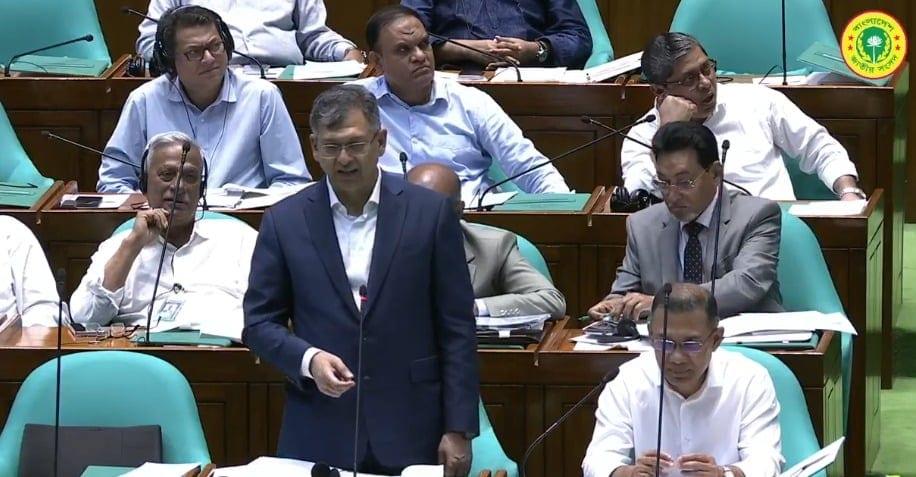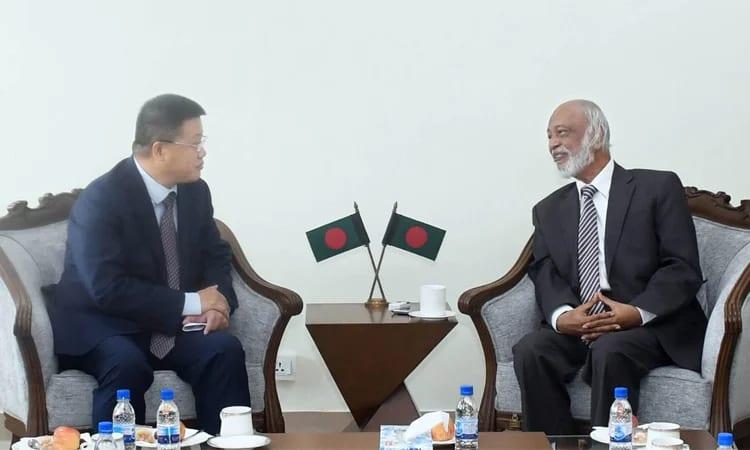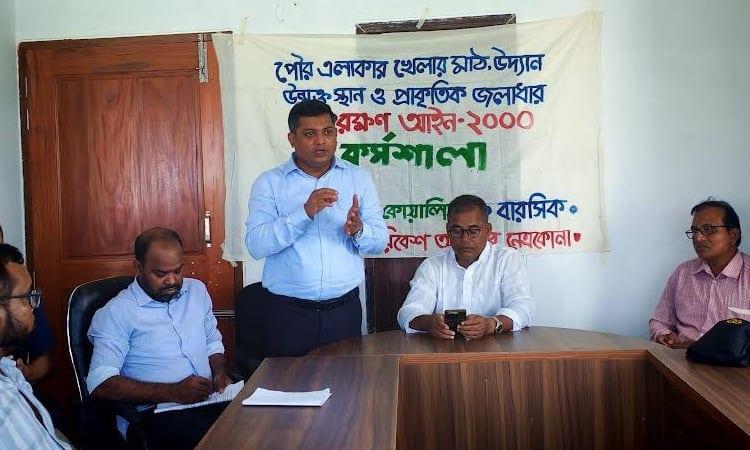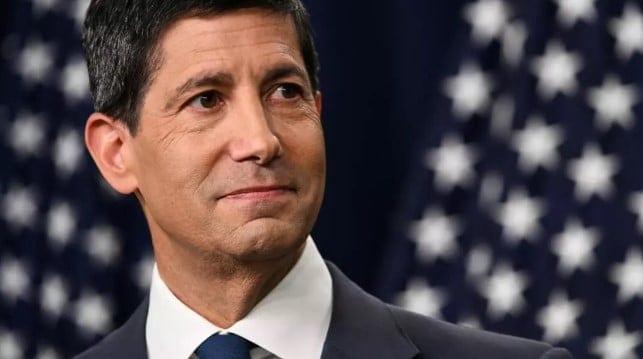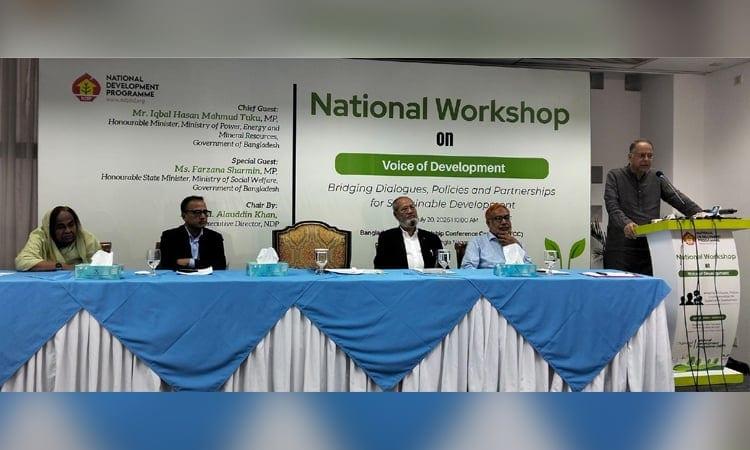
Power, Energy and Mineral Resources Minister Iqbal Hassan Mahmood has called upon non-governmental organizations (NGOs) to increase their investments in the renewable energy sector, particularly in solar power. Speaking as the chief guest at the national workshop titled 'Voice of Development' organized by the National Development Programme (NDP) at the Bangladesh-China Friendship Conference Centre, Mahmood emphasized that NGOs have significant opportunities to promote solar power in rural areas. He stated that expanding solar power generation and usage would reduce energy import costs, allowing the government to redirect the savings toward development projects.
Mahmood said that achieving 10,000 megawatts of renewable energy generation would reduce Bangladesh's dependence on imported fuel. He noted that the government has already introduced policies to promote solar energy and that NGOs could help expand rooftop solar power in rural areas through cluster-based projects. Under the net metering system, NGOs could recover their investments by selling surplus electricity to the grid.
The minister highlighted that financing would not be a major obstacle, as the World Bank and other development partners are interested in funding renewable energy projects. He pointed out that financial institutions are unlikely to fund fossil fuel-based projects amid global climate change. Mahmood cited the example of a woman in Faridpur who produces biogas from livestock waste and supplies cooking gas to her neighbours, demonstrating both public enthusiasm and the strong commercial potential of such initiatives.
Mahmood also mentioned that the government has provided tax incentives for solar panels and batteries to encourage investment in renewable energy. He urged NGOs to move away from grant dependency and instead develop commercially viable renewable energy projects using international financing. The minister encouraged NGOs to take advantage of the government's tax holiday incentives and invest in sectors such as solar energy and biofuels, which would contribute to rural economic development and strengthen the financial sustainability of NGOs.
The minister's call for increased investment in renewable energy comes at a time when Bangladesh is facing significant challenges in energy security. The country has had to spend heavily on importing fuel and other energy resources, placing pressure on its foreign exchange reserves. Ongoing global conflicts have made energy security even more challenging, reinforcing the need to expand renewable energy. Declining domestic gas production has also forced Bangladesh to import larger quantities of liquefied natural gas (LNG), increasing the government's subsidy burden.