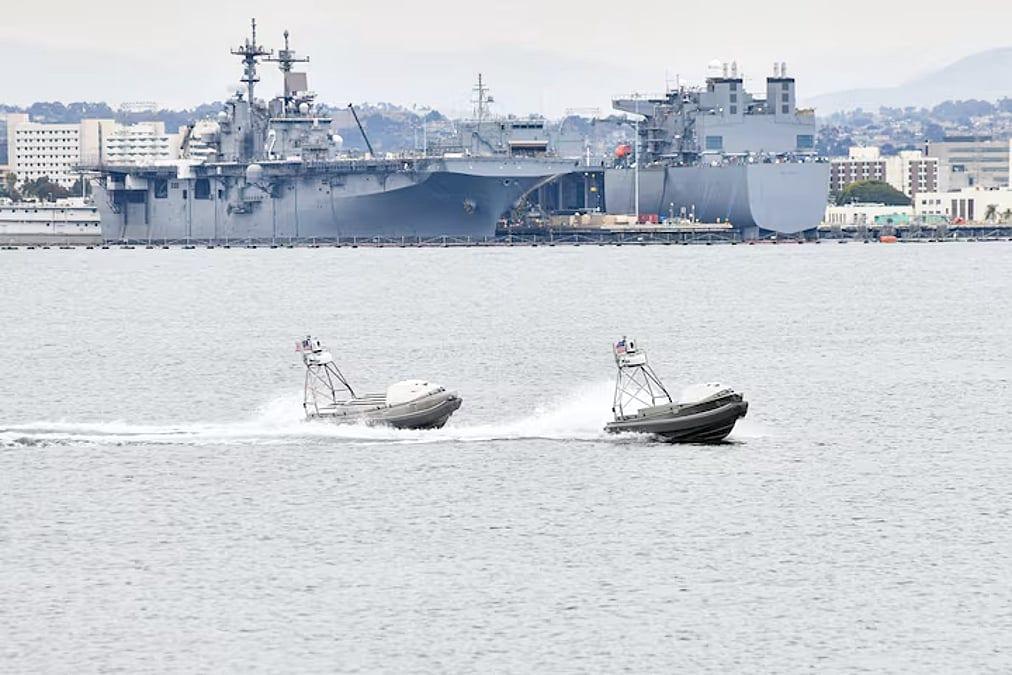
The US Navy has reportedly used an unmanned sea drone to rescue two crew members from a downed helicopter in the Strait of Hormuz. This is believed to be the first time an unmanned naval vessel, or sea drone, has been used in such a rescue operation in US military history.
The drone, named 'Saronik Corsair', is 24 feet (7.3 meters) long and fully autonomous. It is part of the Pentagon's initiative to increase the use of unmanned vehicles alongside traditional military equipment.
Background on US Sea Drone Technology
In 2021, the US Navy formed its first unmanned vehicle-specific unit, Task Force 59, in Bahrain. The unit began deploying the 'Corsair' drone in the Middle East in late March. The US deploys unmanned vehicles both on the surface and underwater to provide commanders with flexibility in decision-making. Many advanced underwater drone technologies remain highly classified.
Sea drones are typically used for surveillance, mine detection, and tracking enemy activities. Some are being developed for combat use. They are effective in both routine surveillance and high-risk missions. The Pentagon is investing in autonomous naval vessels to increase its capabilities at a lower cost and to respond quickly to any threats. The US Navy plans to deploy hundreds or thousands of 'Corsair' drones in the future, though the technology is still evolving and faces technical and operational challenges.
Although not a US drone, Ukraine's use of sea drones against Russia has demonstrated their significant impact on the battlefield. Ukraine has used sea drones to sink Russian warships and even down a helicopter, marking an unprecedented success for unmanned naval vessels.