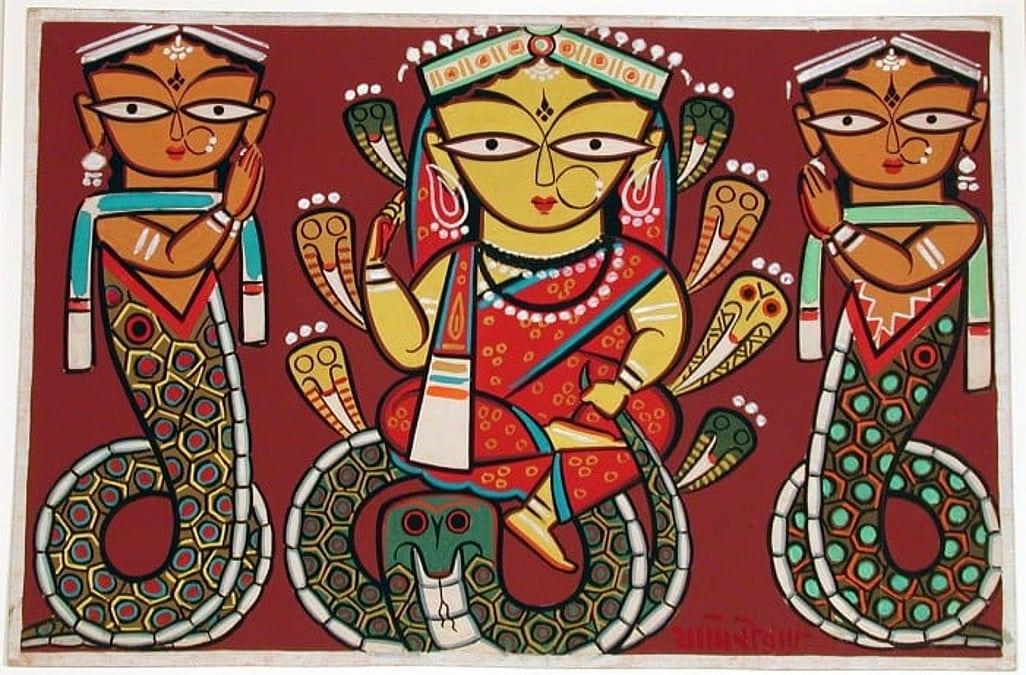
Goddess Manasa holds a significant place in Bengali culture, deeply embedded in its folklore, literature, and religious practices. From medieval Bengali literature to contemporary economic activities, the belief in this deity is pervasive. According to Hindu tradition, the month-long Manasa Devi festival begins on July 17.
In the monotheistic framework of Sanatan Dharma, the concept of oneness in multiplicity is central. This principle is reflected in the dual forms of the primordial sound—vowels and consonants—and the two aspects of the formless Brahman—Prakriti (nature) and Purusha (spirit). Prakriti, also known as Adi Shakti Mahamaya, has countless forms, one of which is revered in Bengal as Goddess Manasa.
The Bengal region, characterized by its wetlands and forests, has historically faced dangers from venomous snakes, crocodiles, and tigers. These creatures, often depicted in religious and cultural contexts, are integral to the region's identity. According to Hindu scriptures, Manasa Devi emerged from the mind of sage Kashyapa to protect the animal kingdom from serpent threats. Her significance is detailed in texts like the Devi Bhagavata and Brahmavaivarta Purana.
Manasa Devi is the central figure in several Mangalkavyas, with the most popular being the story of Chand Saudagar and Behula-Lakhindar by Vijay Gupta. This narrative has inspired numerous films, plays, and TV dramas in both Bengals, as well as popular Bengali songs by bands like Shunno.
The relevance of these ancient tales lies in their portrayal of not just religious morals but also themes of women's courage, love, social inequality, and resistance against Brahminical dominance. The worship of Manasa Devi traditionally includes animal sacrifice, with the meat being shared among the village community, as prescribed in the Puranas. This practice is particularly prominent in the Chittagong region, where large goat markets are held during the festival.
However, with changing values, many places now offer symbolic sacrifices of fruits and vegetables instead of animals. The cultural heritage of Manasa Devi is intertwined with the history of Bangladesh, with ancient temples dedicated to her found across the country. These temples, such as the century-old Manasa Temple in Agailjhara, Barishal, and the Kusumbapura Manasa Temple in Patiya, Chittagong, are integral to local beliefs and traditions.
Manasa Devi is not just a serpent goddess but also represents the kundalini energy in yoga and is associated with Brahmajnana. Her vehicle, the swan, symbolizes transcendent knowledge and pure consciousness. Today, her worship may require a deeper exploration of her profound form, where inner devotion surpasses external rituals.