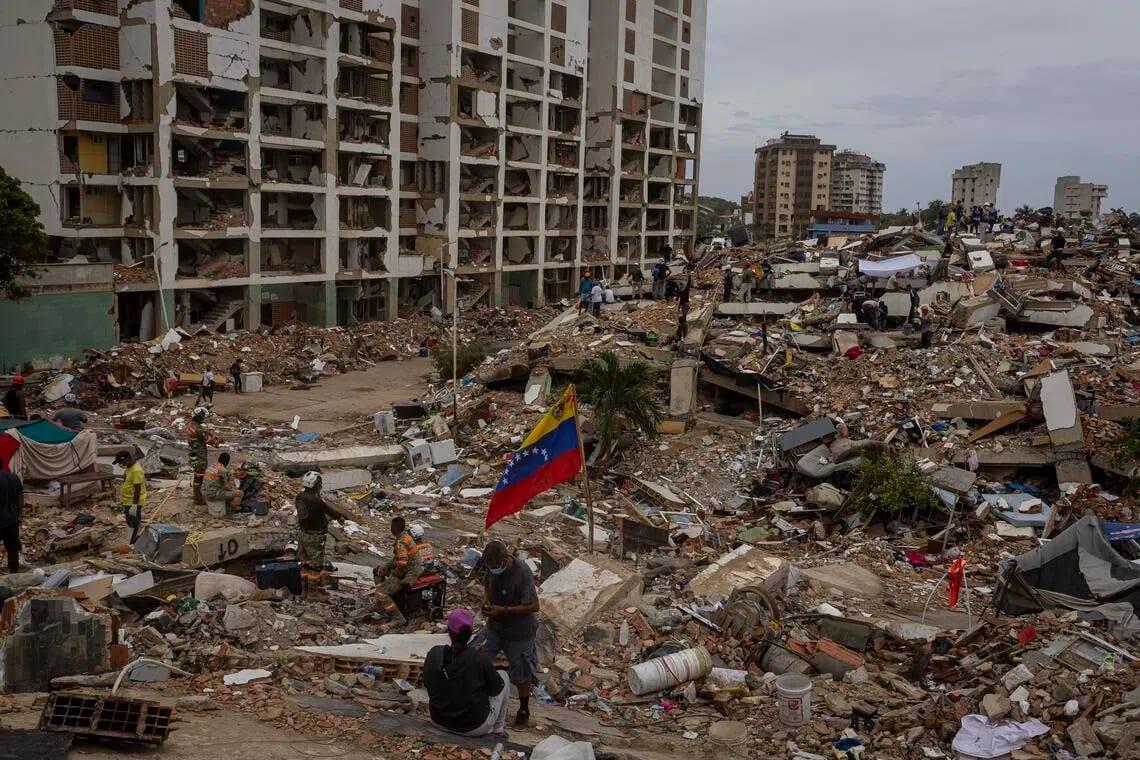
Rumors of a small child trapped alive under the earthquake rubble of the Tahiti building in Venezuela have fueled false hopes and deepened the desperation of families searching for their loved ones. By Friday, the story had spun into a dispute among residents, with some believing in a potential rescue and others desperate to dig for bodies.
Desperation and False Hopes
The Tahiti Residence has become a symbol of the fraying nerves of survivors and relatives more than a week after two earthquakes left more than 2,600 dead and caused widespread destruction, with thousands still missing. Rescue teams visited the site, concluding there were no more signs of life after scanning the ruins.
Social Media and Unverified Reports
Words of mouth and social media posts fueled hopes of saving someone else, attracting influencers who shared videos from the quake's epicenter in Caraballeda, La Guaira state. However, an American rescuer reported that dogs and high-intensity sound detectors found no signs of life.
The Emotional Toll
Jose Francisco Liendo, searching for his father and sister, criticized the spread of unconfirmed reports, stating they played with families' pain. Katherine Lendoiro confirmed a Spanish rescue report showed negative results, while Aloa Gonzalez, hoping to recover her sister and aunt, found the dashed hopes unbearable.
The Reality of Rescue
From the double earthquake that shook La Guaira and Caracas, 6,462 people have been rescued, with the last one saved on Thursday after almost eight days under the rubble. The government has ruled out mass graves, promising to identify the deceased. The United Nations estimates the number of missing could reach 50,000.
Why This Matters
The spread of unverified rumors in the aftermath of natural disasters can have severe emotional and practical consequences for affected communities. It underscores the need for accurate information and the importance of verified reports in managing public expectations and aiding recovery efforts.