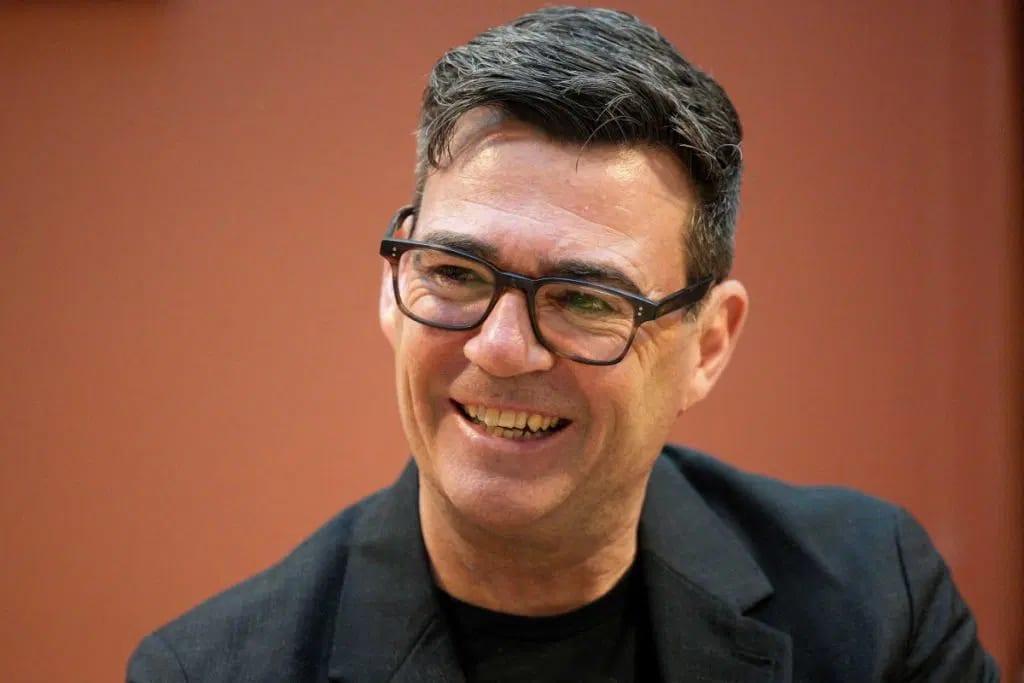
Andy Burnham has officially taken office as the new UK Prime Minister, marking Britain's seventh prime minister in just over a decade. Burnham, who replaced Keir Starmer, has pledged a 10-year plan aimed at easing cost-of-living pressures and re-industrializing Britain. In a swift move to assert his authority, he purged the cabinet of his predecessor's loyalists, appointing new ministers and reassigning others. Burnham's immediate actions included calls with US President Donald Trump and Ukrainian leader Volodymyr Zelensky, highlighting his commitment to international relations and defense. The new prime minister, accompanied by his wife Marie-France van Heel, was greeted with applause in Downing Street and vowed to create a 'new political model' and 'build a new economy'. Among his key appointments, John Healey was named finance minister, Ed Miliband became foreign minister, and Wes Streeting took on the role of defense minister. Burnham also reaffirmed Britain's commitment to Ukraine and promised to tackle rough sleeping and decentralize power. His first announcements will be made on Tuesday, focusing on providing relief for cost-of-living issues.
Immediate Actions and International Relations
Upon assuming office, Burnham held separate calls with US President Donald Trump and Ukrainian leader Volodymyr Zelensky. During his conversation with Trump, Burnham emphasized his commitment to defense and security, while Trump expressed support and noted their discussion on trade, military cooperation, and demining the Strait of Hormuz. With Zelensky, Burnham reaffirmed Britain's support for Ukraine in its conflict with Russia.
Cabinet Reshuffle and Key Appointments
Burnham's cabinet reshuffle saw the removal of several key figures from the previous administration, including Rachel Reeves and David Lammy. John Healey was appointed as the new finance minister, Ed Miliband as foreign minister, and Wes Streeting as defense minister. Angela Rayner, a prominent left-wing figure, returned to government, and Shabana Mahmood was reappointed as interior minister to continue her reforms of the asylum system.
Promises and Future Plans
In his inaugural speech, Burnham outlined his vision for Britain, promising a 10-year plan to address the cost-of-living crisis, re-industrialize the nation, and end rough sleeping. He emphasized the need to decentralize power and bring essential services under stronger public control to make them more affordable. Burnham's plans include promises to build more public housing and to shift away from what he described as 'wrong turns' taken in the 1980s.