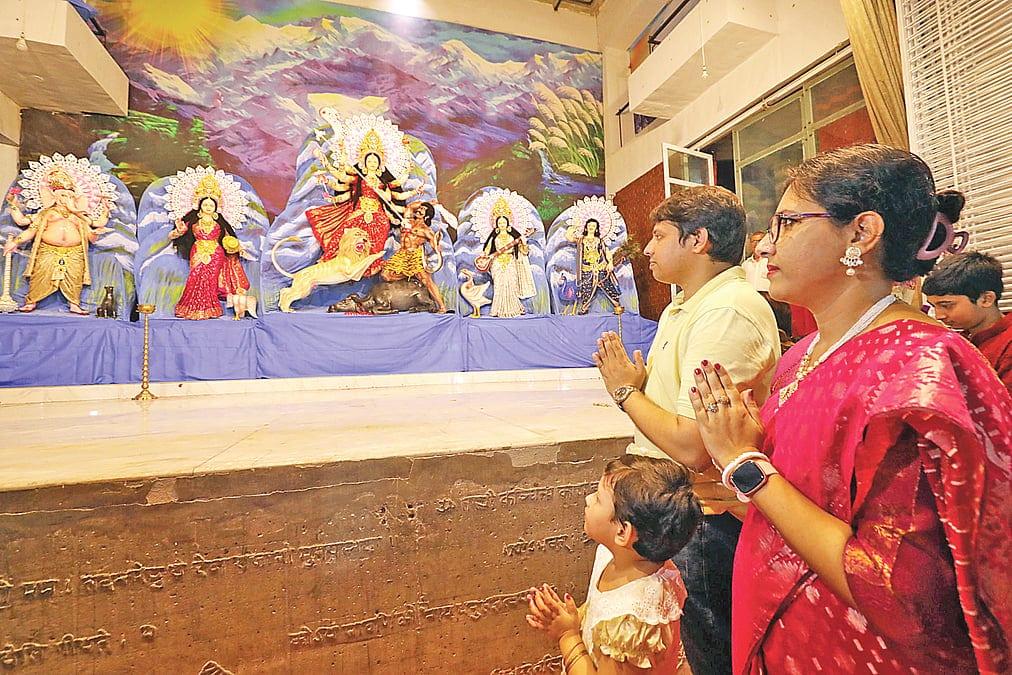
From childhood, the author heard about the numerous festivals celebrated throughout the year, with Durga Puja being the most elaborate. The preparations for this festival began a month or two in advance. The author lived in what was then known as Lalmatia, now Mohammadpur, with Rayerbazar being the nearest market, a two-mile walk away. Midway, there was a place called Pulpar, named after a bridge over a canal, now replaced by a culvert.
Rayerbazar was predominantly inhabited by families practicing the Sanatan Dharma, many of whom were potters. They crafted various clay items and celebrated Durga Puja on a grand scale at Pulpar. The author, along with friends, would visit the festival during school holidays, which were at least two weeks long.
At Pulpar, the author first encountered the goddess Durga and her four children—Lakshmi, Saraswati, Ganesh, and Kartik. The vivid depictions, especially of Kartik and Ganesh, left a lasting impression. The author also remembers the sounds of drums and bells, the sight of priests performing rituals, and the collective ululations of women. The immersion of the idols in the Buriganga River, though initially perplexing, is now understood.
In January 1964, communal riots broke out in the area. The author, then in class eight, saw schools close and homes in Rayerbazar set ablaze. Many families left the area, leading to a decline. The Pulpar Puja was halted for several years. In 1973, the festival resumed, but the author did not attend, finding new celebrations at Banshbari nearby, though the joy of childhood was diminished.