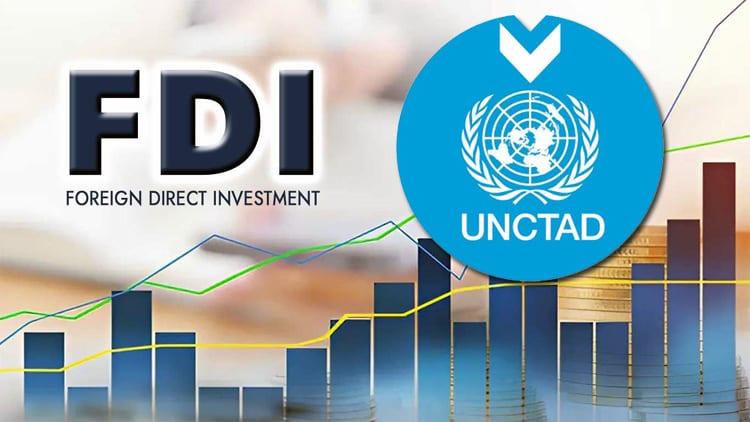
Bangladesh recorded the fastest growth in foreign direct investment (FDI) among South Asian economies in 2025, with inflows rising around 45 percent year-on-year to US$1.78 billion, according to the World Investment Report 2026 released by the United Nations Conference on Trade and Development (UNCTAD). The report shows that Bangladesh's FDI inflows increased significantly from US$1.23 billion in 2024 to US$1.78 billion in 2025, reflecting growing international investor confidence in the country's economy despite a challenging global investment environment.
Global Context and Regional Performance
The report comes at a time when global investment flows remain uneven due to geopolitical tensions, trade uncertainties, and high financing costs. Against this backdrop, Bangladesh's strong growth rate stands out within the South Asian region. UNCTAD highlighted that developing Asia retained its position as the world's leading investment destination among developing regions, attracting US$644 billion in FDI during 2025.
Domestic Investment and Future Potential
Although FDI accounted for a relatively small share of total fixed capital formation, the report suggests that the country continues to rely heavily on domestic investment, which remains a key strength of Bangladesh's growth model. The report indicates that Bangladesh has substantial room for further expansion in attracting foreign investment, particularly in manufacturing, services, infrastructure, and technology-related industries.
Driving Factors and Future Prospects
Analysts say the country's large domestic market, competitive workforce, strategic geographic location, and ongoing economic reforms provide a strong foundation for future FDI growth. With a GDP exceeding half a trillion dollars and continued progress in industrialization and connectivity, Bangladesh is increasingly viewed as a long-term investment destination with significant untapped potential.
Global FDI Trends
Globally, FDI increased by 6 percent to US$1.6 trillion in 2025, ending two consecutive years of decline. The recovery was led by investment in digital infrastructure, advanced manufacturing, energy transition technologies, and other strategic sectors.