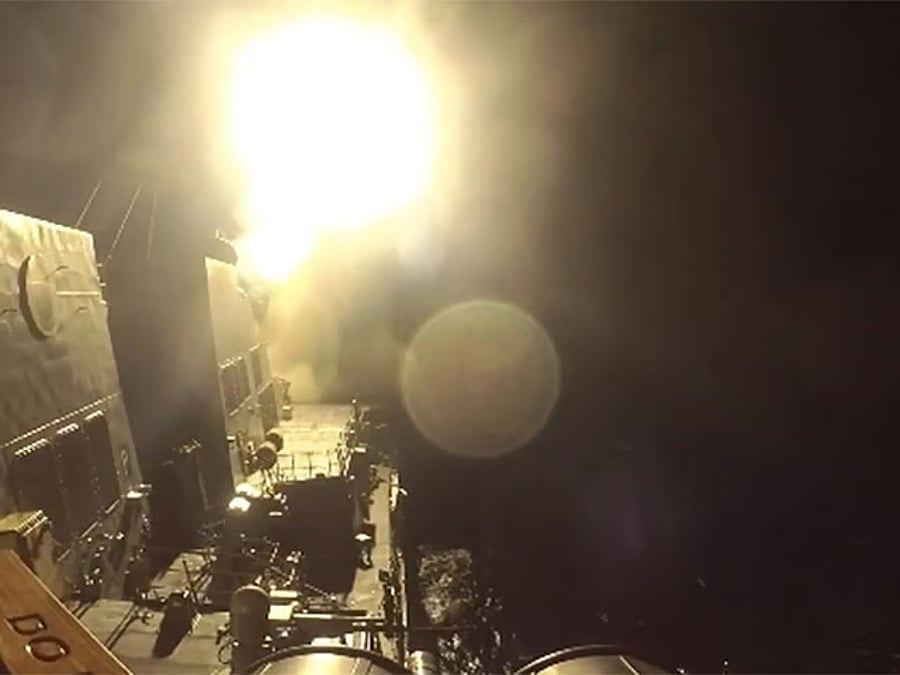
Three Indian sailors were killed in a US military attack on an Iranian oil tanker off the coast of Oman, India confirmed on Thursday. Initially, three sailors were reported missing following the incident. The US Central Command stated that the attack was part of Washington's blockade of Iran-linked ships. Since the US naval blockade began on April 13, this is the first incident of casualties in the Strait of Hormuz. The US Central Command has disabled eight ships and diverted over 100 ships since the blockade began. India's Shipping Minister Sarbananda Sonowal confirmed the deaths of the three sailors. The US Central Command posted on social media platform X that the Palau-flagged ship 'Settebelov' failed to comply with US directives, leading to the attack. Before confirming the deaths, India reported that three Indian sailors were missing following the attack on the Settebelov ship off the coast of Oman, but 21 Indian crew members were rescued. India called for an end to attacks on commercial ships and civilian infrastructure in the region. The US military has imposed a blockade on Iranian ports following Tehran's closure of the Strait of Hormuz, through which about 20% of the world's oil and gas supply is transported. Earlier this week, the US military attacked a Palau-flagged oil tanker with an Indian crew. The Settebelov ship was attacked after failing to comply with US directives. India's authorities reported that Oman's military rescued all 24 crew members following the attack. Media outlet The Wire reported that India summoned a top US diplomat to protest the attack on the oil tanker that killed three Indian sailors. On Wednesday, India's Foreign Ministry summoned the Charge d'Affaires of the US Embassy in New Delhi to protest the attack. The deceased Indian sailors were identified as Aditya Sharma, Shivanand Chaurasia, and Patnala Suresh. Although not officially confirmed, diplomatic sources stated that India's Additional Secretary Nagaraj Naidu summoned US Deputy Chief of Mission Jason Miks. The Ministry stated, 'We condemn the attack on the commercial ship Settebelov off the coast of Oman.' India expressed 'deep concern' over the continuous attacks on ships in the region and called for an end to attacks on commercial ships and civilian infrastructure, ensuring unhindered maritime navigation in international waters. The US Ambassador to India and Special Envoy for South and Central Asia, Serge Gor, is currently on a visit to Kazakhstan. This is the second time India has summoned a foreign diplomat following an attack on a commercial ship since the start of the Iran war. Diplomatic observers noted that India's response to the attack on the Settebelov ship was more severe compared to its reaction to the attack on the MT Maryvex oil tanker. India's Permanent Representative to the UN, Harish Parwathaeni, stated that India strongly opposes attacks on commercial ships. He noted that about one million Indians live and work in the Gulf region, and their safety is India's top priority. Parwathaeni added that India's trade and energy supply depend on the stability of the region, and any major instability could have severe consequences for the Indian economy. He expressed concern over the expansion of the conflict and the involvement of more countries, which has led to the deaths or disappearances of many Indian citizens. He noted that the conflict's impact on normal life and economic activities is also affecting India.
At a glance:
- Three Indian sailors were killed in a US military attack on an Iranian oil tanker off the coast of Oman. - India summoned a top US diplomat to protest the attack. - The US Central Command stated that the attack was part of Washington's blockade of Iran-linked ships. - India called for an end to attacks on commercial ships and civilian infrastructure in the region. - The US military has imposed a blockade on Iranian ports following Tehran's closure of the Strait of Hormuz.